
A team that has spent all week in back-to-back meetings does not usually need another wellbeing email. It needs something practical, easy to access and worth stepping away from the desk for. That is where the question what is on-site chair massage becomes relevant for employers looking for a credible wellbeing option that supports both staff and business performance.
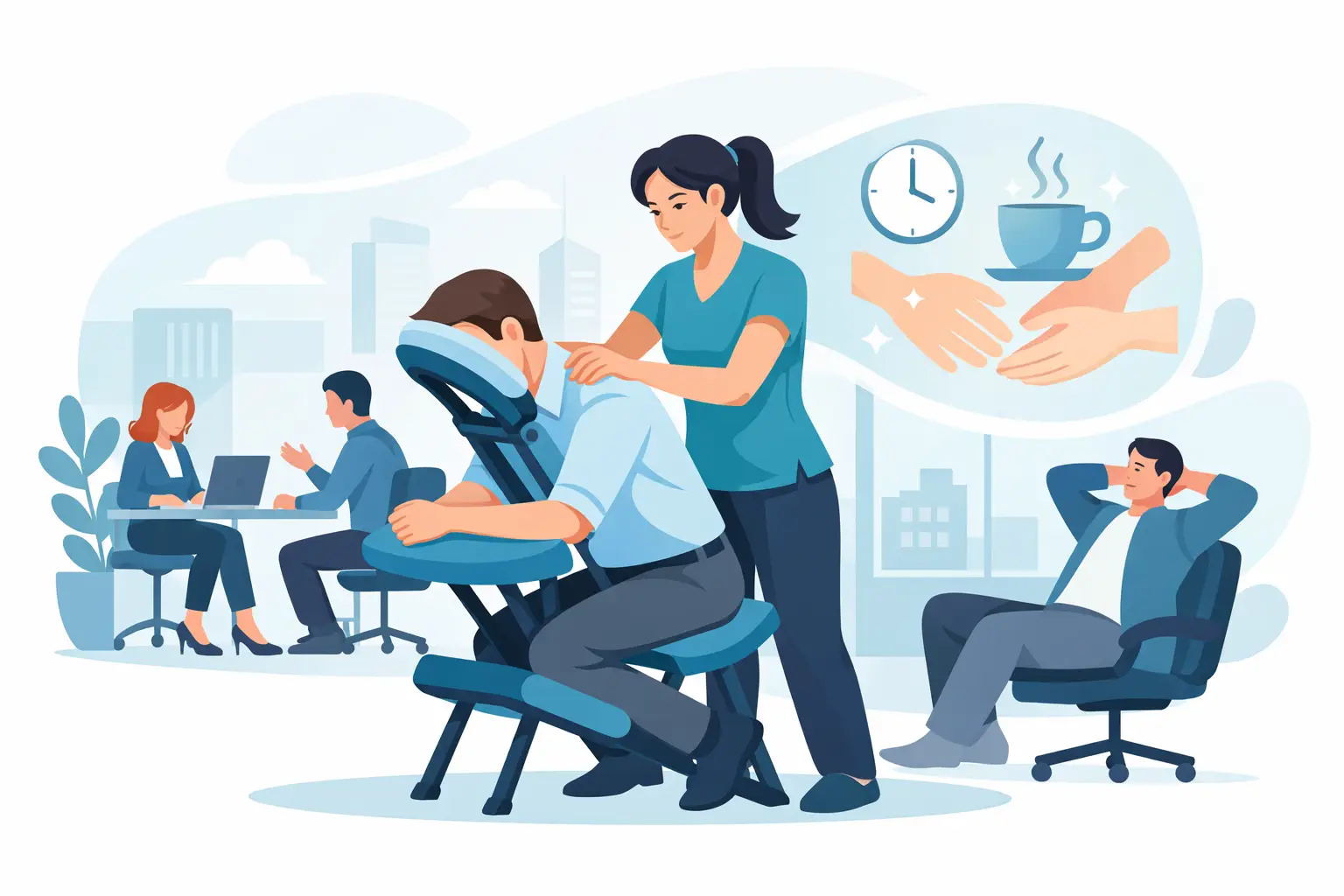
On-site chair massage is a short, focused massage treatment delivered in the workplace, usually on a specially designed portable massage chair. Employees remain fully clothed, no oils are required, and each session is typically tailored to target the areas that desk-based staff feel most – the neck, shoulders, back, arms and hands. The service is brought directly into the office by a qualified therapist, which means there is very little disruption and no need for employees to travel to an external clinic.
For HR teams, office managers and business leaders, the appeal is straightforward. It is easy to arrange, simple for employees to use and visible enough to show that wellbeing support is not just theoretical. When delivered well, it can help reduce physical tension, encourage short recovery breaks and contribute to a healthier workplace experience.
What is on-site chair massage and how does it work?
The treatment is designed for convenience. A therapist arrives on-site with a portable ergonomic chair that supports the body in a forward-leaning seated position. This allows the back, shoulders and neck to be treated effectively while keeping the session comfortable and efficient.
Appointments usually last between 10 and 30 minutes, depending on the format of the day and the goals of the employer. A shorter session may be ideal for a busy office wellbeing event, while longer appointments can work well as part of a regular staff support programme. In most cases, a quiet meeting room or unused office space is enough to set up.
Because employees stay fully dressed, the service fits naturally into a working day. There is no changing, no treatment bed and no need for shower facilities afterwards. Staff can return to work immediately, which makes on-site chair massage especially practical for businesses that want a low-friction wellbeing activity with high uptake.
Why businesses use on-site chair massage
For many organisations, this is not about adding a novelty perk. It is about addressing common issues in modern office life in a direct and manageable way. Long periods of sitting, laptop use, poor posture, repetitive strain and mental fatigue all affect how people feel at work. Left unchecked, those pressures can feed into lower focus, reduced morale and higher levels of absence.
On-site chair massage offers a structured way to break that pattern. A short treatment can help employees feel less tense, more refreshed and better able to concentrate. That does not mean a 15-minute session will solve every workplace wellbeing challenge. It will not replace good management, sensible workloads or an ergonomic office set-up. But it can be a useful part of a broader employee wellbeing strategy, particularly when stress and muscular tension are frequent complaints.
There is also a cultural benefit. When staff see their employer investing in accessible support during the working day, it sends a clear message that wellbeing is being treated seriously. That can strengthen engagement and help create a more positive employee experience.
What employees can expect during a session
For first-time users, the unknown is often the biggest barrier. In practice, the format is simple and unintimidating. The therapist will usually begin with a brief check-in to understand whether the employee has any areas of discomfort, tension or health considerations that need to be taken into account.
The employee then sits on the chair, leaning forwards into the support pads while remaining fully clothed. The therapist works through key muscular areas, often focusing on the upper back, shoulders, neck, scalp, arms and hands. Pressure can be adjusted according to preference, so the treatment does not need to be intense to be effective.
Most people describe the experience as quick, targeted and surprisingly restorative. Because the treatment is short, it suits even those who are reluctant to take long breaks. It can also feel more accessible than a full traditional massage for employees who are new to workplace therapies.
The business case behind chair massage
When employers ask whether workplace massage is worth offering, they are usually really asking a different question: will people use it, and does it support wider business goals?
In many offices, the answer is yes, provided the service is delivered professionally and positioned properly. Uptake tends to be strong because the barrier to participation is low. Employees do not need specialist knowledge, sportswear or a large time commitment. They simply book a slot and attend.
The value extends beyond the session itself. Chair massage can support wider objectives around stress reduction, morale, retention and employer brand. It is visible, memorable and easy for employees to understand. Compared with some wellbeing initiatives that are appreciated in theory but underused in practice, it often feels more immediate.
That said, context matters. A one-off event may lift morale and create a positive talking point, while a recurring programme is more likely to support consistent engagement. Businesses looking for longer-term impact usually benefit from integrating chair massage into a wider wellbeing calendar rather than treating it as a standalone fix.
Where on-site chair massage fits best
This service works particularly well in desk-based environments where physical tension and screen fatigue are common. Corporate offices, contact centres, co-working spaces, law firms, agencies, financial services teams and technology businesses often find it a strong fit. It can also work well during busy seasonal periods, company events, wellbeing weeks, reward days and return-to-office initiatives.
For hybrid teams, the format may need a little more planning. If employees are spread across different days, session scheduling becomes more important. In those cases, it often helps to align treatments with the busiest office days so more people can access the service.
Space is rarely a major obstacle. One of the practical advantages of on-site chair massage is that it does not require a large footprint. A private room is helpful, but the setup is flexible enough for most office environments.
Choosing the right provider
Not all workplace wellbeing services are delivered to the same standard, and this is where employers should be selective. The quality of the therapist matters, but so does the quality of the operational setup around them. Businesses need providers who can supply qualified and insured practitioners, manage scheduling clearly and deliver a professional on-site experience.
Consistency is especially important for larger organisations or multi-site programmes. A provider should be able to scale sensibly, communicate well with internal stakeholders and make the experience easy for both organisers and employees. That includes practical details such as punctuality, setup requirements, session flow and health screening.
A service-led provider with workplace experience will also understand the commercial side of the decision. HR and operations teams are not looking for added admin. They want a wellbeing solution that is straightforward to organise and credible enough to justify budget. This is one reason many employers choose specialist providers such as Therapy Bookings for workplace programmes across London and the wider UK.
Is on-site chair massage right for every business?
Not always, and it is better to be clear about that. If a workforce is mostly remote, a fully on-site format may only reach a limited proportion of employees unless it is combined with other wellbeing support. If the business has no suitable private space at all, logistics can be harder. And if leaders expect a single wellbeing day to resolve deeper workload or culture issues, the service will be judged unfairly.
Where on-site chair massage performs best is in businesses that want practical, visible support which employees can use immediately. It is especially effective when paired with realistic expectations and a wider commitment to staff wellbeing.
For employers who want something flexible, low-disruption and clearly beneficial, it remains one of the most accessible workplace therapies available. A short session cannot change everything, but it can change how someone feels in the middle of a demanding day – and that is often a very good place to start.