
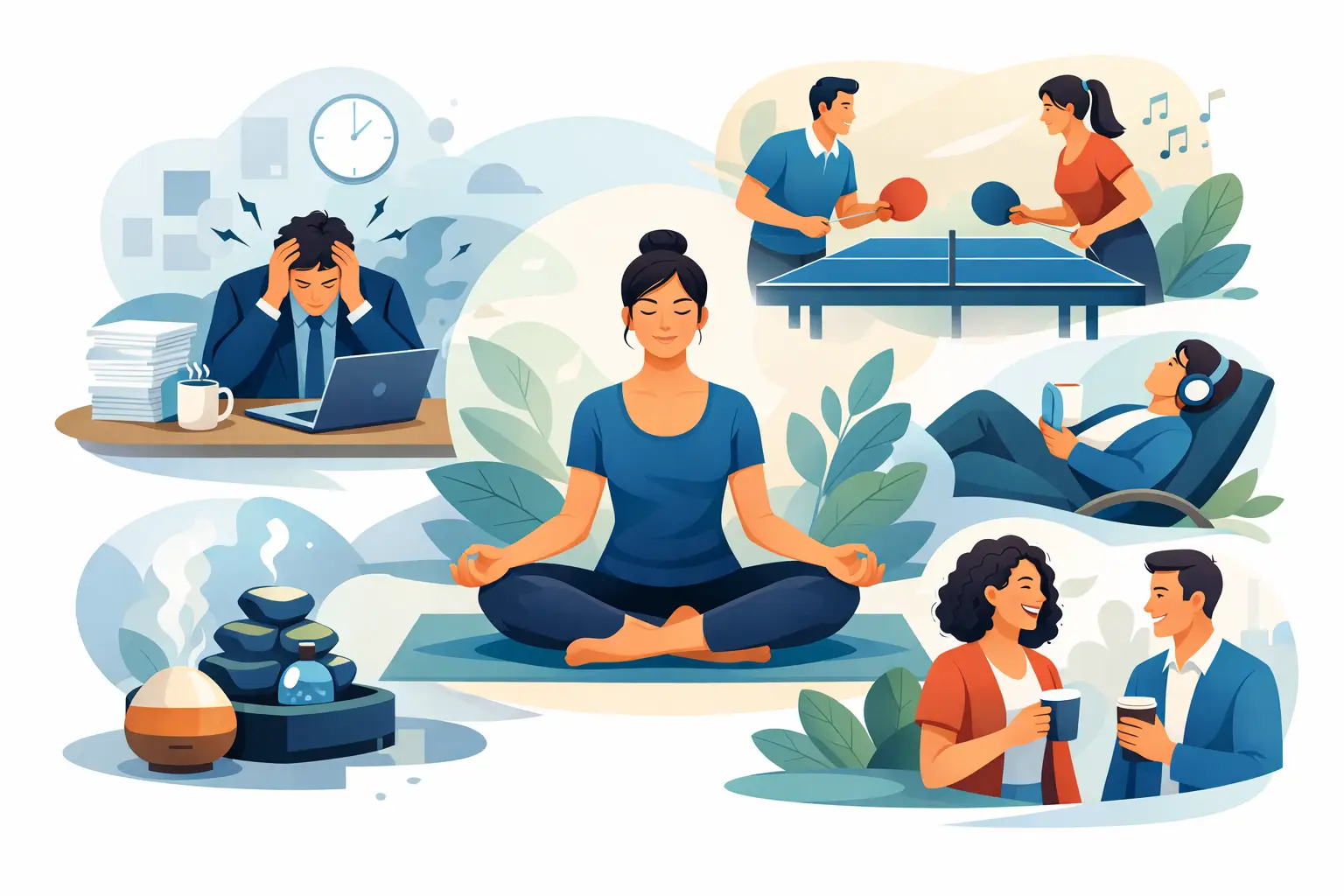
At 3pm, stress tends to show up in the same way in most offices – shorter tempers, slower thinking, more mistakes, and a team running on caffeine rather than focus. That is why the best workplace stress relief ideas are not simply nice extras. They are practical interventions that help people reset during the working day and help businesses protect performance, morale, and retention.
For HR teams, office managers, and founders, the challenge is rarely whether stress exists. It is choosing options that employees will actually use, and that can be delivered without creating more admin. The most effective approach is usually not a single grand initiative, but a small group of well-chosen solutions that fit your workplace, workforce, and budget.
What makes the best workplace stress relief ideas work?
The strongest ideas do two things at once. They give employees immediate relief in the moment, and they also support wider business goals such as lower absenteeism, stronger engagement, and better day-to-day output.
That means the best options are easy to access, simple to understand, and relevant to the kind of stress your team is dealing with. In a desk-based environment, that often includes mental fatigue, poor posture, muscle tension, repetitive strain, and the pressure of back-to-back meetings. A wellbeing initiative that ignores those realities may look good on paper, but uptake often tells a different story.
There is also a practical point here. If something takes too long, feels awkward, or requires employees to leave site, participation can drop quickly. Workplace stress relief works best when it meets people where they already are.
10 best workplace stress relief ideas for modern offices
1. Onsite chair massage
If you want one of the most effective and low-friction options available, chair massage is hard to beat. It is quick, professional, and designed for the workplace, with no need for a treatment room or employees to change clothes. Sessions can be scheduled around the working day, which makes participation far easier than offsite wellness benefits that rely on staff finding extra time.
From a business perspective, chair massage addresses several common office issues at once: neck and shoulder tension, mental fatigue, poor concentration, and stress-related discomfort. Employees feel the benefit immediately, and employers often see a lift in morale because the support feels visible and tangible rather than theoretical.
2. Guided stretching at work
Stress is not purely mental. In many workplaces, it sits in the body first. Tight shoulders, stiff hips, headaches, and shallow breathing all affect how people feel and perform. Guided stretching sessions are a simple way to reduce physical tension and re-energise staff, especially in roles that involve long periods at a desk.
This is particularly useful for teams who may not engage with traditional wellbeing messaging but will take part in something practical and short. A 10 to 15 minute session can break up sedentary time, improve comfort, and help employees return to work with better focus.
3. Quiet recovery spaces
Not every stress intervention needs to be a programme. Sometimes the workplace itself needs to make recovery easier. A quiet space where employees can sit away from screens, noise, and interruption for a few minutes can make a noticeable difference, especially in open-plan offices.
This does not need to be elaborate. A well-considered room with comfortable seating, softer lighting, and a clear purpose can help staff decompress between demanding tasks. The trade-off is space. For smaller offices, creating a dedicated room may not be realistic, so a flexible booking area or multi-use wellbeing corner may be the better fit.
4. Hand massage and reflexology sessions
For employees dealing with computer-heavy roles, hand massage and reflexology can be highly relevant. Repetitive movement, keyboard use, and screen-based work often create physical strain that feeds into overall stress levels.
These treatments are particularly effective at events, wellbeing weeks, and regular office wellness days because they are easy to deliver onsite and feel accessible to a wide range of employees. They also work well as part of a broader wellbeing offer, giving staff different ways to engage depending on what they find most comfortable.
5. Meeting-free focus blocks
One of the most underestimated stress relief ideas costs almost nothing. If your teams are constantly in meetings, the stress problem may be structural rather than personal. Protected focus time gives employees room to think, complete tasks properly, and reduce the cognitive overload that comes from jumping between calls all day.
For some businesses, this looks like a meeting-free lunch hour. For others, it could be one afternoon a week with no internal meetings. The right model depends on how your teams work, but the principle is the same: fewer interruptions can lead to calmer, better-quality work.
6. Nutrition consultations and healthy snack planning
Stress and energy are closely linked. When employees skip meals, rely on sugar, or have limited healthy options during busy periods, concentration and mood often dip. Practical nutrition support can help teams make better choices without turning wellbeing into a lecture.
Short consultations or themed sessions can be particularly useful in high-pressure environments where staff are working long hours. This approach works best when it is realistic. Nobody needs a perfect eating plan at work. They need options that are manageable during a busy week.
7. Manager training on stress signals
Some of the best workplace stress relief ideas are preventative. Training managers to recognise early signs of stress can stop smaller issues becoming larger wellbeing or performance problems. That might include spotting changes in behaviour, increased irritability, withdrawal, or a sudden drop in output.
This is not about turning managers into therapists. It is about giving them the confidence to have appropriate conversations, signpost support, and manage workloads more effectively. Done well, this strengthens trust and helps create a culture where support is normal rather than reactive.
8. Wellbeing days with multiple therapies
A single therapy can be highly effective, but a wellbeing day with several services often creates wider engagement. Offering chair massage alongside reflexology, spinal analysis, assisted stretching, or nutrition support gives employees choice and helps employers serve different needs within one event.
This format works well for larger offices, awareness campaigns, reward initiatives, and periods of organisational change. It can also be easier to justify internally because it supports morale, visibility, and employee experience in a very direct way.
9. Workstation and posture support
Stress is amplified when people are physically uncomfortable. Poor desk set-up, screen height issues, and repetitive strain can turn an already busy day into a draining one. Practical workstation reviews or spinal analysis sessions can help employees understand what is contributing to discomfort and what to adjust.
The benefit here is that small changes often have a large effect. Better seating position, improved screen alignment, and simple movement advice can reduce tension and support better concentration over time.
10. Regular, not one-off, wellbeing support
One-off events have value, especially for engagement and awareness. But if stress is persistent, the response often needs to be consistent too. Regular onsite wellbeing sessions tend to have a stronger long-term effect because they become part of the rhythm of work rather than an occasional treat.
That consistency can also improve uptake. Employees who miss one session know another is coming. Over time, support feels more credible because it reflects an ongoing commitment, not a temporary gesture.
How to choose the right stress relief ideas for your workplace
The right choice depends on what is driving stress in your business. If the issue is physical tension and digital fatigue, body-based therapies and stretching are likely to have strong relevance. If the problem is meeting overload or management pressure, process changes and manager support may matter more.
It also depends on workforce size and working pattern. A small office may do well with quarterly wellbeing days and occasional chair massage sessions. A larger employer may benefit more from recurring onsite services with a mix of therapies across departments or locations. Hybrid teams often need a combination of in-office support and cultural changes that reduce unnecessary pressure across the week.
The key is not to choose whatever sounds the most fashionable. Choose what employees will use, what can be delivered consistently, and what aligns with the experience you want your workplace to offer.
Making stress relief easy to deliver
A good idea only works if it is easy to implement. That is why service-led wellbeing support tends to perform well with busy employers. When delivery is handled professionally, with qualified practitioners, clear scheduling, and minimal disruption, the barrier to action is much lower.
For many employers, that is where specialist providers such as Therapy Bookings can add real value. Rather than asking internal teams to build a wellbeing programme from scratch, businesses can bring in proven services that are flexible, scalable, and designed for the workplace from day one.
That matters because the best stress relief initiatives should not create more work for the people already trying to support the workforce. They should reduce friction, show care in a visible way, and contribute to a healthier, more productive environment.
If your team is showing the signs of pressure, the most useful next step is usually not a bigger policy document. It is one practical change that people can feel this month.