
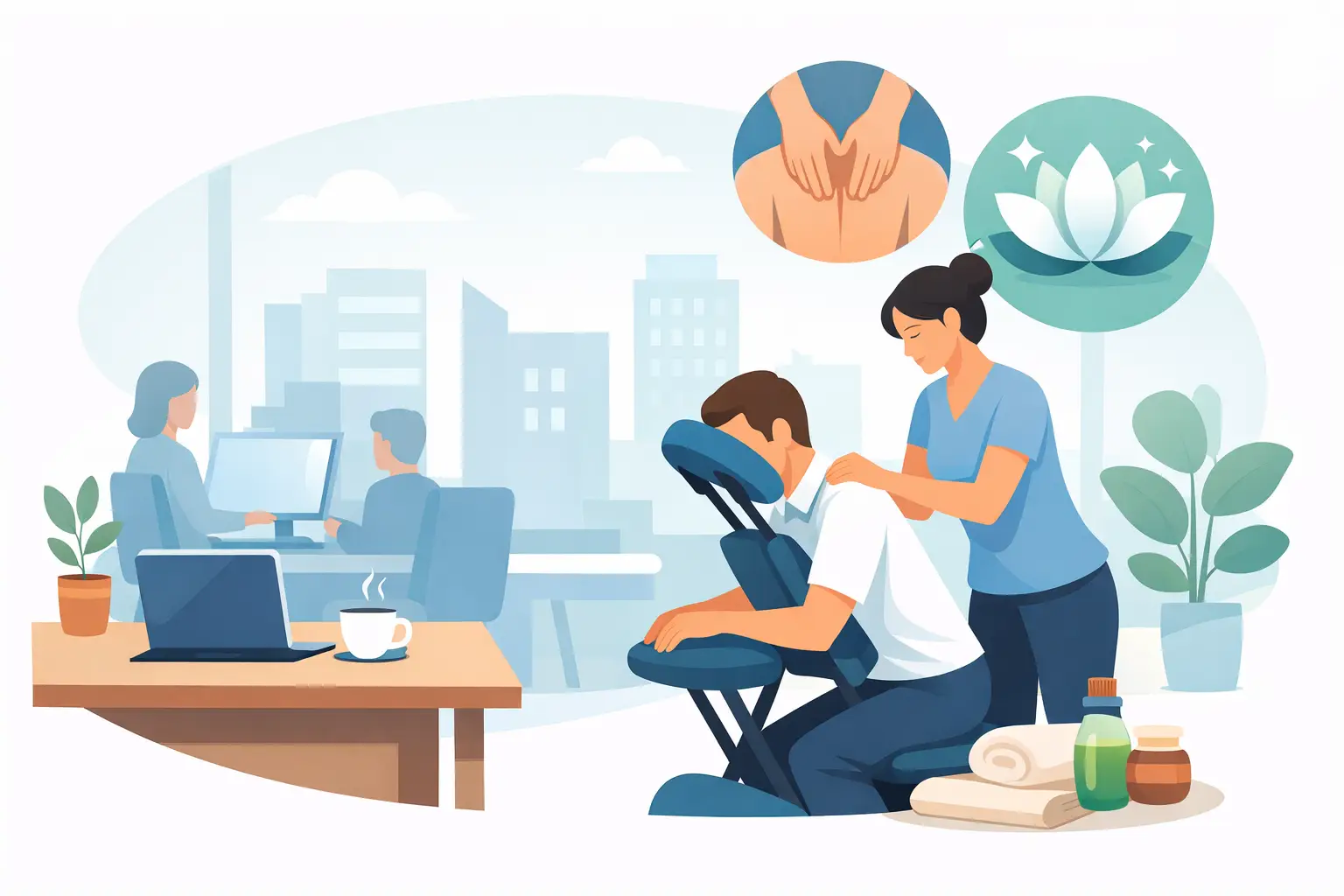
When a team is flagging at 3pm, shoulders are tight, diaries are full and stress is quietly affecting output, employers usually have two choices. They can treat wellbeing as a once-a-year gesture, or they can put in place support that people actually use. This guide to onsite massage programmes is for organisations that want the second option – practical wellbeing support that fits the working day and delivers visible value.
For HR leaders, office managers and operations teams, the appeal is straightforward. Onsite massage is easy to bring into the workplace, requires very little space, and gives employees immediate relief from the physical effects of desk work, long meetings and digital fatigue. Done properly, it also supports broader business goals such as morale, engagement and retention.
What onsite massage programmes are designed to solve
Most desk-based teams are not short on wellbeing messaging. What they are short on is time, headspace and access. If support is difficult to book, takes people away from work for half a day or feels too personal to engage with, uptake tends to be weak.
Onsite massage programmes work because they remove friction. A qualified therapist comes to the workplace, treatments are delivered in a compact setup, and sessions can be arranged around the flow of the day. Chair massage is the most common format because it is efficient, comfortable and does not require employees to undress or use oils. That makes it particularly suitable for offices, events and shared workplaces.
The problem it addresses is not only stress in the broad sense. It is also neck and shoulder tension, lower energy, repetitive strain discomfort, headaches linked to posture, and the cumulative effect of long hours at a screen. While massage is not a replacement for medical treatment, it can be a useful part of a sensible workplace wellbeing strategy.
A guide to onsite massage programmes for employers
The strongest programmes start with a clear objective. Some employers want to reward teams after a demanding period. Others are trying to reduce signs of burnout, improve office attendance or strengthen a wider wellbeing offering. The format should follow the goal.
If the aim is visibility and morale, a one-day wellbeing event may be the right fit. If the aim is ongoing support, regular weekly or monthly sessions usually make more sense. A recurring programme gives employees a reason to engage more than once and helps position wellbeing as part of normal working life rather than a one-off gesture.
Session length matters as well. Shorter appointments, often 10 to 20 minutes, work well when you want to maximise participation across a larger team. Longer appointments can be useful for senior leadership days, smaller groups or premium wellbeing activations. There is no single correct model. It depends on headcount, budget and how much disruption the business can tolerate during the day.
Employers should also think about who the programme is for. In some businesses, a company-wide rollout is realistic. In others, a pilot in one office or department is a more practical place to start. That can be especially helpful if you need internal proof before committing to a larger programme.
What good delivery looks like
A successful onsite massage programme should feel simple from the employer’s side. That begins with qualified and insured therapists who are experienced in workplace settings, not only clinical or spa environments. Workplace delivery is its own discipline. Therapists need to be punctual, professional, discreet and confident operating in busy office environments.
Operational ease is just as important as treatment quality. Booking should be straightforward. The provider should be able to advise on room setup, scheduling, therapist numbers and likely participation rates. For larger rollouts, they should also be comfortable delivering across multiple offices or regions without standards slipping.
Communication plays a bigger role than many employers expect. If staff are not told what to expect, who it is for, or how the sessions work, participation can dip. A clear internal message usually helps: explain that the treatment is desk-friendly, time-efficient and intended to reduce tension and stress during the working day. Once employees understand that it is convenient and professional, take-up is often strong.
Choosing the right format for your workplace
Chair massage is typically the most practical option for offices because it is compact, effective and easy to rotate through multiple employees. It can be delivered in meeting rooms, breakout areas or event spaces with minimal preparation. For many businesses, it is the best starting point.
That said, it is not the only option. Reflexology, hand massage, assisted stretching and posture-focused wellbeing sessions can all complement a broader programme. The right mix depends on your culture and use case. If you are running a wellbeing week, variety can improve interest. If you want consistency and easy repeat delivery, keeping the format focused may be better.
There is also a question of cadence. Monthly sessions can work well for steady engagement and budget control. Fortnightly or weekly visits may be appropriate in high-pressure environments, larger offices or businesses going through periods of change. More frequent sessions tend to deepen the perception that the employer is serious about staff support, but they do require stronger scheduling discipline.
Budget, ROI and what employers should measure
For decision-makers, the conversation inevitably comes back to cost. That is reasonable. Wellbeing services should not be judged only on good intentions. They should be assessed against outcomes that matter to the business.
The clearest return often appears in softer metrics first: stronger employee feedback, higher participation in wellbeing initiatives, better sentiment around employer care and improved office atmosphere on the day of delivery. Over time, onsite wellbeing support can also contribute to retention, lower short-term stress complaints and a more positive employee experience.
It is worth being realistic here. No massage programme will single-handedly fix workload problems, poor management or structural burnout. But that does not make it superficial. In a healthy workplace strategy, onsite massage can be one practical lever among several. It supports employees in the moment and signals that the business is willing to invest in their day-to-day experience, not just talk about it.
Simple measurement works best. Track usage rates, repeat participation, employee feedback and internal demand for future dates. If the service is part of a broader wellbeing plan, compare engagement before and after launch. For some employers, anecdotal feedback from managers is also valuable, especially where morale or team pressure has been a concern.
Common concerns before launch
Some employers worry that onsite massage will be seen as a novelty rather than a serious wellbeing investment. In practice, presentation makes the difference. If the programme is framed professionally, delivered by experienced therapists and tied to broader wellbeing objectives, it tends to land as a credible benefit.
Others worry about disruption. This is usually manageable with sensible scheduling. Staggered appointments, advance booking and a clear location plan keep the working day on track. For hybrid teams, rotating onsite dates can also help ensure fairness across attendance patterns.
There can also be questions around inclusivity. Not every employee will want a massage, and that is fine. A strong programme is offered as an optional support, not an expectation. Some businesses pair massage with other services so employees have a choice. That tends to strengthen overall engagement and avoids the feeling of a one-size-fits-all initiative.
Guide to onsite massage programmes that scale well
If you are planning beyond a single office, consistency becomes critical. National coverage, therapist quality control and dependable logistics matter far more once a programme starts spanning locations. This is where many providers look similar on paper but perform very differently in practice.
The key is to work with a partner that can scale without creating more admin for your internal team. That means clear scheduling, reliable therapist allocation and delivery standards that hold up whether the session is in London or elsewhere in the UK. Therapy Bookings has built its service around that operational reality, which is often what busy HR and office teams need most.
The most scalable programmes are also the easiest to repeat. They do not rely on excessive setup, complicated employee instructions or too many moving parts. If a service can be explained quickly, booked easily and enjoyed without fuss, it stands a far better chance of becoming part of the workplace routine.
A good onsite massage programme should feel like a practical business decision, not an indulgence. It gives employees immediate support in the place they spend most of their week, and it helps employers show care in a way that is visible, efficient and measurable. When wellbeing is easy to access, people are more likely to use it – and that is where the real value starts.