
A team can look productive while running on empty. Calendars are full, messages keep arriving, and people stay at their desks through lunch – yet concentration drops, shoulders tighten and minor frustrations become harder to absorb. Understanding how workplace massage reduces stress helps employers respond to that pressure in a practical, visible way, without adding another task to employees’ working days.
For HR leaders, office managers and people teams, the value is not simply that a massage feels good. Well delivered onsite massage gives employees permission to pause, supports physical comfort during demanding periods and signals that wellbeing is being treated as part of how the business operates. When it is planned around the needs of a desk-based workforce, it can contribute to better morale, focus and engagement.
How workplace massage reduces stress in desk-based teams
Stress is not only a mental experience. It often shows up physically: raised shoulders during back-to-back video calls, a clenched jaw before a deadline, headaches after screen-heavy work, or stiffness that makes sitting uncomfortable by mid-afternoon. These symptoms can reinforce one another. Physical discomfort interrupts attention, and the pressure to keep working can make people less likely to take the breaks that would help.
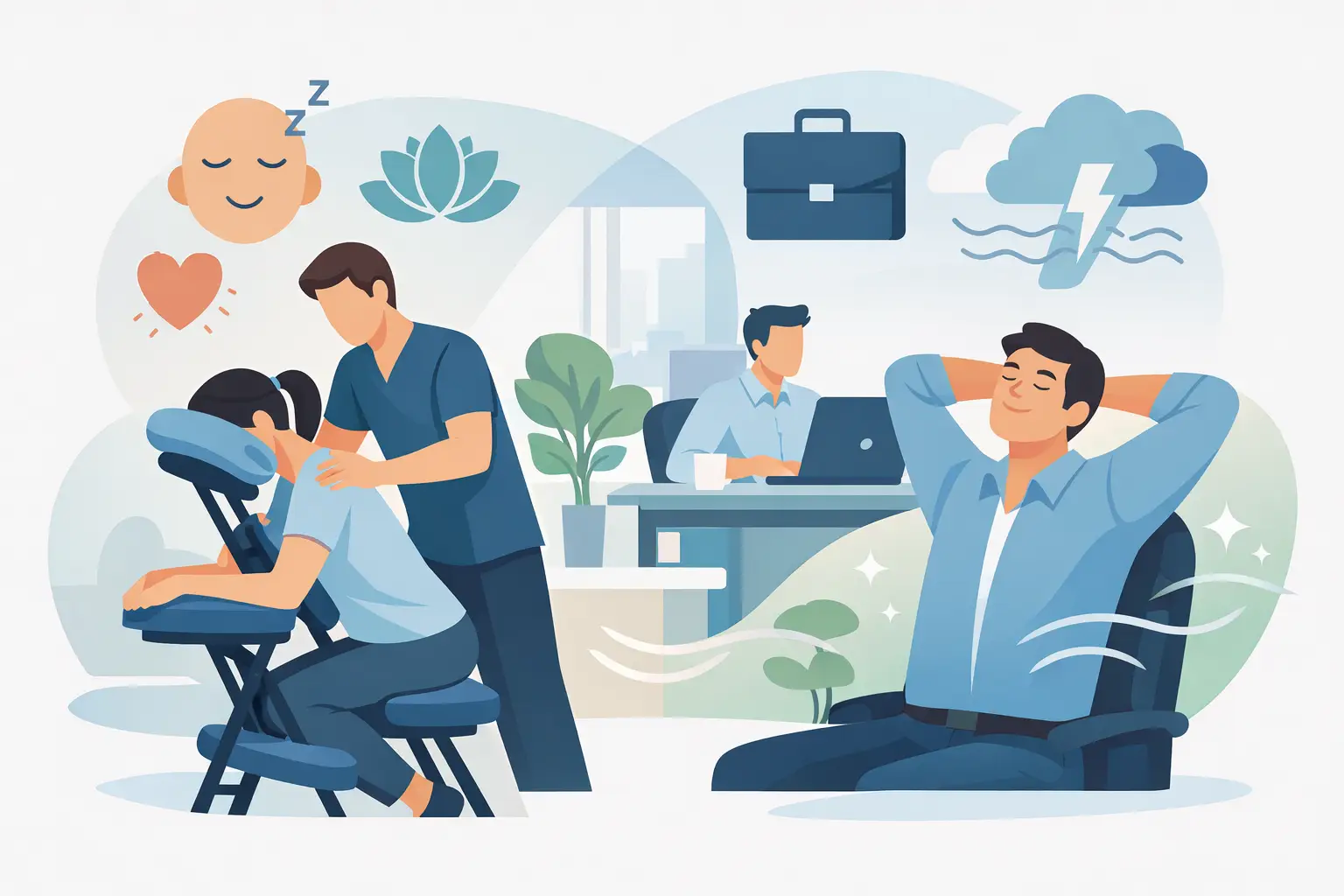
Chair massage is designed to interrupt that cycle. Delivered through clothing in a specially designed ergonomic chair, it commonly focuses on the upper back, neck, shoulders, arms and hands. A qualified therapist uses targeted techniques to ease muscular tension and encourage a calmer state, while the employee remains supported and comfortable. Sessions are usually short enough to fit around a working day, often 15 to 20 minutes.
The immediate benefit is a purposeful break from screens, meetings and demands. Employees are not expected to arrange travel, change clothes or give up a large part of their day. That convenience matters. A wellbeing benefit has limited impact if the people who most need it feel too busy to use it.
Massage may also support the body’s relaxation response. As breathing slows and tense muscles begin to release, employees can feel less physically wound up. Individual responses will vary, and workplace massage is not a treatment for clinical anxiety, depression or other medical conditions. It is, however, a practical complementary measure that can help people feel more settled and comfortable at work.
The business case goes beyond a moment of calm
A relaxed employee is not automatically a more productive employee, and employers should be wary of promising instant transformation. The commercial value comes from repeated, credible support for the everyday factors that affect performance: fatigue, discomfort, morale, connection and the sense that an employer cares.
When people are under sustained pressure, presenteeism can become as costly as absence. Someone may be logged in and attending meetings but struggling to think clearly, communicate patiently or complete work efficiently. A brief chair massage will not resolve workload problems, poor management or an unhealthy culture. Those require broader action. What it can do is provide timely relief and make a wider wellbeing strategy feel tangible rather than theoretical.
For many teams, the most meaningful outcome is psychological. An onsite session says, clearly, that taking a short pause is acceptable. That message can be especially valuable in high-growth businesses, professional services teams and organisations managing change, where employees may otherwise feel they need to appear permanently available.
There is also a culture benefit. Shared access to a thoughtful wellbeing service creates positive conversation across teams without forcing anyone into a group activity. Employees retain choice, and the experience feels personal. Over time, this can strengthen perceptions of employer support – an important factor in engagement and retention.
Why chair massage works well in the workplace
Traditional massage appointments can be valuable, but they are not always practical for an employer-led programme. They require more time, more space and often more personal preparation. Chair massage is suited to offices because it is efficient, professional and minimally disruptive.
A therapist can work from a quiet meeting room, wellbeing area or suitable private space. Employees can book timed slots, helping managers maintain service coverage and reducing queues. There is no need for oils or changing facilities, and sessions can be delivered during normal working hours, at wellbeing events or as part of an ongoing programme.
This format also makes support more inclusive for people who might not otherwise prioritise self-care. A person who would never book a weekend treatment may be comfortable accepting a 15-minute session at the office. For hybrid teams, employers can rotate onsite days or combine workplace activity with other wellbeing support, so access is not limited to one group.
That said, implementation should respect personal preferences. Some employees will not want massage, may have health considerations or simply prefer another form of support. Offering alternatives such as reflexology, hand massage, assisted stretching or nutrition consultations can broaden participation and make the programme feel more considered.
Turning a wellbeing perk into a useful programme
The best workplace massage programmes begin with a clear purpose. A one-off session can work brilliantly for an employee appreciation day, a demanding project milestone or a return-to-office event. A regular programme may be more appropriate where stress, sedentary work and retention are ongoing concerns.
Start by considering when pressure is highest. Is the team approaching year-end deadlines? Are people returning from a major organisational change? Is absence linked to musculoskeletal discomfort or are engagement survey comments pointing to workload and wellbeing concerns? The answer should shape the frequency, timing and mix of services.
Operational detail matters as much as the treatment itself. Employees need straightforward booking instructions, clear information about what to expect and confidence that sessions are private. Managers need a schedule that protects service levels. The therapist needs an appropriate space, access arrangements and enough time between appointments to maintain a calm experience.
A practical programme should also include four simple elements:
- A qualified, insured therapist with workplace experience.
- Session lengths that fit the organisation’s working patterns.
- A private, accessible area with minimal interruption.
- A feedback method that captures participation and employee sentiment.
These basics reduce friction for the organiser and help the service feel credible from the first visit. Therapy Bookings designs onsite programmes around those practical considerations, with qualified therapists available in London and across the UK.
Measuring whether workplace massage is helping
Wellbeing should not be reduced to a single number, but employers can still assess whether an initiative is worthwhile. Participation rates show whether the format and timing are accessible. Short, optional post-session feedback can reveal whether employees felt calmer, less tense or more able to focus afterwards.
For recurring services, look for patterns alongside existing people data. This may include engagement feedback, wellbeing survey responses, sickness absence trends and retention conversations. Avoid claiming that massage alone caused a change. Employee wellbeing is influenced by workload, leadership, pay, flexibility, job design and many other factors. Instead, assess whether the service is contributing to a wider package of support.
Qualitative comments are often revealing. Employees may describe feeling appreciated, returning to work with a clearer head or noticing relief in their shoulders and hands. These observations help employers understand what matters to their people and whether to continue, adjust or expand the programme.
When massage is not enough on its own
Workplace massage is most effective when it sits alongside sensible working practices. If employees are consistently overloaded, expected to answer messages late at night or unable to take annual leave, a monthly massage will not address the underlying issue. It may even feel superficial if leaders are not also listening and acting on what teams need.
Pair onsite therapy with realistic workload planning, supportive line management, good ergonomic guidance and clear routes to mental health support. Encourage regular screen breaks and make sure employees can decline a session without explanation. The aim is not to make people cope with avoidable pressure more efficiently. It is to provide practical care while the organisation works to prevent unnecessary stress.
A well-run massage day will not solve every workplace challenge. It can, however, create a calm, credible moment in a busy week – one that reminds employees their comfort, health and ability to do good work are worth making time for.