
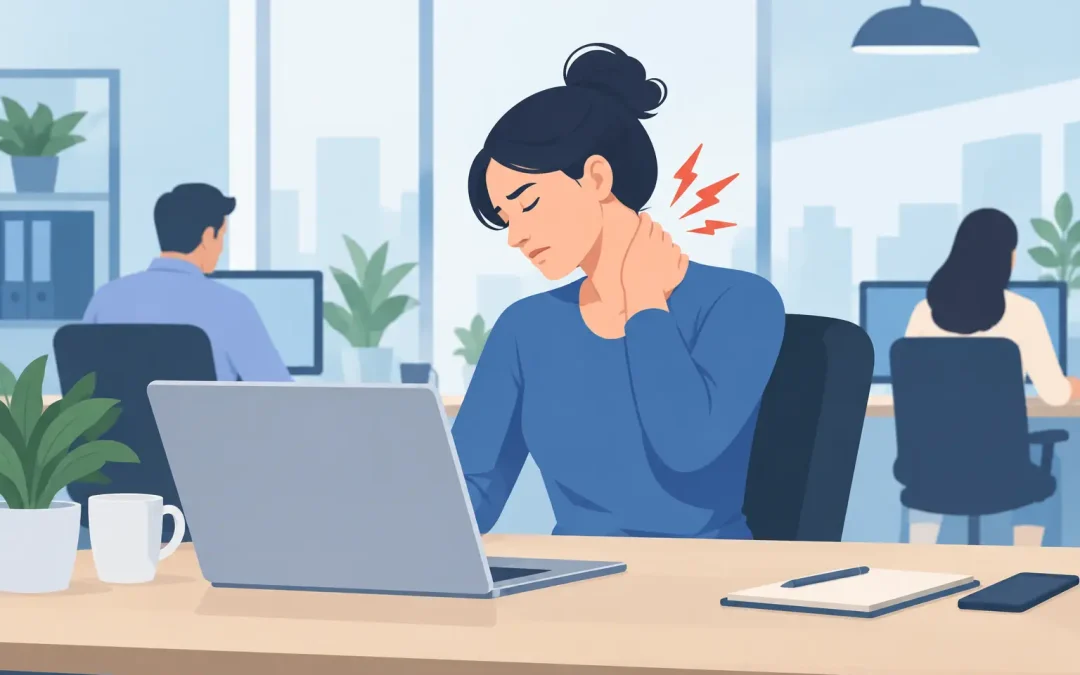
A colleague rubbing the base of their neck after a video call is not simply experiencing a poor afternoon. When that pattern repeats across a team, it can affect concentration, mood, comfort and attendance. Understanding what causes office neck pain helps employers move beyond one-off posture reminders and make practical changes that support people throughout the working day.
For desk-based teams, neck discomfort rarely has one single cause. It is usually the result of how people work, how long they remain in one position, the demands of their workload and the recovery they do – or do not – get between tasks. The good news is that many contributing factors are within an employer’s influence.
What Causes Office Neck Pain in Desk-Based Teams?
The neck is designed to move. It supports the head, which can weigh around 4.5 to 5.5 kilograms, while coordinating with the shoulders, upper back and arms. When someone stays still for long periods, especially with their head angled forwards or turned to one side, the muscles in this area work continuously at a low level.
That sustained effort can lead to stiffness, fatigue and aching. Add deadlines, back-to-back meetings and a less-than-ideal home or office set-up, and the discomfort can become a familiar part of the working week.
Screen position and forward-head posture
A laptop placed directly on a desk often encourages people to look down. Over time, this can bring the head forwards, round the shoulders and increase demand on the neck and upper-back muscles. The same issue can arise when a monitor is too low, too far away or positioned off to one side.
Employees do not need to sit perfectly still or maintain a rigid posture all day. In fact, chasing a single “correct” position can create more tension. The more useful goal is a comfortable set-up that allows regular movement. A screen at roughly eye level, an external keyboard and mouse for regular laptop users, and a chair that supports the individual can all reduce unnecessary strain.
Static work is often the bigger issue
Even an excellent workstation becomes uncomfortable if a person remains in it for three hours without changing position. Static loading is a major reason why office neck pain develops. Muscles receive less opportunity to relax and circulation can be reduced when people are absorbed in reports, spreadsheets or calls.
Hybrid working has made this more variable. An employee may have a well-configured desk at the office but spend two days working from a kitchen table, sofa or spare-room desk. Employers should consider the full working pattern, rather than assuming a workplace assessment solves the issue everywhere.
Video calls and digital habits
Video meetings create a particular type of stillness. People may hesitate to shift position on camera, spend long periods looking at a laptop screen, or lean towards a webcam and microphone. Consecutive calls also remove the natural movement that once came from walking between meeting rooms.
Small habits matter. Holding a phone between the shoulder and ear, typing while looking down at a mobile device, or repeatedly twisting to view a second screen can all contribute to neck tension. These are not dramatic movements, but repeated low-level strain adds up across a week.
Stress and workload pressure
Office neck pain is not purely an ergonomic problem. Stress can change how the body holds tension, particularly around the shoulders, jaw and upper back. Employees under pressure may raise their shoulders, take shallower breaths, skip breaks and work through discomfort to meet a deadline.
This is why a new chair alone may not resolve the problem. If a team has unrealistic workloads, a culture of constant availability or little control over their day, physical tension may continue regardless of the equipment provided. Effective wellbeing support considers both the workstation and the working environment.
Poor recovery outside the desk
Sleep quality, commuting, exercise, caring responsibilities and existing musculoskeletal issues can all influence how someone feels at work. Employers cannot control every factor, nor should they overstep into personal health decisions. They can, however, create conditions that make recovery easier: reasonable breaks, manageable meeting schedules, appropriate workstation equipment and access to supportive wellbeing services.
The Business Cost of Treating Neck Pain as “Normal”
It is easy to dismiss a stiff neck as a minor complaint. Yet discomfort can distract people from detailed work, make long meetings harder to tolerate and lower energy by the end of the day. When employees repeatedly work through pain, the impact may show up as reduced engagement, more short-term absence or lower confidence in the organisation’s care for its people.
For HR teams and office managers, the objective is not to diagnose individuals. It is to identify common workplace contributors and provide sensible, accessible support. This is particularly valuable in teams where long screen time is central to the role, such as professional services, technology, finance, customer support and creative work.
There is also a retention consideration. Employees increasingly judge workplace culture through everyday experience, not only policies. A well-run wellbeing programme shows that the organisation recognises the realities of desk-based work and is prepared to act on them.
Practical Steps Employers Can Take
Start with the basics. Encourage regular workstation reviews for office-based and home-based staff, especially after a role change, office move or return from extended leave. Ensure people know how to adjust their own chair, screen and desk rather than relying on a one-time assessment.
Movement should be built into the rhythm of work, not left to willpower. Teams can be encouraged to stand between calls, take short screen breaks, walk during audio-only conversations where practical, and avoid scheduling every hour with meetings. Managers set the tone here: if leaders visibly protect short breaks, employees are more likely to take them.
Workload design matters too. Review whether meeting-heavy teams have enough focus time, whether response expectations are realistic, and whether employees feel able to flag discomfort before it worsens. A supportive manager conversation can be as useful as a new monitor when pressure is the real driver of tension.
For a more visible and engaging intervention, onsite chair massage and assisted stretching sessions can give employees immediate relief while reinforcing the value of regular self-care and movement. Delivered by qualified practitioners, these services are practical for busy workplaces because they require little space, do not require employees to change clothes and can fit around the working day. Therapy Bookings can tailor workplace wellbeing sessions for one-off events or ongoing programmes across London and the UK.
When Neck Pain Needs More Than Workplace Support
Workplace changes and complementary therapies can be helpful for common tension and stiffness, but they are not a substitute for medical advice. Employees should be encouraged to seek appropriate clinical support if neck pain is severe, follows an injury, persists or worsens, or comes with symptoms such as numbness, weakness, severe headache, dizziness or pain travelling down an arm.
Employers should communicate this carefully. The role of a workplace wellbeing programme is to provide practical support, signpost sensible next steps and reduce avoidable work-related strain – not to make a diagnosis.
Make Comfort Part of Everyday Operations
The most effective approach is rarely a single intervention. It is a combination of well-set-up workstations, permission to move, thoughtful meeting culture and services that help employees manage the physical effects of desk-based work. What works will depend on the team, the workspace and the intensity of screen time, but consistency matters more than perfection.
When people can finish a working day without carrying avoidable tension into their evening, the benefit reaches beyond comfort. It supports better focus, stronger morale and a workplace culture that feels genuinely considered.