A gym benefit can look impressive in a recruitment package. But if employees are too busy, tired, self-conscious or time-poor to use it, the value sits on a spreadsheet rather than supporting the people it was meant to help. The workplace massage vs gym membership decision is therefore less about choosing the more fashionable perk and more about choosing the intervention your team can realistically access.
For HR leaders, office managers and founders, the right answer depends on workforce needs, working patterns and the outcomes you need to influence. Gym membership can support long-term physical activity. Workplace massage provides immediate, accessible relief from the stress and muscular tension that often build up during a working day. Both can have a place in a thoughtful benefits strategy, but they do not solve the same problem.
Workplace massage vs gym membership: the practical difference
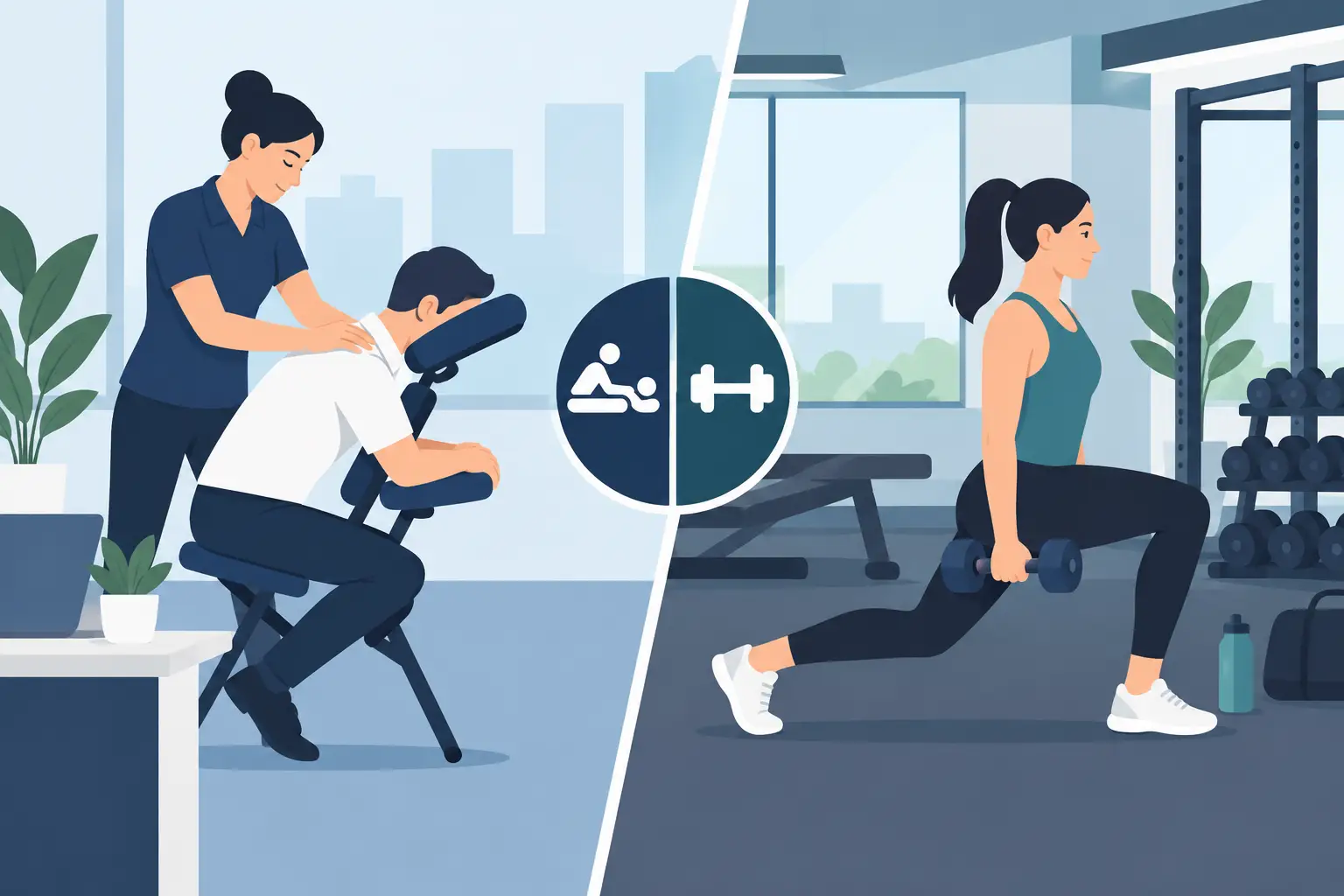
A gym membership asks an employee to make several commitments. They need to travel to a venue or use an app, change clothes, find time around work and family responsibilities, and maintain motivation over weeks or months. For people who already enjoy exercise, that can be a valuable contribution to their routine.
Workplace massage removes much of that friction. A qualified therapist arrives at the office or workplace with a purpose-built massage chair. Employees typically receive a focused seated treatment without needing to change clothes, shower or leave the building. Sessions can be scheduled around meetings, delivered as part of a wellbeing day, or offered regularly as an ongoing programme.
That difference matters for participation. A benefit only creates a return when people use it. A convenient experience delivered during the working day can reach employees who would never redeem a gym discount, including busy parents, commuters, people with limited confidence in gym settings and colleagues managing desk-based discomfort.
What each benefit is designed to achieve
Gym membership is primarily a preventative, lifestyle-focused benefit. Regular exercise can support cardiovascular health, strength, mobility, mood and sleep. It may be especially well received by employees who already have an established fitness routine or who want help making one sustainable.
Its limitation is that it is usually indirect. An employer contributes to access, but cannot easily control uptake or whether the employee uses the membership in a way that meets their needs. A low redemption rate can turn a seemingly generous perk into an underused cost.
Workplace chair massage is designed for a different moment: the employee who has spent hours at a screen, feels pressure in their shoulders and neck, or needs a short reset before returning to a demanding task. It is not a replacement for exercise, clinical treatment or a wider health strategy. It is a practical intervention that can help people feel cared for, more comfortable and better able to refocus.
The business value is also more visible. When a therapist is on site, employees see the investment being made in their wellbeing. That shared experience can lift the atmosphere of a wellbeing event, reinforce a culture of care and create a natural conversation about stress, posture and taking proper breaks.
Participation is often the deciding factor
When comparing benefits, avoid assuming that the most comprehensive offer will produce the best engagement. Ask a simpler question: how many people are likely to use it this month?
Gym membership can be highly valued by a committed minority. In a hybrid organisation, it may also offer flexibility because employees can use local facilities wherever they live. However, staff who are new to exercise, work irregular hours or face caring commitments may find it difficult to turn access into a habit.
An on-site massage service offers a lower threshold. A 15- or 20-minute chair massage can fit into a lunch break or a gap between calls. It does not require employees to be athletic, change their routine or disclose a health concern. For diverse teams, that simplicity supports a more inclusive wellbeing offer.
There is a trade-off. A single massage day has a finite number of appointment slots, so it must be planned properly for larger teams. Booking systems, session lengths and therapist numbers should match headcount and expected demand. An experienced provider can help employers organise this without adding pressure to an already busy people or operations team.
Cost should be measured against use, not just price
A gym subsidy can be easy to administer, particularly where an employer already uses a benefits platform. The headline cost per employee may appear predictable, but the meaningful figure is cost per active user. If a large share of memberships go unused, the programme may not be delivering the engagement or employer-brand value expected.
Workplace massage is usually budgeted per event, per therapist or as part of a recurring programme. This makes it easier to scale around business priorities. A company might introduce chair massage during a demanding project period, use it to support Mental Health Awareness Week, include it in a return-to-office initiative, or schedule monthly sessions as a regular benefit.
The comparison should include operational value as well as the invoice. Consider the time required to launch the benefit, manage questions, encourage take-up and demonstrate that it is helping. A well-run on-site service gives employees a clear, tangible experience while requiring little from the internal organiser beyond agreeing dates, space and communications.
Which option better supports desk-based teams?
For teams spending much of the day at laptops, workplace massage frequently addresses the more immediate concern. Long periods of sitting, repetitive movements, video calls and deadline pressure can contribute to muscular tightness and fatigue. A short chair massage focuses on common areas of tension, such as the upper back, shoulders, neck, arms and hands.
That does not mean employers should position massage as a cure for poor ergonomics or persistent pain. Good workstation assessments, sensible break habits, supportive management and access to appropriate healthcare remain essential. Massage works best as one part of a practical wellbeing programme, not as a substitute for fixing workplace conditions.
Gym membership can still complement this approach. Exercise may support strength and mobility over time, while on-site therapies help employees manage the day-to-day physical and mental load of work. If budget allows, the strongest strategy may be to offer both, with each serving a clearly defined purpose.
Choosing the right benefit for your organisation
Workplace massage is likely to be the stronger first investment if your priority is broad participation, visible employee appreciation and support for stress and desk-related tension. It is particularly suited to office-based teams, workplace events, busy periods and employers looking for a benefit that people can use immediately.
Gym membership may be the better fit if your workforce has expressed a clear preference for fitness support, works mainly remotely, or already has strong engagement with exercise initiatives. It can also be a useful component of a wider flexible benefits package, where employees choose what suits their lifestyle.
Before committing, review employee feedback rather than relying on assumptions. Look at absence themes, engagement survey comments, workplace attendance patterns and the realities of your team’s schedule. A team that says it wants to be more active may still benefit most from a service that is brought directly to them.
Make wellbeing easy to use
The most effective employee benefit is rarely the one with the most ambitious promise. It is the one that respects people’s time, responds to the pressures they actually face and demonstrates that the business takes their wellbeing seriously.
For organisations seeking a low-effort, high-visibility way to support employees, Therapy Bookings can deliver qualified, insured therapists on site across London and the UK. A simple chair massage programme may be the prompt that helps a busy employee pause, reset and feel valued at exactly the point they need it.