
A monthly wellbeing event may create a welcome buzz, but it rarely changes how a team feels during a demanding quarter. When HR and office leaders ask how often should employees get massage, the useful answer is not simply ‘as often as possible’. It is to set a regular, realistic rhythm that reflects workload, team size, budget and the outcomes the business wants to improve.
For most desk-based teams, onsite chair massage every four to six weeks is a strong starting point. It is frequent enough to provide consistent relief from stress, screen-related tension and poor posture, while remaining simple to schedule and manage. Teams under sustained pressure may benefit from fortnightly sessions, while quarterly massage can work well for recognition events, wellbeing campaigns or hybrid teams with limited office attendance.
How Often Should Employees Get Massage?
There is no universal frequency that suits every organisation. A software company working through a product launch has different needs from a professional services firm with predictable peak periods, or a business bringing people together for monthly office days.
The right cadence depends on three practical questions: how often employees experience high levels of pressure or physical discomfort; how regularly they are in the workplace; and whether massage is intended as a one-off reward or part of a wider wellbeing programme.
For many employers, a recurring monthly chair massage programme offers the best balance of impact and operational ease. It gives employees something dependable to look forward to, rather than treating wellbeing as an occasional gesture. It also allows HR teams to monitor uptake, gather feedback and adjust provision as the programme develops.
Monthly massage: the most effective starting point
A monthly onsite massage day is often the most appropriate option for organisations introducing workplace wellbeing for the first time. It creates a visible and valued employee benefit without requiring a large administrative commitment. Staff can book short sessions around their work, while the business keeps disruption to a minimum.
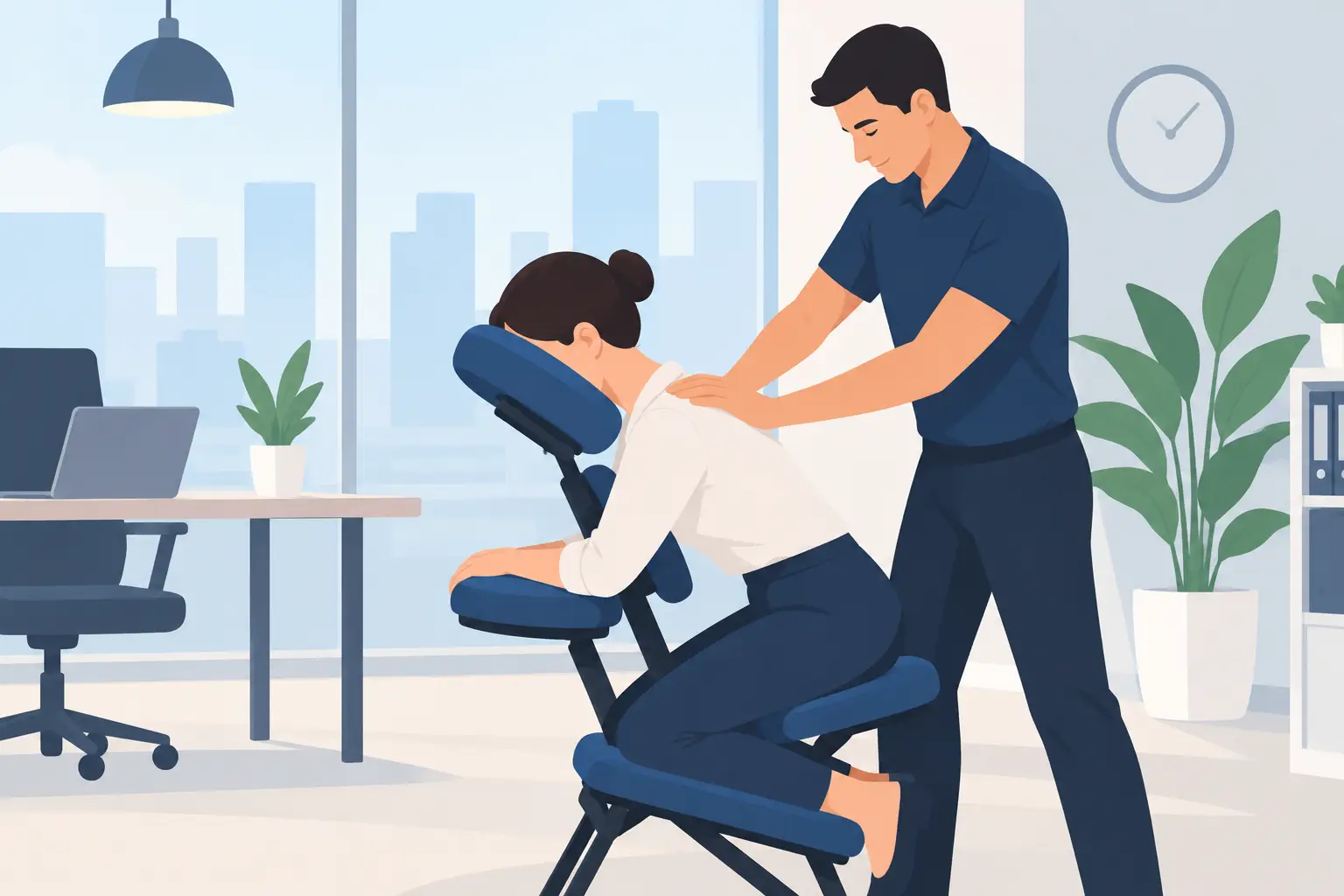
Monthly delivery is particularly effective for teams that spend long periods at laptops, in meetings or travelling between client sites. Chair massage focuses on the upper back, neck, shoulders, arms and hands, where many employees hold tension. Short sessions can provide a meaningful pause in the working day and help employees return to their tasks feeling calmer and more comfortable.
From a commercial perspective, monthly sessions also make it easier to plan a sustainable budget. Instead of spending heavily on a single annual event, employers can build regular support into their employee experience strategy and assess whether it is improving morale, engagement and attendance over time.
Fortnightly massage: for high-pressure teams
Fortnightly sessions may be appropriate when stress levels are consistently high or when a team is working through an intense period. This could include finance teams approaching year-end, customer service departments managing seasonal demand, legal and consultancy teams facing deadlines, or rapidly growing businesses where workloads are changing quickly.
More frequent massage does not mean employees need lengthy treatments. In a workplace setting, 15 to 20-minute chair massage appointments are usually enough to offer focused relief while allowing several people to participate in a day. The aim is not to replace clinical care, but to provide accessible preventative support and a practical reset before tension accumulates.
A fortnightly programme can also send a clear message that employee wellbeing is being managed proactively. For employers concerned about burnout, retention or sustained absence, regular support is generally more credible than a one-off initiative introduced after pressure has already built.
Quarterly massage: best for events and hybrid schedules
Quarterly massage is a sensible choice for companies with dispersed teams, lower office occupancy or a wellbeing budget focused on key moments throughout the year. It can work especially well alongside town halls, team days, annual conferences, mental health awareness activity or end-of-project celebrations.
The trade-off is consistency. Employees may enjoy the experience, but quarterly sessions are less likely to become part of an ongoing wellbeing routine. They are best positioned as a high-quality morale boost, rather than the sole response to regular workplace stress or musculoskeletal discomfort.
For hybrid businesses, a useful approach is to schedule massage on days when office attendance is already highest. This improves participation without asking employees to alter their routines solely for a wellbeing activity.
Match Massage Frequency to Your Business Goals
The question is not only how frequently massage should be offered. It is what the organisation needs it to achieve.
If the priority is employee recognition, a quarterly or seasonal programme may be enough. A massage day can make a team celebration feel more considered, particularly when employees have been working hard on a major delivery or organisational change.
If the goal is to support stress management and morale, monthly sessions are more suitable. Regular access helps make care visible and normalised, which is valuable in workplaces where employees may otherwise feel pressure to work through discomfort or skip breaks.
If the focus is reducing the effects of desk-based strain, employers should consider monthly or fortnightly massage alongside practical measures such as workstation assessments, assisted stretching, movement education and ergonomic guidance. Massage can help ease muscular tension, but it works best as part of a broader approach to healthy working habits.
For businesses looking to strengthen retention and employer brand, consistency matters. Employees notice whether wellbeing support is occasional or embedded in how the organisation operates. A well-run recurring programme demonstrates care in a tangible way, without creating a complicated benefit for HR or office managers to administer.
Make the Programme Easy for Employees to Use
Even an excellent massage programme will have limited impact if staff cannot access it easily. Offer appointments during core office hours and allow employees to book discreetly in advance. Clear communication matters: explain that chair massage is fully clothed, typically delivered in short sessions and designed to fit around the working day.
Managers should be encouraged to participate and to protect booked appointment times. When leaders treat wellbeing sessions as legitimate use of work time, employees are less likely to feel guilty about stepping away from their desks.
It is also worth reviewing participation after the first few sessions. If appointments fill immediately, additional therapist capacity or more frequent visits may be justified. If uptake is lower than expected, the issue may be timing, communication or office attendance rather than lack of interest.
Qualified therapists should always carry out a short consultation before treatment and adapt their approach where needed. Employees with certain health conditions, recent injuries or pregnancy may require adjustments or may be advised to seek medical guidance. Workplace massage is a supportive service, not a substitute for medical assessment or treatment.
A Sensible Frequency Plan for Growing Teams
For an employer unsure where to begin, start with a monthly chair massage day for three months. This gives employees enough opportunity to experience the benefit and gives the business meaningful feedback on demand, preferred appointment lengths and the most suitable day of the week.
At the end of that period, review simple measures: booking rates, attendance, repeat participation and employee comments. Consider whether the programme is helping the team feel valued, whether it is reaching those most likely to benefit, and whether other services such as reflexology, hand massage or assisted stretching would complement it.
Therapy Bookings can help employers shape an onsite wellbeing programme around team size, office patterns and business priorities, with qualified and insured therapists available across London and the UK. The service should feel straightforward for the organiser and worthwhile for every employee who takes part.
The best frequency is the one your organisation can maintain with purpose. Start with a regular rhythm, listen to employees and refine the programme as your workplace needs change.