
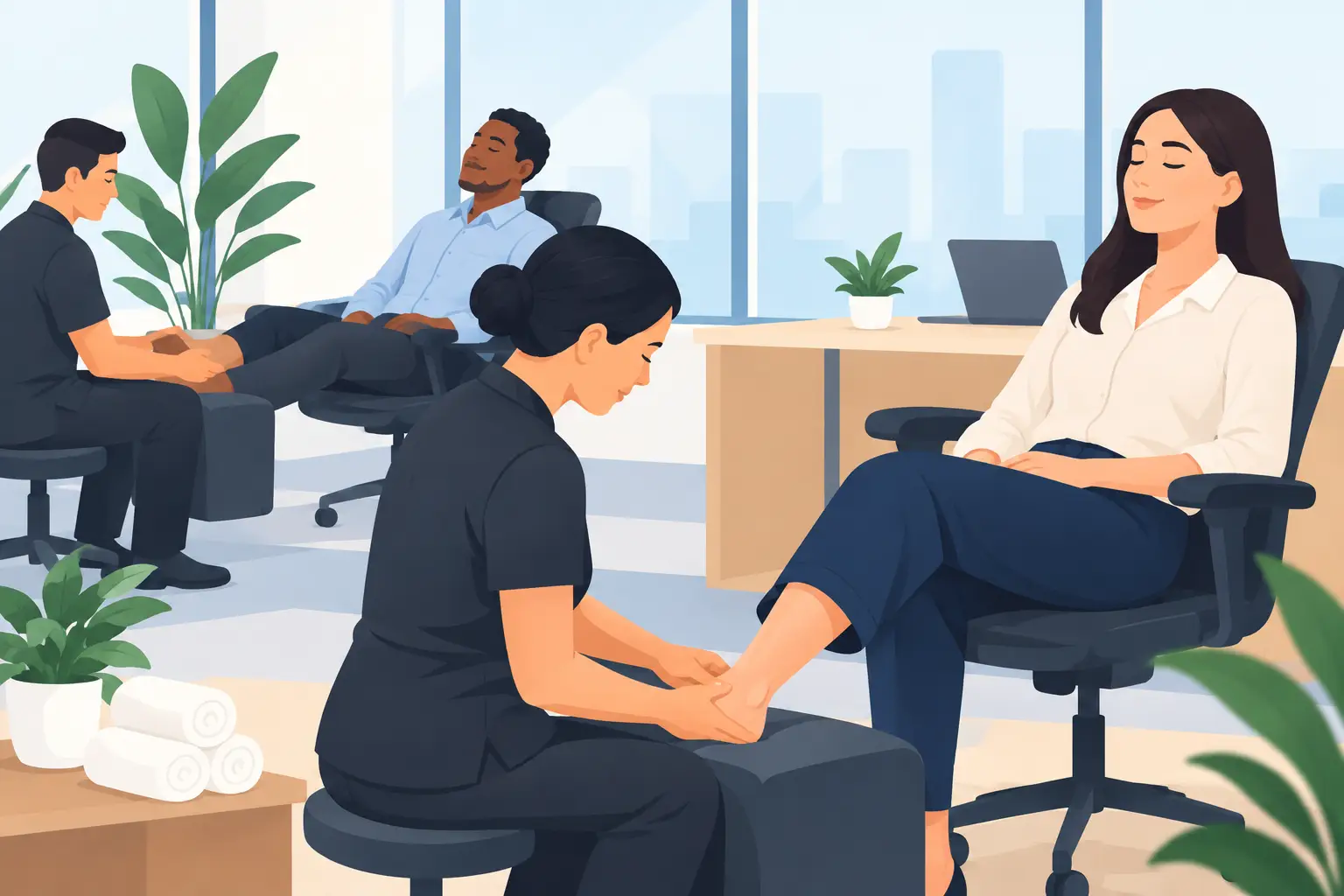
A wellbeing initiative only works when people can actually use it. That is why knowing how to book office reflexology means more than choosing a date and inviting employees to sign up. The most successful sessions are easy to access, professionally delivered and planned around the working day, so employees feel cared for without operations grinding to a halt.
Office reflexology brings a qualified therapist into your workplace to provide focused treatment to the feet. Employees remain fully clothed, sessions are typically delivered in a quiet meeting room or suitable private area, and appointments can be scheduled in short, manageable slots. For desk-based teams dealing with long hours, pressure and screen fatigue, it is a practical way to create a proper pause in the day.
Start with the business outcome you want to support
Before requesting a quote, decide what you want the service to achieve. A one-off reflexology day can work well as a reward after a demanding project, a wellbeing feature during an internal event or a thoughtful addition to a seasonal staff initiative. Regular sessions may be a better fit if your aim is to build a more consistent culture of support around stress, morale and retention.
This distinction matters because it shapes the format. A growing business may want a half-day programme for a compact team, while a larger employer might need recurring full-day visits across several floors or sites. If attendance is likely to be high, shorter sessions can help more people take part. If your priority is deeper relaxation and a premium employee experience, longer appointments may be more appropriate.
Treat reflexology as part of your employee wellbeing plan, not simply a perk to fill an empty calendar slot. Clear objectives make it easier to choose the right schedule, communicate the benefit internally and assess whether employees found it valuable.
Choose an office reflexology provider with the right safeguards
The lowest price is rarely the only consideration. You are inviting a practitioner into your workplace and asking employees to place their trust in the service, so qualifications, insurance and professional delivery standards are essential.
Ask potential providers about therapist credentials, public liability insurance, experience in corporate settings and how they manage health screening or contraindications. A reputable provider should be able to explain what employees can expect, which conditions may require a conversation with the therapist first, and when treatment should be adapted or declined. Reflexology is a complementary therapy and should not be presented as a diagnosis or replacement for medical care.
Operational experience is equally important. Workplace therapists need to arrive on time, set up efficiently, protect privacy and work confidently around the realities of a busy office. For employers with teams outside London, check that the provider can deliver consistently across your locations rather than relying on ad hoc local availability.
Confirm the format, timings and space
A good booking process begins with straightforward practical details. Share your preferred date or date range, office location, approximate headcount and whether the session is intended for all employees or a particular group. Your provider can then recommend the number of therapists, appointment length and total service time.
Most office reflexology sessions can be organised with minimal disruption, but the room matters. Choose a clean, quiet and reasonably private space where employees can relax without colleagues walking through. A meeting room is often ideal. The therapist will usually bring the necessary equipment, although it is sensible to confirm access requirements, seating, lighting and whether there are any building check-in procedures.
Think carefully about appointment timings. Back-to-back sessions are efficient, but allow a small buffer for employees arriving from meetings or returning to client calls. Booking during the middle of the day can suit office attendance patterns, while early morning or late-afternoon slots may help shift-based or hybrid teams participate.
Decide how employees will access appointments
For most organisations, a pre-booked schedule offers the best balance of fairness and efficiency. Employees select a slot in advance, receive a reminder and know exactly when to attend. This reduces queues, avoids interruptions and gives managers visibility of time away from desks.
Walk-in sessions can create an enjoyable event atmosphere, particularly at wellbeing fairs or launch days, but they can also mean some employees miss out. A hybrid approach often works well: reserve most appointments in advance and keep a small number available on the day.
If your culture allows it, make participation voluntary and keep communications inclusive. Not everyone will want a treatment, and that is fine. Position it as an optional opportunity to take a restorative break rather than an expectation to engage.
Communicate the benefit clearly
The internal message can determine whether your booking is fully used or leaves empty slots. Employees need to understand what reflexology involves, how long it takes and that they can remain clothed. They also need practical reassurance: where to go, whether they need to bring anything and how to cancel if work commitments change.
Keep the language grounded. Rather than making sweeping health claims, explain that the session is designed to support relaxation and provide a calm break from the demands of the day. Connect the initiative to your wider commitment to employee wellbeing, particularly during periods of high workload, organisational change or return-to-office adjustment.
A concise announcement, calendar invitation and reminder the day before are usually enough. Encourage managers to protect booked slots where possible. When leaders visibly support participation, employees are far more likely to feel comfortable stepping away from their desks.
How to book office reflexology without creating admin work
The smoothest arrangements put the provider in charge of the delivery detail while your team retains control over dates, attendance and budget. When you enquire, provide a short brief covering your objectives, location, team size, preferred dates and any accessibility or site requirements. A capable corporate wellness provider should turn this into a clear proposal rather than leave you to piece together the logistics.
Before confirming, make sure the scope is clear. Check the number and length of sessions, how many therapists will attend, what equipment is included, how employee bookings will be managed, cancellation terms and whether travel is included. If you operate multiple sites, ask whether the same programme can be replicated elsewhere with a single point of contact.
For recurring programmes, agree a review point after the first few visits. Attendance levels, employee comments and manager feedback will show whether the format is right. You may find that a different day, longer booking window or an additional therapist improves uptake. Flexibility is valuable, but a regular rhythm is what helps wellbeing become part of the employee experience rather than a one-off gesture.
A practical booking checklist
Before your office reflexology day, confirm these essentials:
- Your purpose, budget, preferred dates and expected participant numbers.
- Qualified, insured therapists with workplace experience.
- A private, accessible room and clear building access arrangements.
- Session lengths and a booking method that suits your team.
- Employee communications, reminders and a named onsite contact.
Measure what matters after the session
Not every wellbeing benefit can be reduced to a single figure, but feedback should still inform your next decision. Send a short optional survey asking employees whether the session was easy to access, professionally delivered and worthwhile. You can also track booking uptake, no-shows and requests for future sessions.
For HR and people teams, look beyond a simple satisfaction score. Did the initiative help reinforce a culture where people feel supported? Did it create positive conversation across the office? Was it particularly valued during a stressful period? These insights can help you build a more balanced programme that combines therapeutic support with other practical interventions such as chair massage, assisted stretching or nutrition consultations.
Therapy Bookings can help employers arrange qualified onsite reflexology as part of a flexible workplace wellbeing programme, whether you are planning one focused event or a recurring service across UK locations.
The best first booking does not need to be complicated. Start with a well-chosen date, a private room and a provider that understands corporate delivery. When employees can step away, reset and return to their work feeling genuinely looked after, the value reaches well beyond the appointment itself.