
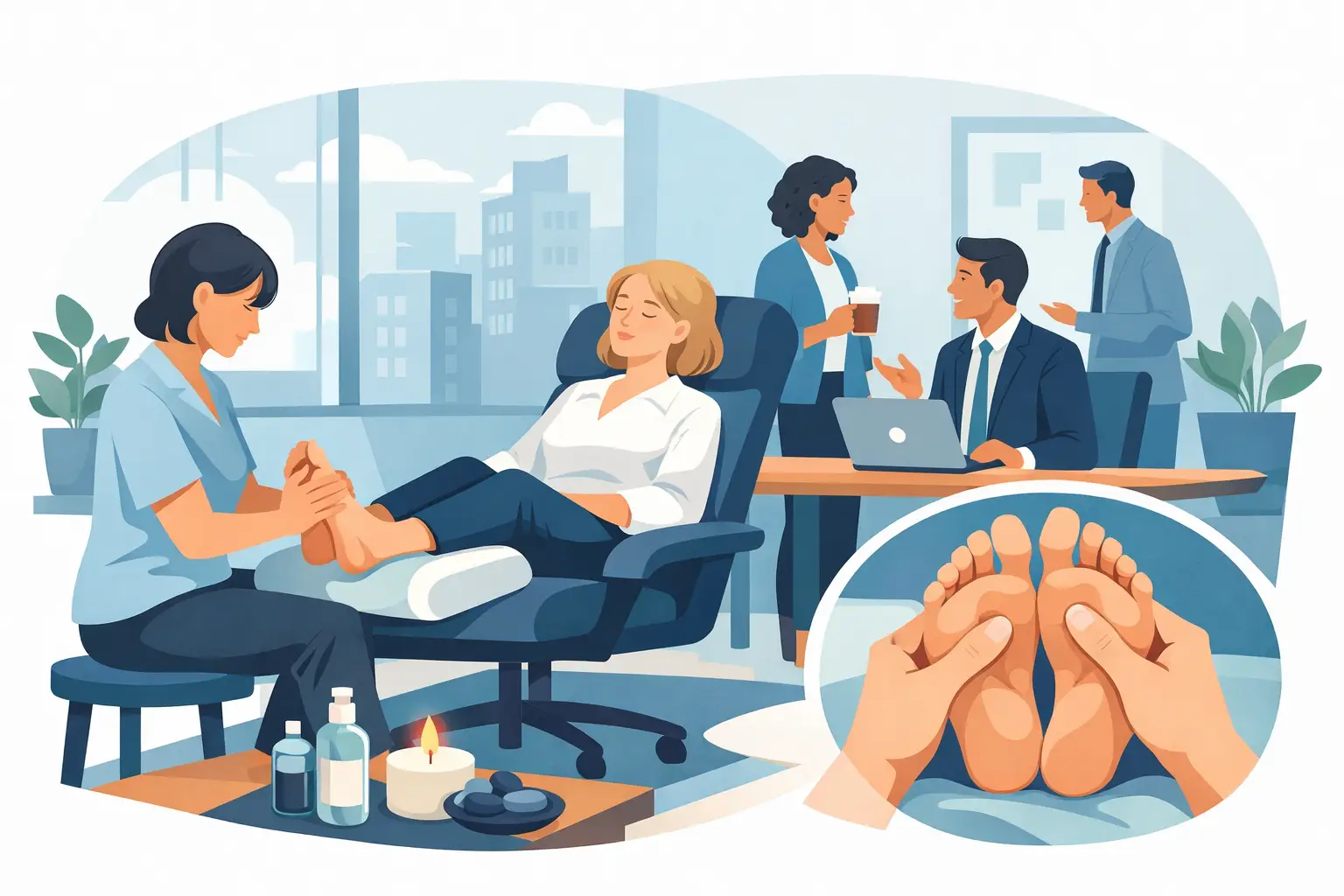
A full diary, constant notifications and long periods at a desk can leave employees feeling physically tense long before they call themselves stressed. Corporate reflexology sessions give people a practical, time-efficient opportunity to pause, reset and feel looked after without leaving the workplace. For employers, that makes reflexology more than a pleasant perk: it can be a visible, well-run part of a wider strategy for morale, engagement and sustainable performance.
Reflexology is usually delivered as a focused treatment on the feet, although hand reflexology can be a useful alternative where footwear removal is unsuitable or employees prefer it. The therapist applies pressure to specific areas using established complementary therapy techniques. People often choose it for relaxation and a sense of relief from everyday tension. It should not be presented as a medical treatment or a substitute for clinical care, but it can be a valuable wellbeing experience in a busy working environment.
Why corporate reflexology sessions suit desk-based teams
Many workplace wellbeing initiatives fail because they ask too much of employees. A weekly class held outside working hours, or a benefit that requires lengthy travel, will only reach a small proportion of the team. Onsite reflexology is different. It is delivered at the office, booked in short appointments and designed to fit around meetings, shift patterns and project deadlines.
For an employee who has spent hours at a screen, even a 20-minute appointment can create a genuine break from the pace of the day. The benefit is not only the treatment itself. It is the permission to step away from the desk, put the phone aside and return with more mental space. That matters in organisations where people are working hard but beginning to show the signs of digital fatigue, pressure and low energy.
The business value comes from consistency of experience. A well-organised reflexology day is inclusive, easy to access and appreciated by people who may not engage with gym memberships, team sports or more vocal wellbeing initiatives. It helps an employer demonstrate care in a way employees can feel immediately.
What employees can expect from a workplace session
Corporate reflexology sessions are designed for professional settings, not a spa-day schedule. A qualified therapist arrives with the required equipment and prepares a quiet, clean treatment area, often in a meeting room or private wellbeing space. Employees book a convenient slot and remain fully clothed, other than removing shoes and socks for foot reflexology.
A short consultation takes place before the treatment. This allows the therapist to understand the employee’s needs, check for relevant health considerations and explain what will happen. The therapist then delivers a tailored session, applying controlled pressure to areas of the feet. Appointments commonly last 20 to 30 minutes, although timing can be adjusted around the size of the team and the purpose of the event.
Employees do not need prior experience of reflexology. Some will value the chance to relax; others may simply welcome a comfortable, quiet break in the middle of a demanding day. Setting expectations clearly is helpful: the aim is a restorative wellbeing experience, rather than a promise to diagnose or treat health conditions.
Foot reflexology or hand reflexology?
Foot reflexology is often the preferred option because many employees find it particularly relaxing. It works well where a private room is available and the workplace culture supports a more traditional treatment format.
Hand reflexology can be a strong alternative for office events, exhibitions, shared workspaces and settings where time or privacy is limited. It is also useful for employees who would rather keep their shoes on. The best choice depends on the venue, workforce preferences and how many appointments need to be delivered in the available time. Offering both formats can make the programme more accessible.
The operational detail that makes the difference
A positive wellbeing event depends as much on delivery as it does on the treatment. HR and office teams should not have to spend days managing schedules, answering clinical questions or sourcing equipment. The provider should make the experience straightforward from first enquiry to the final appointment.
Start with a realistic estimate of participation. If a company has 80 employees but only one therapist for a half-day, not everyone will receive a session. That is not necessarily a problem, but it needs to be communicated honestly. A smaller team may be fully covered in one day, while a larger organisation may need multiple therapists, a full-day programme or rotating monthly visits.
A private room is usually ideal. It should be quiet enough for employees to relax, large enough for the treatment setup and easy to reach without people feeling on display. Where meeting rooms are scarce, an experienced provider can advise on practical alternatives. Timing also matters. Mid-morning and mid-afternoon appointments often work well, while avoiding peak meeting periods reduces cancellations.
Booking is another common friction point. A clear appointment system with short instructions helps employees take part without creating extra work for the organiser. It is sensible to include a reserve list, as diaries change and last-minute spaces are common. The employer should also share basic guidance on arrival time, clothing and any health information employees may need to raise privately with the therapist.
Turning a one-off perk into a credible wellbeing programme
A single reflexology day can be an effective way to mark Employee Appreciation Day, a company milestone, a return-to-office initiative or a particularly demanding period. It creates energy and gives employees something tangible to talk about. For teams under sustained pressure, however, regular provision is often more meaningful than an occasional gesture.
Monthly or quarterly sessions can become part of a broader workplace wellbeing plan alongside chair massage, assisted stretching, nutrition consultations or health-focused events. The right mix depends on what the organisation is trying to address. A team reporting high stress may benefit from relaxation-led treatments. A workforce with widespread posture concerns may respond well to chair massage and stretching alongside reflexology.
The key is to avoid treating wellbeing as a box-ticking exercise. Ask employees what would make support easier to use, then review uptake and feedback after each event. Are particular departments unable to attend because of client calls? Are appointment lengths right? Is demand higher than capacity? These practical answers help refine the next booking and show employees that their feedback leads to action.
Measuring value without overclaiming
Wellbeing services should be measured sensibly. Reflexology cannot solve poor workload management, unclear priorities or an unhealthy culture. Nor should employers claim that one treatment day will reduce absence by a fixed amount. Those outcomes are influenced by many factors.
What can be assessed is participation, repeat demand, employee feedback and perceived impact on stress, mood and feeling valued. Short post-event surveys are useful when they ask focused questions: whether the booking process was easy, whether the session helped the employee take a proper break, and whether they would use the service again. HR teams can then consider that evidence alongside wider engagement, retention and absence data over time.
This approach makes the programme more credible internally. Finance and leadership teams are more likely to support continued investment when the service is well used, operationally simple and connected to clear people objectives.
Choosing a corporate reflexology provider
The quality of the therapist and the reliability of delivery should be central to the decision. Corporate settings require more than technical treatment skills. Therapists need to be qualified, insured, professional with employees at every level and comfortable working to a busy office timetable.
Look for a provider that can explain how it manages therapist credentials, consultations, confidentiality and health considerations. Nationwide coverage may matter for organisations with offices beyond London, while a deep local network can be especially useful for short-notice events. It is also worth asking how the provider handles changes to attendee numbers, room constraints and repeat bookings.
Therapy Bookings supports employers with qualified therapists and flexible onsite wellbeing formats across London and the UK. The objective is straightforward: make employee support easy to organise while delivering an experience people genuinely want to use.
Questions employers often ask
How long should each session be?
Twenty to 30 minutes is usually the most effective balance between a meaningful treatment and practical diary management. Shorter sessions can work for large events, while longer appointments may suit a smaller team or a premium wellbeing day.
Is reflexology suitable for everyone?
Most employees can take part, but individual suitability depends on their health circumstances. A qualified therapist will conduct a brief consultation and may adapt or decline a treatment where appropriate. Employees should always be encouraged to share relevant information directly and privately.
Do we need a dedicated wellbeing room?
Not necessarily, although privacy improves the experience. A quiet meeting room is often sufficient. The provider should advise on the space required before the event, so there are no surprises on the day.
The most effective wellbeing programmes are not the flashiest. They are the ones employees can access easily, trust and return to when work becomes demanding. A thoughtfully planned reflexology session gives people a pause that feels personal, while showing that the organisation takes everyday wellbeing seriously.