
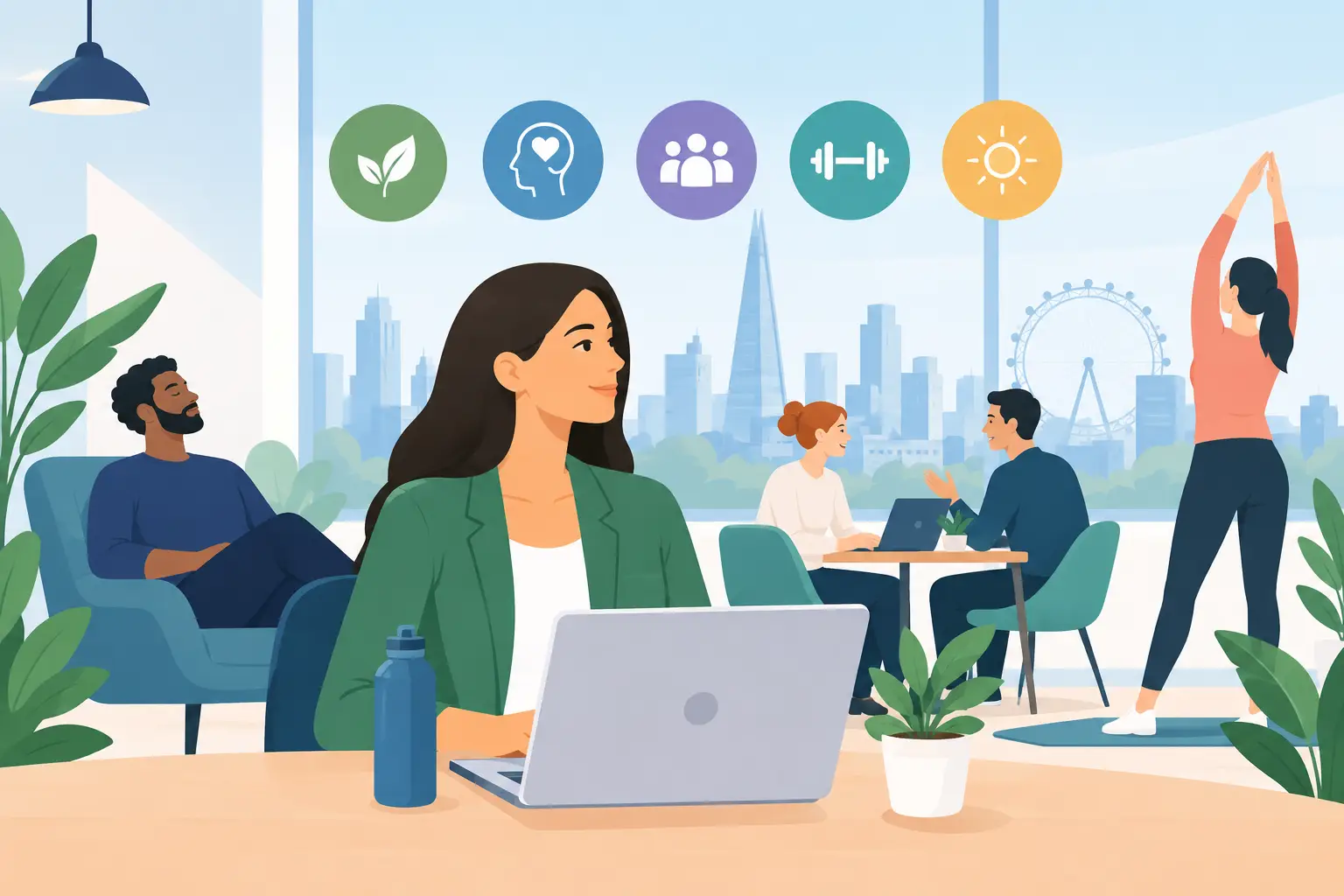
A monthly fruit delivery and a wellbeing app may still be appreciated, but they are no longer enough to address the pressures facing desk-based teams. Future workplace wellbeing trends point towards practical, visible support that helps people feel better during the working day while giving employers a clearer view of participation, morale and value.
For HR leaders, office managers and founders, the shift is significant. Wellbeing is moving from a collection of optional perks to a more considered part of workforce planning. The employers that gain most will not necessarily offer the longest list of benefits. They will make support easy to access, relevant to real working conditions and credible enough for employees to use.
Future workplace wellbeing trends changing employer priorities
The next phase of workplace wellbeing is shaped by a simple reality: employees are managing sustained workloads, digital fatigue and physical discomfort alongside changing expectations of work. Hybrid arrangements have brought flexibility, but they can also blur boundaries, reduce informal connection and make early signs of stress easier to miss.
This means employers are looking beyond broad wellbeing messaging. They want services that meet people where they are, whether that is in a London office, a regional hub or a workplace gathering teams together for a key day. They also want programmes that can be delivered without placing another task on already stretched people teams.
Preventative support will take priority over crisis response
Mental health support remains essential, particularly where employees need specialist or clinical care. However, more organisations are recognising the value of acting before stress develops into absence, disengagement or burnout. Preventative wellbeing is not a replacement for formal employee assistance programmes or occupational health provision. It is the regular, practical layer that can help reduce everyday strain.
For office-based teams, this often means addressing the physical effects of work as well as the mental ones. Hours at a screen can contribute to neck and shoulder tension, repetitive strain, headaches and poor posture. Chair massage, assisted stretching and spinal analysis offer an accessible way to focus on these concerns in the workplace, without employees needing to change clothes or leave the site for long periods.
The commercial case is straightforward. When employees feel cared for before problems escalate, organisations have a better opportunity to protect energy, concentration and attendance. The outcome will vary by workforce and cannot be guaranteed by a single session, but consistent support can reinforce a healthier, more attentive culture.
Personalisation will matter more than a one-size-fits-all benefit
A workforce may share an employer, but it does not share one wellbeing need. Some employees are seeking relief from muscular tension. Others may benefit from guidance around nutrition, stress management or movement. A wellbeing programme that gives people a degree of choice is more likely to feel relevant than a generic initiative designed to suit everyone equally.
This does not require an overly complicated benefits menu. It means choosing a small range of services that reflect the workforce, its working environment and the objectives of the business. A fast-growing company might use onsite chair massage to support a high-pressure team during busy periods. An established organisation could combine massage therapy with nutrition consultations during a wider wellbeing campaign. For teams returning to the office more regularly, a wellbeing day can help make the workplace feel purposeful and welcoming.
The right mix depends on practical factors too: available space, shift patterns, headcount, budget and how frequently employees are together. Flexible delivery is often more valuable than an ambitious programme that is difficult to organise.
Wellbeing will become part of the employee experience
Employees increasingly judge a workplace by how it feels on an ordinary Tuesday, not only by what happens during an annual benefits launch. That puts wellbeing closer to employee experience, workplace culture and retention.
Visible onsite services can be particularly effective because they turn an intention into an experience. A qualified therapist arriving at the office, setting up professionally and providing short, focused sessions sends a clear message that employee time and comfort matter. It also creates a positive point of connection between colleagues, especially in hybrid workplaces where people may have fewer shared moments.
There is a balance to strike. Wellbeing should never be used to gloss over excessive workloads, poor management or unclear priorities. No massage session can compensate for a culture that normalises burnout. But when paired with sensible workload management and supportive leadership, practical wellbeing services can make care more tangible.
Social connection will be designed, not left to chance
Hybrid work has changed the role of the office. For many employees, travelling in needs a clearer purpose than simply sitting at a different desk. Future programmes will therefore support connection as well as individual health.
Wellbeing events can give colleagues a reason to pause and interact outside project discussions. Short chair massage sessions, reflexology, hand massage or assisted stretching are suitable for this because they fit around the working day and do not demand a high level of commitment from participants. They can work equally well as part of a team event, a recognition initiative or a regular onsite programme.
For employers, the operational detail matters. Booking slots, clear communications, qualified and insured therapists, and minimal disruption all influence uptake. A service that is easy for employees to use and easy for an office manager to run is far more likely to become a valued part of workplace life.
Measuring participation will matter, but so will trust
Wellbeing budgets will face closer scrutiny as businesses seek evidence of return on investment. This is a positive development when measurement is used sensibly. Employers should understand whether people are using a service, what they value and whether the programme supports wider aims such as engagement, retention or reducing stress-related absence.
However, not every outcome can be reduced to a spreadsheet. A confidential therapy session should remain confidential. Employers should avoid collecting personal health information simply to prove that an initiative is working. Better measures include booking levels, repeat participation, anonymous feedback, event attendance and broader employee engagement indicators over time.
It is also worth separating activity from impact. High uptake is encouraging, but it does not automatically show improved wellbeing. Low uptake does not always mean a service lacks value either – it may point to poor timing, limited communication or a format that does not suit the team. Reviewing the data alongside employee feedback gives a more useful picture.
Manager capability will remain essential
Employers are investing more in wellbeing, yet managers still shape much of the everyday employee experience. A manager who notices sustained pressure, respects boundaries and encourages breaks can make formal support more effective. A manager who praises overwork can undermine it quickly.
The trend is towards clearer responsibility: senior leaders set the standard, managers apply it consistently and wellbeing providers contribute specialist support. External services are most successful when they complement this internal foundation rather than being treated as a standalone solution.
How to turn wellbeing trends into a workable programme
The best starting point is not asking which benefit is most fashionable. It is identifying the workplace issue worth addressing. Is the business trying to improve office attendance and connection? Are employees reporting tension and screen-related discomfort? Is a demanding period creating obvious stress across teams? The answer should guide the format.
Next, make participation straightforward. Offer sessions during normal working hours, use a familiar office space, communicate what employees can expect and ensure the experience does not feel intrusive. For an onsite therapy programme, short appointments are often easier to accommodate than lengthy sessions, particularly in busy offices.
Then review and adapt. A one-off wellbeing event can be an excellent way to recognise employees or introduce a new service. An ongoing programme is usually better suited to organisations seeking regular engagement and a sustained wellbeing presence. Neither option is automatically better. The choice depends on the business objective, employee feedback and available budget.
Therapy Bookings supports employers across London and the UK with flexible onsite wellbeing services delivered by qualified, insured practitioners. For organisations that want to make wellbeing practical rather than performative, the value lies in combining a considered plan with reliable delivery.
The most useful workplace wellbeing programme is rarely the most elaborate one. It is the one employees can genuinely use, managers can confidently support and the business can maintain long enough for care to become part of how work gets done.