A wellbeing day can look excellent on paper and still miss the mark if the therapy does not suit the way your people work. When considering reflexology versus chair massage, the right choice is not simply about which treatment feels more relaxing. It is about employee needs, available space, appointment flow and the outcome you want the day to support.
For desk-based teams, both services offer a practical break from screens, meetings and sustained concentration. They can help employees feel recognised, create a positive moment in a demanding week and reinforce a culture that takes wellbeing seriously. Their delivery and focus, however, are distinctly different.
Reflexology versus chair massage: the key difference
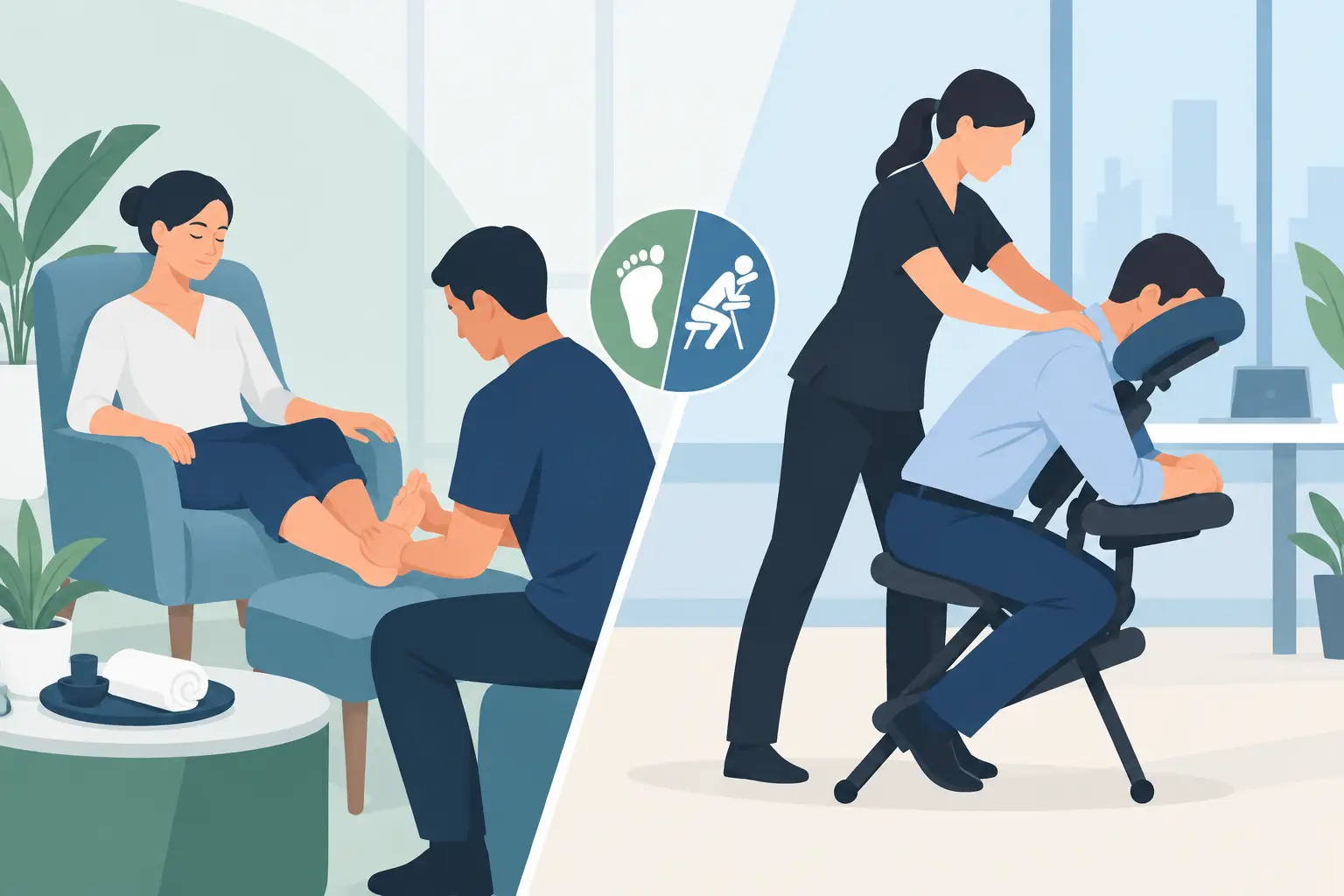
Chair massage is a clothed, seated treatment focused on the upper body. A qualified therapist works through clothing on areas commonly affected by desk work, including the neck, shoulders, back, arms and hands. Sessions are usually short, making chair massage particularly effective for busy offices, larger teams and event-style wellbeing days.
Reflexology is a foot-focused complementary therapy. The practitioner applies pressure to specific areas of the feet, based on the principles of reflex points corresponding with different parts of the body. Employees remain seated or reclined, with shoes and socks removed for the treatment. It is often chosen by people looking for a quieter, more restorative experience.
Neither is inherently better. Chair massage tends to address the physical patterns employees readily associate with computer-based work, such as shoulder tension and a stiff upper back. Reflexology offers a more individual, calming pause that can appeal to employees who prefer not to receive upper-body massage.
What chair massage brings to the workplace
Chair massage is designed for convenience. There is no need for employees to change clothes, no oils are required and a portable ergonomic massage chair can be set up in a meeting room, breakout space or suitable quiet area. This reduces administration for the organiser and makes the experience accessible during a normal working day.
For employers, the operational advantage is significant. Sessions can commonly run for 10 to 20 minutes, allowing a substantial number of employees to participate without being away from their desks for long. That makes chair massage a strong option for office wellbeing days, recognition events, conferences and ongoing workplace wellness programmes.
The treatment is also easy for employees to understand. Most people can immediately connect a massage focused on the shoulders, neck and back with the effects of prolonged sitting, video calls, laptop work and commuting. While it should not be presented as a cure for musculoskeletal conditions, it can provide a welcome sense of relief and relaxation, particularly when paired with sensible ergonomic support and regular movement.
Chair massage can support workplace engagement because it feels immediate and inclusive. Employees do not need prior experience of complementary therapies to take part, and the short format makes it easier to fit into a busy diary. For organisations trying to encourage uptake of wellbeing benefits, low-friction services matter.
Where reflexology can be the better fit
Reflexology creates a different kind of experience. It is less about targeting the upper-body discomfort of desk work and more about offering calm, comfort and dedicated personal time. For employees who spend their day making decisions, dealing with clients or moving between high-pressure meetings, a foot treatment can feel like a genuine reset.
It can also be an excellent addition where employee preferences are varied. Some people are uncomfortable with massage around their shoulders or back, even when fully clothed. Others may have mobility restrictions, skin sensitivities or personal reasons for preferring a treatment that is focused on the feet. Offering reflexology gives more people a route into workplace wellbeing on their own terms.
The trade-off is throughput and setup. Reflexology commonly requires slightly longer appointments and a reclined chair, couch or suitably comfortable treatment position. Employees also need to remove footwear and socks, so organisers should provide a private, clean and quiet room rather than a high-traffic office area. This is entirely manageable, but it calls for a more considered booking schedule.
For smaller teams, leadership away days and organisations looking to deliver a premium wellbeing experience, this added intimacy can be a benefit rather than a limitation. It signals that the business is investing in meaningful support, not merely filling a calendar with a one-off perk.
Choosing based on your business objective
The most useful starting point is to decide what the programme needs to achieve. If your priority is to reach as many employees as possible in a limited window, chair massage will usually be the more efficient choice. It is highly visible, straightforward to communicate and well suited to a fast-moving office environment.
If the aim is deeper relaxation, a more personal appointment or a therapy option that broadens your wellbeing offer, reflexology may be the stronger fit. It can work particularly well as part of a recurring programme, where employees can book a longer session and build a regular wellbeing habit.
There is also a cultural consideration. A creative agency preparing for a major client pitch may value quick chair massage sessions that help the whole team pause and recharge. A professional services firm supporting a smaller group through an intense period may prefer reflexology appointments that offer privacy and calm. The service should reflect the working reality of the team, not just the available budget.
For many employers, a blended approach works best. Chair massage can form the high-capacity centrepiece of a wellbeing day, while reflexology provides an alternative for employees with different preferences. This helps avoid the common issue of offering a benefit that only a small section of the workforce feels comfortable using.
Practical planning: space, timing and participation
Both therapies are simple to bring onsite when delivered by qualified, insured practitioners, but the details affect the employee experience. Chair massage needs a relatively compact, private or semi-private space with enough room for the therapist to work safely around the chair. Reflexology needs a quieter environment and more privacy, along with a comfortable reclining position.
Appointment management is equally important. Short, pre-booked slots minimise disruption and give employees confidence that they will not spend their break waiting. For drop-in events, clear signage and realistic expectations around session length can maintain a positive atmosphere. Managers should also be encouraged to protect participation time rather than treating it as something employees must fit around an already overloaded day.
Communication should be practical and inclusive. Explain what employees can expect, how long the session will take and that treatments are clothed in the case of chair massage. Invite employees to share relevant health information confidentially with the therapist, who can advise on suitability and adapt the treatment where appropriate. Complementary therapies are not a replacement for medical assessment or treatment, especially where someone has persistent pain, injury or a health concern.
Measuring value beyond a feel-good moment
Workplace wellbeing is more credible when it is connected to organisational outcomes. Neither reflexology nor chair massage should be judged solely by how many appointments were filled. Useful measures include participation across departments, repeat demand, employee feedback, perceived stress levels and whether people felt the company made time for their wellbeing.
For recurring programmes, HR and people teams can track trends over time alongside engagement survey results, absence patterns and retention indicators. It is rarely possible to attribute a business result to one service alone, but consistent, well-delivered wellbeing support can contribute to a healthier employee experience. That is particularly valuable when paired with workload management, flexible practices, manager training and ergonomic improvements.
Therapy Bookings helps employers make this process straightforward by matching qualified therapists and flexible delivery formats to the size, location and goals of each workplace programme. Whether the requirement is a one-off London office event or a wider UK wellbeing initiative, the operational model should be simple for the organiser and worthwhile for employees.
The best choice is the one employees will genuinely use. Choose chair massage when your priority is efficient, familiar relief for a broad desk-based team. Choose reflexology when you want a quieter, more personalised restorative experience. And when your workforce needs both, giving people that choice is often the clearest demonstration that wellbeing is being treated as a practical business commitment, not a token gesture.