
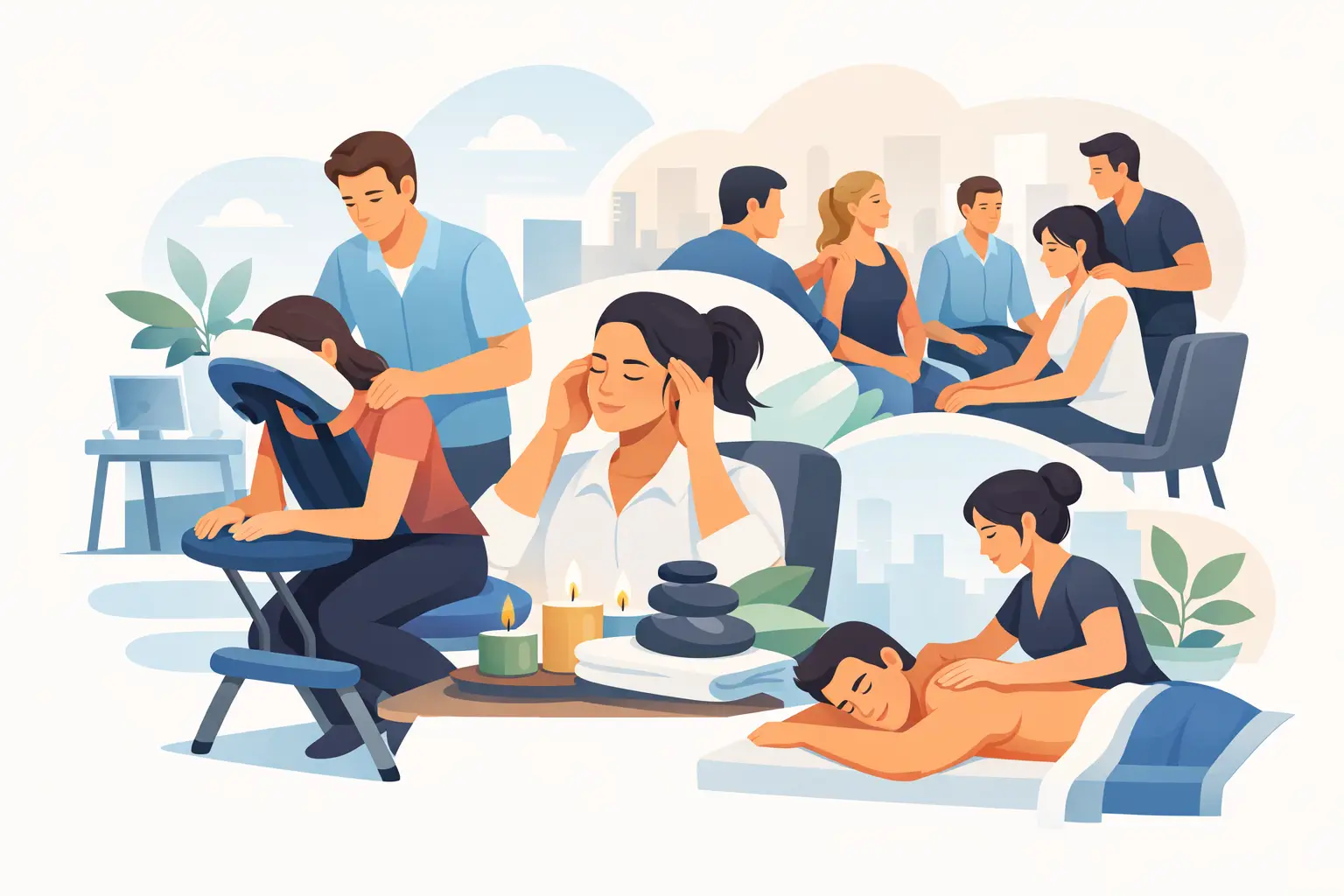
A tense team does not always look stressed. It can look like back-to-back video calls, missed lunch breaks, rising sick days and a quieter office by 4pm. The best workplace massage ideas address that everyday pressure in a format employees can use without changing clothes, leaving the building or losing half a working day.
For HR teams and office managers, the objective is not simply to offer a pleasant perk. A well-run massage programme gives people a practical pause from desk-based strain while signalling that the business takes sustainable performance seriously. The most effective format depends on your workforce, workspace and budget, but the following options make employee wellbeing straightforward to introduce.
10 best workplace massage ideas for modern teams
1. Onsite chair massage for busy office days
Chair massage is often the strongest starting point for a workplace. Employees remain fully clothed while a qualified therapist works on the upper back, shoulders, neck, arms and hands in a specialist ergonomic chair. Sessions commonly last 10 to 20 minutes, making them easy to schedule around meetings.
It is particularly suitable for teams reporting neck tension, tight shoulders and screen fatigue. From an operational point of view, it requires very little space and no treatment room. A quiet meeting room, breakout area or screened-off office corner is usually sufficient.
2. Regular massage days rather than a one-off treat
A single wellbeing event can create a welcome lift in morale. A recurring monthly or quarterly programme is more likely to become part of how employees manage pressure at work. It also gives employers a clearer picture of take-up and helps ensure that staff on different working patterns get an opportunity to participate.
Regularity matters most where workloads are consistently intense or teams spend long periods at desks. A smaller, dependable programme may have more value than one large annual event because it demonstrates ongoing care rather than a short-lived gesture.
3. Desk-side hand and arm massage
Hand and arm massage is a highly accessible choice for employees who may be reluctant to book a longer treatment. It is useful for keyboard-heavy roles, call centre teams and people who experience repetitive tension through their hands, forearms and wrists.
Because it can be delivered quickly at a desk or nearby wellbeing area, this option works well during busy periods. It is also a considerate inclusion for workplaces with limited private space. Employees can receive a focused treatment without needing to step away for long.
4. Reflexology sessions for a calm wellbeing event
Reflexology focuses on pressure points in the feet and can be provided while the employee sits comfortably in a chair. It offers a quieter, more restorative experience and can suit wellbeing days, appreciation events and smaller groups where people have time to slow down.
This is not always the highest-throughput option, so it is best planned with realistic appointment numbers. Where chair massage may support a large office over one day, reflexology can be positioned as a premium element for a more intimate event or a rotating programme.
5. Assisted stretching for posture and movement breaks
Massage does not need to be the only answer to sedentary work. Assisted stretching gives employees guided support to release common areas of stiffness, particularly through the shoulders, upper back, hips and legs. It is an effective complement to chair massage for organisations looking to tackle the effects of prolonged sitting.
The practical benefit is that employees leave with a greater awareness of how they are holding tension. For a hybrid workforce, this can be especially useful, as home working set-ups are often less ergonomic than office workstations.
6. A massage pop-up during peak-pressure periods
Consider timing a massage service around the moments employees need it most. Financial year-end, major project deadlines, organisational change, return-to-office periods and seasonal peaks can all put added strain on teams.
A pop-up chair massage station can turn a difficult week into a visible act of support. It will not remove workload problems, and it should never be used as a substitute for good resourcing or management. However, alongside sensible workload planning, it can give employees immediate physical relief and a meaningful reason to pause.
7. Massage as part of an employee appreciation day
Service anniversaries, team celebrations and company milestones are natural opportunities to provide massage. Unlike branded gifts that may be forgotten in a drawer, a short treatment creates a memorable experience and accommodates a broad range of tastes.
The key is to make it feel easy rather than obligatory. Use a simple booking schedule, allow employees to opt in, and set aside a calm, private-enough space. When employees do not have to compete for slots or explain why they need one, participation tends to be stronger.
8. A wellbeing menu with employee choice
Not every employee wants the same form of support. Offering a choice between chair massage, reflexology, hand massage and assisted stretching can make a workplace wellbeing day more inclusive. Choice recognises different comfort levels, physical needs and schedules.
There is a trade-off: a broader menu needs more planning and clear communications. For larger offices, it may be more efficient to lead with chair massage and add one complementary therapy. For smaller groups or leadership away days, a more tailored menu can be a valuable differentiator.
9. Massage alongside spinal analysis and ergonomics support
When employees repeatedly report discomfort, massage is most valuable as part of a wider preventative approach. Spinal analysis can help identify postural patterns, while practical ergonomic advice can encourage changes to screen height, chair position and movement habits.
This approach gives employers a stronger connection between wellbeing activity and workplace conditions. It helps move the conversation beyond treating tension after it appears towards reducing the factors that contribute to it. Any service should be delivered by appropriately qualified, insured practitioners who can work within clear professional boundaries.
10. Combine massage with nutrition consultations
For a more comprehensive wellbeing programme, individual nutrition consultations can sit alongside massage services. This combination is useful where teams have asked for support with energy, concentration or healthier routines during demanding periods.
The therapies serve different purposes, so they should not be forced into the same session. Instead, offer bookable appointments across a wellbeing day or rotate services across the year. This gives employees practical options while allowing the employer to build a more rounded programme without overwhelming the calendar.
How to make workplace massage work in practice
The best ideas only deliver value when the experience is well organised. Start with the team you have, not an idealised version of the workplace. A London office with 150 desk-based employees may need an all-day chair massage service with timed slots. A smaller UK-wide business with remote staff may benefit from rotating onsite days across locations or aligning treatments with planned team gatherings.
Choose a service length that matches demand. Ten-minute sessions maximise access and are ideal for large teams. Fifteen- or twenty-minute appointments provide a more considered experience for smaller groups. If uptake is uncertain, begin with a pilot event and use the results to decide whether a recurring programme is warranted.
Communication also affects participation. Position the service as professional support for everyday workplace tension, not as an indulgence employees need to justify. Explain what to expect, confirm that treatments are clothed where relevant, and make booking confidential and simple. A clear appointment schedule protects productivity far better than an informal queue in a busy corridor.
Privacy should be proportionate to the treatment. Chair massage can work well in a screened breakout space, while reflexology and consultations benefit from a quieter meeting room. Consider accessibility, noise levels and whether shift workers, part-time colleagues and hybrid employees have equitable access.
Measuring the business value of a massage programme
Employee wellbeing should be felt by people and understood by decision-makers. You do not need an overly complicated evaluation process, but you should measure more than how many appointments were booked. Attendance shows demand; feedback shows whether the format, therapist and scheduling worked.
After an event or programme period, ask employees a few focused questions: did the session help them feel more relaxed, was the booking process convenient, and would they use the service again? Combine this with participation by department, repeat bookings and qualitative comments. Over time, these insights can inform wider conversations about stress, morale, retention and the employee experience.
Therapy Bookings supports employers with qualified therapists and flexible onsite programmes designed around operational realities, from one-off appreciation events to ongoing workplace wellbeing. The most successful programmes are not the most elaborate. They are the ones employees can access easily and employers can run consistently.
A thoughtful massage programme will not solve every source of workplace stress. What it can do is create a regular moment of care in the working week, helping people feel seen, supported and better able to return to their work with focus.