
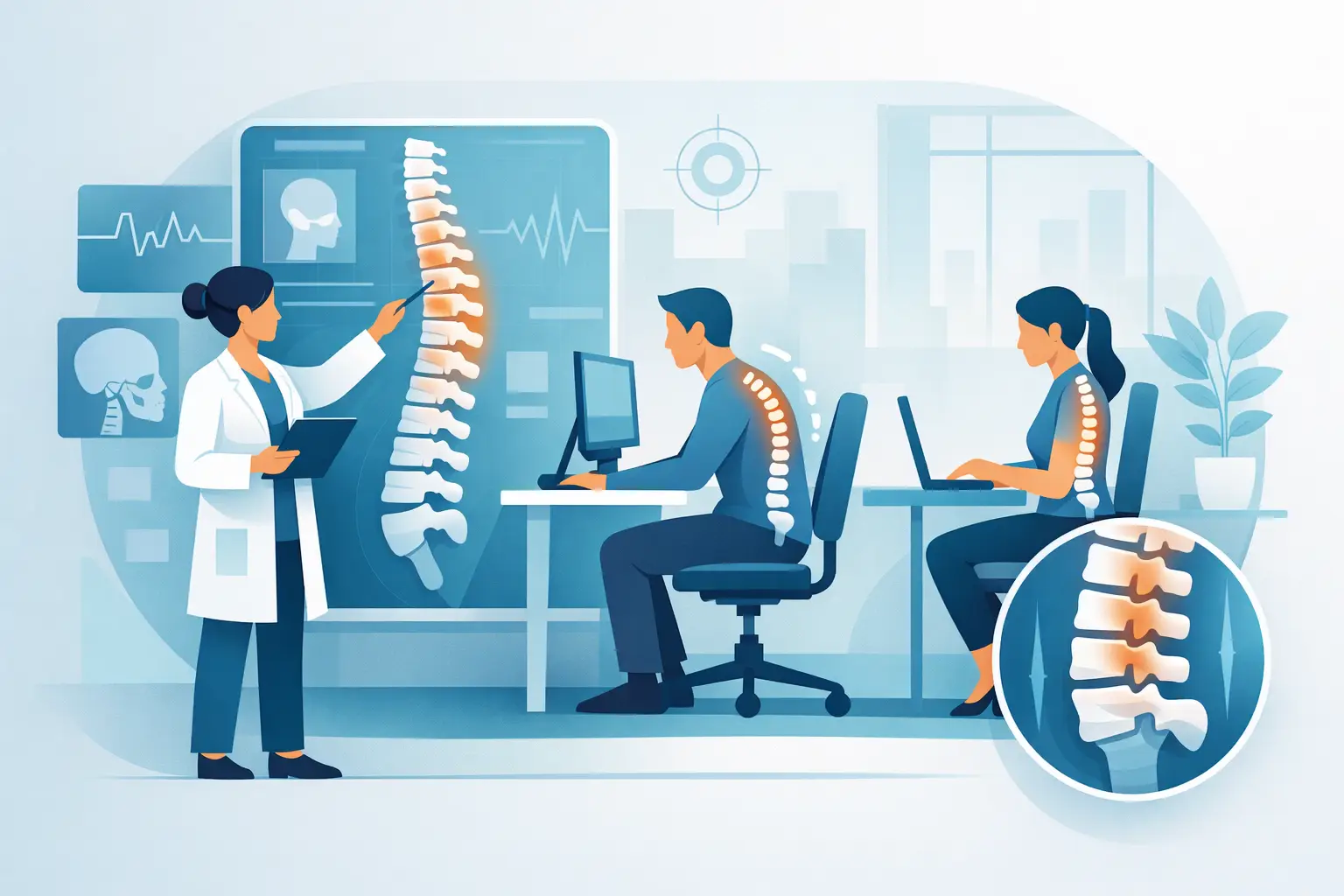
A team can spend hours refining hybrid-working policies and ergonomic guidance, yet employees may still finish the day with tight shoulders, a stiff lower back or recurring neck discomfort. Spinal analysis for employees gives people a practical, individual starting point for understanding how their posture and daily habits may be affecting their comfort at work.
For employers, it is not about diagnosing conditions or replacing medical care. It is a professional workplace wellbeing service that makes posture visible, creates useful conversations and demonstrates that the business is taking the realities of desk-based work seriously. Delivered well, it can turn a standard wellbeing day into an experience employees remember and act on.
What spinal analysis involves in the workplace
Workplace spinal analysis is a non-invasive posture-focused assessment carried out by a qualified practitioner. Depending on the service format, the practitioner may observe an employee’s standing posture, spinal alignment, shoulder position and movement patterns. They may use specialist posture-analysis equipment or visual assessment methods to identify visible imbalances and areas that could benefit from attention.
The employee receives clear, accessible feedback rather than a clinical diagnosis. That might include discussion around common working patterns, such as leaning towards a second screen, hunching over a laptop, sitting for long periods or carrying stress through the upper body. The practitioner can then offer practical guidance on posture, movement breaks, desk positioning and appropriate next steps.
This distinction matters. A workplace session should never overstate what it can establish. Spinal analysis can highlight postural patterns and encourage earlier self-care, but it does not diagnose injury, disease or a specific medical condition. Employees with persistent, severe or concerning symptoms should be directed towards an appropriate regulated healthcare professional.
Why spinal analysis for employees has business value
Posture concerns are rarely just posture concerns. They are often connected to workload, workstation set-up, stress, screen time and a lack of movement during the day. When employees are uncomfortable, distracted or fatigued, their ability to focus and engage can suffer.
A spinal analysis event gives employees dedicated time to pause and consider those patterns. For an HR or office manager, that creates an immediate wellbeing benefit without asking people to complete a lengthy programme or make appointments away from work. Sessions are brief, personal and relevant to the way people actually work.
There is also a culture benefit. Employees are more likely to feel valued when wellbeing support is specific rather than generic. A fruit bowl or broad wellbeing email has its place, but individual feedback from a qualified practitioner feels more considered. It reinforces a workplace culture where prevention, comfort and sustainable performance are taken seriously.
For employers looking at return on investment, the strongest case is usually as part of a wider wellbeing strategy. Spinal analysis alone will not solve absence, burnout or retention challenges. Combined with sensible workstation practices, regular movement, manager support and hands-on therapies, it can contribute to a more proactive approach to employee wellbeing.
The employees most likely to benefit
Spinal analysis works particularly well for desk-based teams, including office, customer service, technology, finance and professional-services employees. These roles often involve extended screen use, repetitive movements and limited opportunities to change position during busy periods.
It can also be valuable for hybrid teams. Employees may have carefully assessed workstations in the office but less suitable arrangements at home. A posture conversation can help them recognise the difference between working from a properly configured desk and working from a kitchen table, sofa or temporary set-up.
That said, attendance should always be voluntary. The service is most effective when it is offered as supportive, confidential and practical, not as an assessment employees are expected to pass. Avoid framing results as a measure of fitness for work or performance. The purpose is wellbeing education and individual awareness.
Making a workplace spinal analysis event work
Operational simplicity is one reason employers choose onsite wellbeing services. A well-organised spinal analysis programme can be delivered in a meeting room, quiet wellness area or other private space with enough room for the practitioner and participant to move comfortably.
Most organisations schedule short, pre-booked appointments across a half or full day. This approach helps minimise disruption while ensuring employees have enough time for a meaningful assessment and discussion. It also gives organisers a reliable view of demand and helps avoid queues during peak working hours.
Before the event, communicate clearly about what employees can expect. Explain that the session is posture-focused, non-invasive and confidential, and that it is not a medical diagnosis. This small amount of preparation reduces uncertainty and encourages take-up, especially among people who may be interested but unsure what spinal analysis means.
Privacy is essential. Individual observations should remain between the practitioner and employee. Employers can review anonymised, high-level themes where appropriate, such as widespread interest in desk ergonomics or upper-body tension, but should not receive individual health information. This protects trust and keeps the programme aligned with good data-handling practice.
Pair spinal analysis with action, not just awareness
Insight is useful only if employees can do something with it. The best programmes pair spinal analysis with practical support that fits the working day. A simple stretch routine, guidance on monitor height and chair position, or reminders to take short movement breaks can make the feedback more actionable.
For a fuller wellbeing event, spinal analysis can sit alongside chair massage, assisted stretching, reflexology, hand massage or nutrition consultations. Each service addresses a different aspect of workplace wellbeing. Massage may help employees relax and release tension; assisted stretching can support mobility; nutrition consultations can focus on energy and habits. Together, these options create a more rounded experience without forcing every employee into the same type of support.
The right mix depends on your objective. If the priority is an engaging wellbeing day with broad appeal, combining short treatments and assessments may work well. If a team has raised repeated concerns about workstation discomfort, a more focused spinal analysis and ergonomic education programme may be the better fit. A flexible provider should help you match the format to your people, space and budget.
Questions employers should ask before booking
Quality and clarity matter more than flashy equipment. Ask who will carry out the assessments, what qualifications and insurance they hold, and how they explain the limits of the service. The practitioner should be confident, approachable and able to communicate in plain English without making medical claims.
It is also worth confirming how appointments will be managed, what space is needed, whether the provider can cover multiple locations and how employee feedback will be gathered. For organisations with offices across the UK, consistent delivery is particularly valuable. Therapy Bookings works with fully qualified and insured therapists to make these logistics straightforward for employers, whether the requirement is a one-off event or an ongoing wellbeing programme.
Finally, consider what success looks like before the day begins. It may be strong participation, positive employee feedback, increased awareness of posture habits or a better understanding of which wellbeing services employees value most. Measuring attendance and anonymised feedback gives you useful evidence for planning future initiatives.
A thoughtful addition to employee wellbeing
Spinal analysis is not a substitute for proper clinical care, ergonomic risk assessment or good management practice. It is a practical complement to them. Its strength lies in making an often-overlooked issue personal, visible and easy to discuss in the context of everyday work.
When employees leave a session with a clearer sense of how to adjust their desk, move more often or seek further advice when needed, the value extends beyond the appointment itself. That is the kind of practical care that can make a workplace wellbeing programme feel less like a perk and more like meaningful support.