
A recurring absence pattern rarely starts with one dramatic event. More often, it builds through tight shoulders, poor sleep, mounting pressure, screen fatigue and the feeling that work has become difficult to sustain. So, can massage reduce absenteeism? It can play a useful supporting role, particularly when employers use it as part of a practical wellbeing programme rather than treating it as a stand-alone fix.
For HR teams and office managers, the commercial question is not whether a 15-minute chair massage can eliminate sickness absence. It cannot. The better question is whether accessible, professionally delivered support can help employees manage stress and physical discomfort earlier, remain more engaged and feel better supported at work. In many organisations, that is where the value lies.
Can massage reduce absenteeism in practice?
Massage is not a replacement for medical care, occupational health processes, reasonable adjustments or a well-managed workload. Absence can be caused by illness, injury, caring responsibilities, poor mental health and many other factors outside an employer’s control.
However, workplace massage can address several common contributors to short-term absence and reduced performance: muscle tension, desk-related aches, stress and low morale. Desk-based teams often spend long periods sitting still, working under deadline pressure and switching constantly between meetings, messages and screens. By the end of the week, minor discomfort can feel more significant, while stress may affect sleep, concentration and resilience.
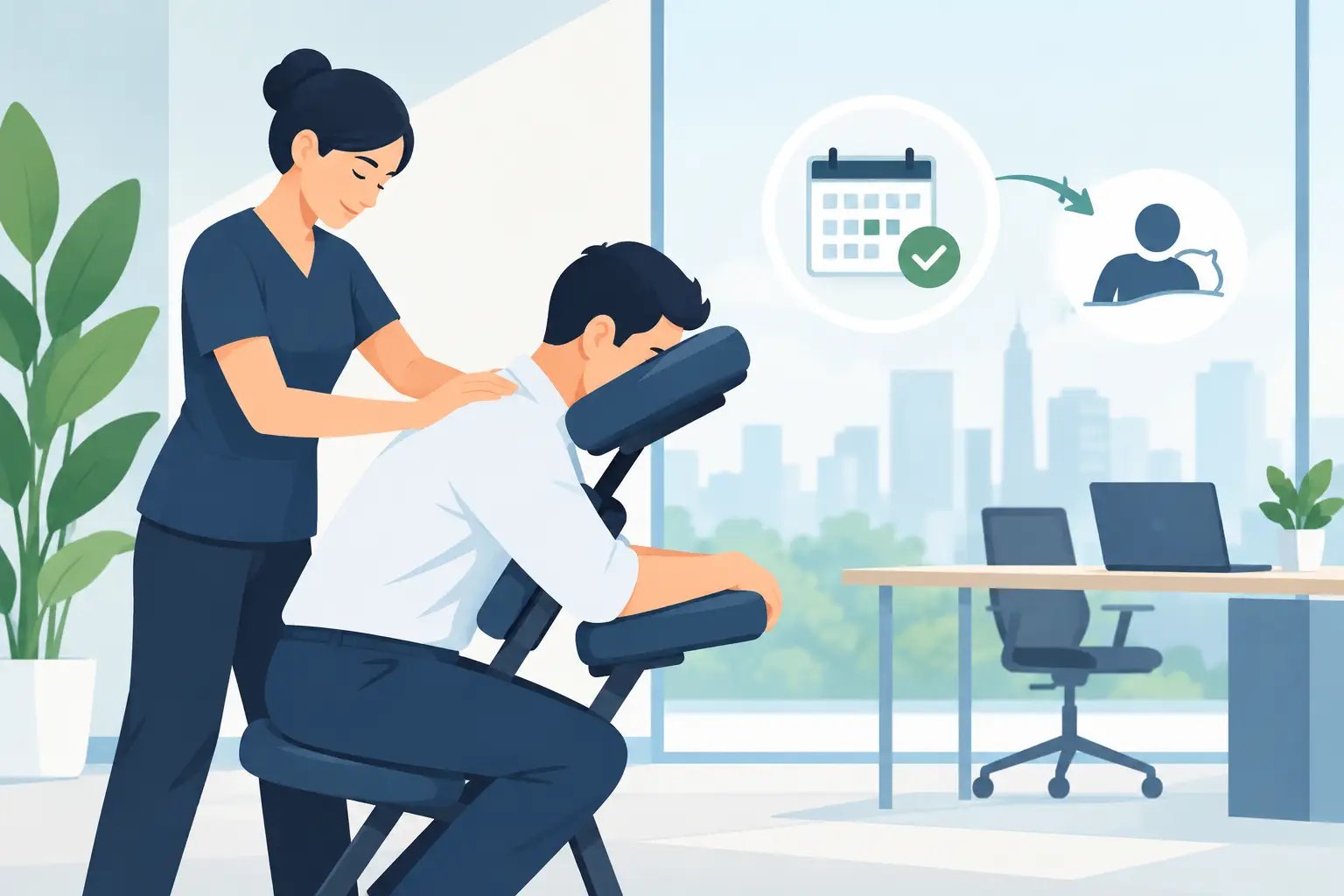
On-site chair massage gives employees a convenient opportunity to pause and reset without needing to leave the office or change clothes. Sessions are usually short, targeted and easy to schedule around the working day. This matters because wellbeing support only has an impact when people can realistically use it.
The direct link between massage and lower absenteeism will vary by organisation. A business with high physical strain, intense workloads or poor management practices will not solve its absence challenge through massage alone. Yet as one part of a wider employee wellbeing strategy, regular sessions can help reduce the day-to-day pressures that contribute to people feeling overwhelmed, uncomfortable or disengaged.
Why stress and discomfort affect attendance
Absence figures are a lagging indicator. Before an employee calls in sick, there may be weeks of stress, neck pain, headaches, disrupted sleep or diminished motivation. Presenteeism can appear first: someone is technically at work but lacks the energy, comfort or focus to perform well.
Massage supports the immediate experience of work in a few meaningful ways. It can promote relaxation, ease muscular tension and create a clear break in an otherwise demanding day. Employees commonly value the simple fact that their employer has made time and space for their wellbeing, especially during busy periods or organisational change.
That sense of care should not be underestimated. People are more likely to raise concerns, use available support and remain connected to their employer when workplace wellbeing feels genuine rather than performative. Better morale does not automatically mean fewer absences, but it can strengthen the conditions that support attendance, retention and sustainable performance.
For employers, the most useful view is preventative. Rather than waiting for stress or discomfort to become a formal absence issue, offer interventions that help people manage pressure earlier. Chair massage, assisted stretching and similar on-site therapies are well suited to this role because they are low-disruption and simple to access.
What makes workplace massage more likely to deliver value?
The quality of delivery matters as much as the therapy itself. A one-off wellness day can create a welcome morale boost, but a recurring programme is more likely to support lasting habits and provide a clearer picture of employee uptake.
Make sessions easy to use
A wellness benefit hidden behind a complicated booking process will have limited reach. On-site chair massage works well because treatments can be delivered in a meeting room, breakout space or other quiet area, with little set-up required. Employees can book short appointments around their work commitments and return to their day promptly.
Employers should also consider timing. Sessions during high-pressure periods, after major project milestones or through the darker winter months may be especially valued. For hybrid teams, alternating office days or offering sessions at different locations can improve access.
Choose qualified practitioners
Employees need to feel safe and comfortable. Workplace therapists should be appropriately qualified, insured and experienced in delivering professional treatments in a corporate setting. They should also understand boundaries, consultation procedures and when to advise an employee to seek medical guidance instead.
This protects the employee experience and gives the organisation confidence that its wellbeing provision is credible. Therapy Bookings delivers programmes through qualified, insured therapists, allowing employers to offer practical support without adding an administrative burden to internal teams.
Position massage as part of a wider plan
Massage is most effective when it complements the fundamentals of healthy work. That includes manageable workloads, supportive line management, ergonomic assessments, clear absence policies and access to appropriate mental health support.
For example, an organisation may combine chair massage with workstation guidance, assisted stretching or nutrition consultations. This approach recognises that employee wellbeing is not one issue with one solution. It is a collection of daily conditions that either support or drain people.
How to measure whether massage is helping
Absence data should be monitored over time and interpreted carefully. Seasonal illness, restructuring, changes in headcount and reporting practices can all affect the figures. It is rarely credible to claim that massage alone caused a reduction in sickness absence.
Instead, track a mix of practical measures. Attendance and short-term absence trends are useful, but they should sit alongside uptake rates, repeat bookings, employee feedback and pulse survey results on stress, morale and feeling valued. Managers may also notice changes in team energy or engagement, though these observations should be treated as supporting insight rather than proof.
A simple quarterly review can help employers assess whether the programme is reaching the right people. If uptake is low, the issue may be communication, timing or a culture where employees do not feel able to take a short break. If demand is consistently high, more frequent sessions or additional wellbeing services may be justified.
The most meaningful return is often broader than absence reduction. A service that helps teams feel cared for, improves the office experience and supports retention can be commercially worthwhile even where the impact on sickness figures is modest.
When massage will not be enough
Employers should be cautious of using wellbeing services to paper over structural problems. If employees are routinely working excessive hours, facing unclear priorities or experiencing poor behaviour from managers, a massage day may feel disconnected from their actual needs.
Similarly, massage is not suitable as a response to serious mental health concerns, acute injury or persistent pain. Employees should be encouraged to use appropriate clinical, occupational health or employee assistance support where needed. Responsible workplace wellbeing means recognising the limits of each intervention.
That does not reduce the value of on-site massage. It simply puts it in the right context. The aim is not to make people tolerate unsustainable work. It is to create a workplace where recovery, comfort and proactive support are built into the employee experience.
A practical investment in healthier attendance
For businesses seeking a manageable way to support attendance, chair massage offers a visible, flexible starting point. It is quick to deliver, popular with desk-based teams and capable of addressing the everyday tension that can undermine focus and morale.
The strongest programmes are consistent, easy to access and backed by wider action on workload and workplace culture. When employees can take a genuine pause before pressure turns into burnout or discomfort becomes a bigger problem, the benefit reaches beyond a pleasant treatment. It becomes part of how a business helps people stay well enough to do their best work.