
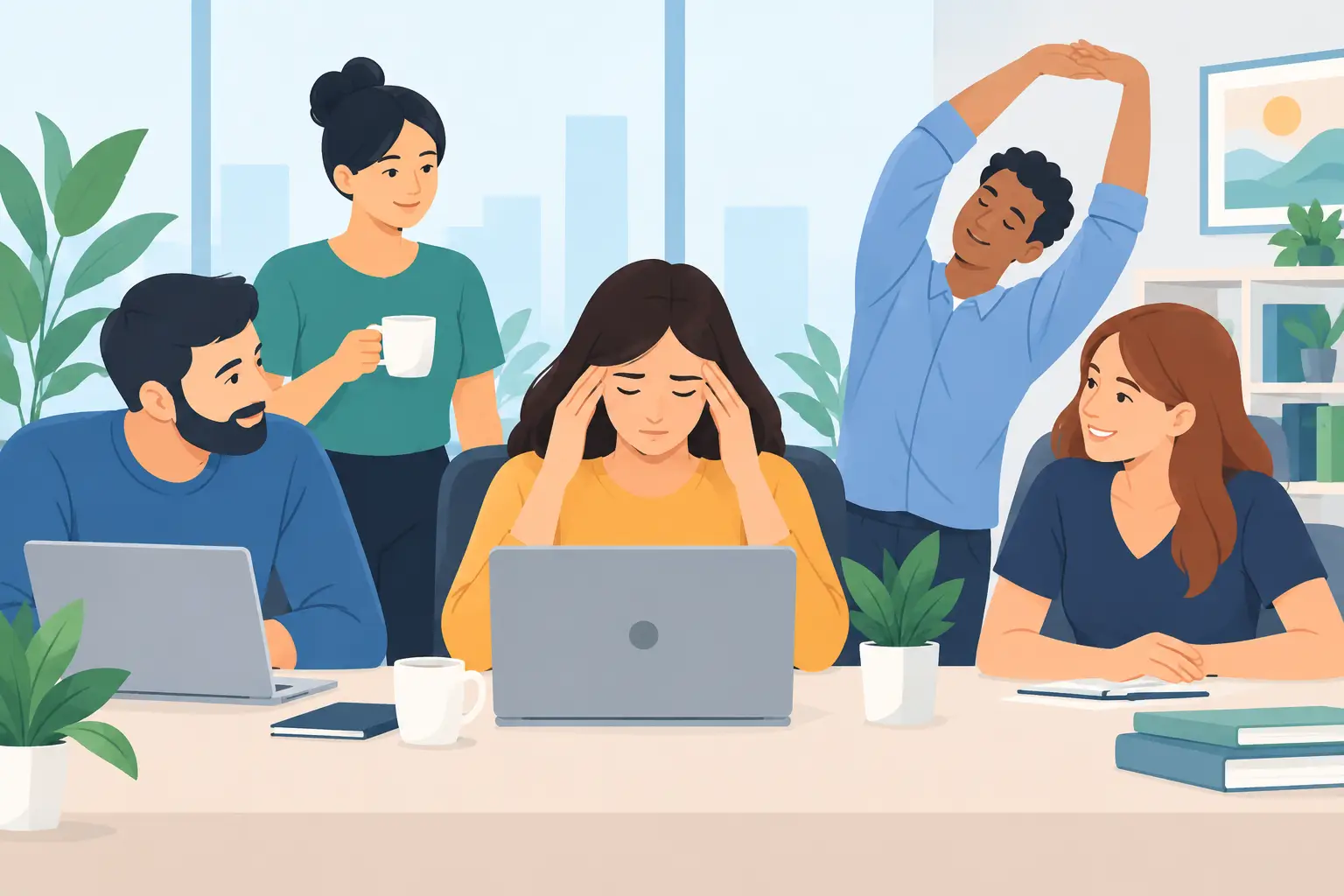
The early signs of desk burnout are often easy to miss. A capable employee becomes slower to reply, skips breaks, complains of a tight neck or headaches, and starts treating routine tasks as an uphill struggle. For employers, learning how to prevent desk burnout is not about adding superficial perks. It is about designing a working environment that helps people recover from pressure before stress becomes absence, disengagement or resignation.
Desk-based teams can spend most of their day switching between meetings, emails, screens and deadlines with little physical movement or mental space. That pattern places a real strain on concentration, posture and morale. A practical wellbeing approach gives employees regular opportunities to reset while giving the business a more sustainable foundation for performance.
Recognise desk burnout before performance drops
Burnout is more than feeling busy at the end of a demanding week. It is a state of prolonged physical and emotional exhaustion, often accompanied by reduced focus, detachment from work and a growing sense that effort no longer makes a difference. While burnout has many causes, desk work can intensify it through long periods of sitting, constant notifications, poor workstation habits and limited separation between concentrated work and recovery.
Managers should look for patterns rather than judging one difficult day. Rising short-term absence, a drop in collaboration, unusually high error rates, presenteeism and lower participation in team activity can all signal that pressure is becoming unsustainable. Employees may also report sore shoulders, lower back discomfort, wrist tension, eye strain or disrupted sleep.
The aim is not to monitor people intrusively. It is to create a culture where discussing workload and wellbeing is normal, timely and safe. A manager who asks, “What is making your work harder than it needs to be?” will usually learn more than one who asks whether someone is coping.
How to prevent desk burnout with everyday working habits
Effective prevention combines sensible work design with accessible support. A monthly wellbeing event can be valuable, but it cannot offset an unmanageable workload or a culture that rewards being permanently available. Start with the conditions employees experience every day.
Build recovery into the working day
Short breaks are not lost productivity when they help people return with clearer attention and less physical discomfort. Encourage teams to step away from screens between demanding tasks, change position after long meetings and take a proper lunch break where possible. Leaders need to model this behaviour themselves. If senior people send messages late at night or boast about skipping lunch, employees receive a different message from the one set out in a wellbeing policy.
Meeting practices matter too. Defaulting to 25 or 50-minute meetings can create breathing room between calls. Protecting focus time, reducing unnecessary attendees and allowing a pause after intensive workshops helps prevent the calendar from becoming a source of constant pressure.
Improve physical comfort, not just posture advice
Poor desk set-up does not cause burnout on its own, but ongoing discomfort can drain energy and make demanding work harder to manage. Employees need a chair, screen and keyboard arrangement that supports neutral, comfortable working positions. A laptop used all day without a separate screen or keyboard is a common and fixable issue.
Practical guidance is most useful when it is personalised. People have different bodies, home-working arrangements and job demands, so a one-size-fits-all workstation checklist has limits. Encourage employees to raise concerns early and provide a clear route for requesting equipment or adjustments. For office teams, occasional posture checks, assisted stretching or spinal analysis sessions can also prompt better habits while addressing areas of tension.
Make workload conversations specific
Vague wellbeing messages can leave employees feeling responsible for solving structural problems themselves. Instead, train line managers to discuss priorities in concrete terms: what can wait, what can be delegated, which deadlines are fixed and where extra support is needed.
This is especially important during growth periods, restructures, major client deadlines or seasonal peaks. Some intensity is unavoidable in many businesses. The difference is whether it is planned, time-limited and followed by recovery, or whether high pressure becomes the permanent operating model. Employees are more likely to stay engaged when they can see that leaders are actively managing demand rather than simply asking them to be more resilient.
Give teams a meaningful way to reset
Onsite wellbeing services can make recovery easier to access during a working day. Chair massage, for example, offers a focused break without requiring employees to change clothes or leave the workplace for long periods. It can help relieve muscular tension, create a clear pause from screens and show employees that their wellbeing is being taken seriously.
The value is not limited to relaxation. A well-run workplace wellness session can encourage conversations about stress, posture and self-care that employees may otherwise postpone. Options such as reflexology, hand massage, assisted stretching and nutrition consultations give employers flexibility to match support to their people, space and schedule.
For hybrid teams, fairness needs careful thought. If an onsite service is only available to office-based colleagues, consider how remote employees will receive comparable support, such as a wellbeing allowance, virtual consultation or access to a session when they attend the office. The right solution depends on team location, budget and attendance patterns, but the principle should be consistent: support should not feel reserved for the most visible employees.
Turn wellbeing from a one-off event into a programme
A single wellness day can lift morale, particularly after a busy project or during a high-pressure period. However, lasting burnout prevention comes from consistency. Employers should consider a programme that combines regular wellbeing interventions with manager capability, workload review and feedback from employees.
Start by identifying the points where pressure is highest. This could be month-end reporting, a return-to-office transition, an annual planning cycle or sustained change within the business. Then choose support that fits the operational reality. A fast-moving London office may benefit from short chair massage appointments across one or two days, while a dispersed UK workforce may need a rotating schedule across sites.
Operational ease is essential. Sessions should be simple to book, delivered by qualified and insured practitioners, and organised around the working day rather than disrupting it. Therapy Bookings provides flexible onsite wellbeing programmes that can be tailored to team size, location and objectives, making it easier for employers to offer credible support without creating extra work for HR or office teams.
Measure what matters to the business
Wellbeing is personal, but that does not mean employers cannot assess whether an initiative is useful. Before launching a programme, agree what success looks like. Depending on the issue being addressed, measures might include participation rates, employee feedback, absence trends, retention indicators, engagement survey results and manager observations about energy or team morale.
Avoid overclaiming. A chair massage session will not solve poor leadership, chronic understaffing or an unrealistic commercial target. It can, however, be a practical part of a wider approach that reduces immediate tension, improves the employee experience and reinforces a culture of care.
Anonymous feedback is particularly valuable. Ask employees whether the support was accessible, whether it helped them take a genuine break and what would make their working day more manageable. This gives decision-makers useful evidence for refining future provision rather than relying on assumptions.
Make care visible when work gets demanding
The strongest wellbeing strategies are felt in ordinary moments: a manager who reprioritises work, a diary with space to think, a comfortable workstation and a regular opportunity to step away from the screen. These actions tell employees that sustained performance matters more than constant availability.
A helpful place to begin is simple: identify one pressure point your desk-based team faces this month, ask them what would reduce it, and act on the answer. Small, repeated improvements are often what keep temporary stress from becoming desk burnout.