
A ten-minute chair massage can be a welcome reset after a demanding morning of calls, screens and deadlines. But when you are responsible for employee wellbeing, the question is not simply whether people will enjoy it. You need to know: is chair massage safe for a mixed workforce, and what does responsible delivery look like?
For most employees, chair massage is a safe, low-risk workplace wellbeing service when it is delivered by qualified, insured therapists and supported by appropriate health screening. It is also designed for office environments: employees remain fully clothed, no oils are normally needed, and sessions are short, practical and easy to fit into the working day.
Safety does, however, depend on the individual, the therapist and the way the service is organised. A credible provider will never treat chair massage as a one-size-fits-all perk. They will create a calm, professional experience while giving each employee clear control over whether, and how, they take part.
Is chair massage safe in an office setting?
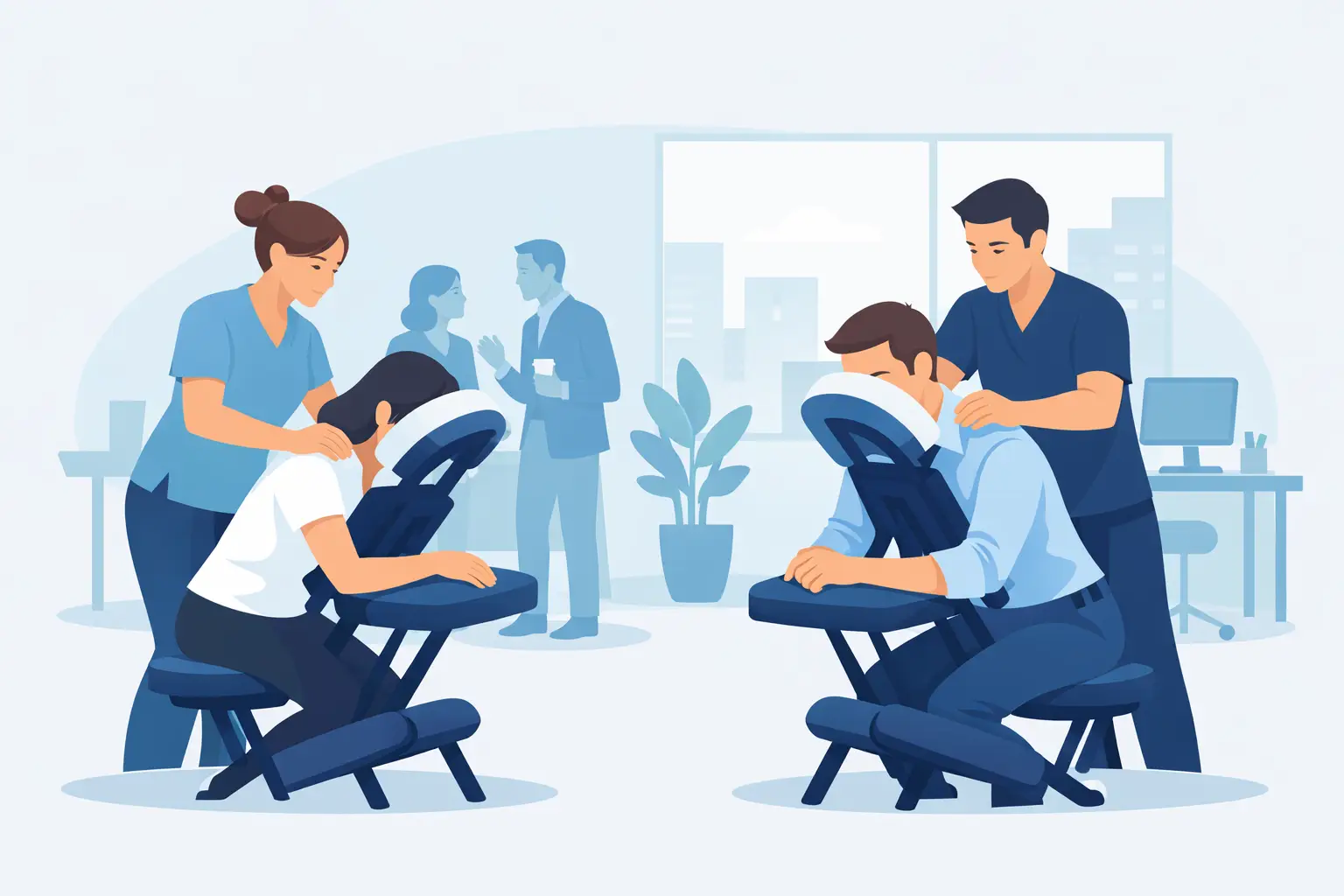
Yes, chair massage is generally safe for workplace use. It uses a specially designed ergonomic chair that supports the body while the therapist works mainly on the upper back, shoulders, neck, arms, hands and scalp. The person receiving treatment is seated forwards with their face supported, rather than lying down or needing to change clothes.
This format has practical safety advantages. It avoids the need for oils, limits direct skin contact and does not require employees to get on and off a treatment couch. Sessions commonly last 10 to 20 minutes, which helps make the service accessible for busy teams and suitable for wellness days, conferences and ongoing office programmes.
A trained therapist adapts pressure, positioning and technique to the person in front of them. Chair massage should feel relieving, not painful. Employees can ask for lighter pressure, request that an area is avoided, or stop the session at any point. That consent-led approach is central to a safe and positive experience.
For employers, the value is not just convenience. A well-run programme gives desk-based teams a short opportunity to step away from screens, release day-to-day muscular tension and feel visibly supported by their organisation. Used consistently as part of a broader wellbeing approach, it can contribute to morale, engagement and a healthier workplace culture.
When chair massage may not be appropriate
Chair massage is not a medical treatment, and it is not right for everyone on every day. Most concerns can be identified through a brief consultation before treatment. The therapist should ask relevant health questions, explain what the session involves and decide whether to adapt, postpone or decline treatment.
Employees should tell the therapist about recent injuries, surgeries, ongoing pain, allergies, pregnancy or any health condition that may affect treatment. Particular caution may be needed for people with acute inflammation, fever or infection, severe osteoporosis, blood-clotting concerns, certain skin conditions, uncontrolled high blood pressure, neurological symptoms, or a recent accident involving the neck, back or shoulders.
Someone experiencing sharp pain, numbness, unexplained weakness, dizziness or persistent symptoms should seek advice from an appropriate healthcare professional rather than relying on massage to resolve the issue. Massage may be comforting for everyday tightness, but it should never delay clinical assessment where it is needed.
Pregnancy does not automatically rule out chair massage, but it does call for informed discussion and a therapist with suitable training. Similarly, an employee taking medication or managing a long-term condition may still be able to receive a carefully adapted session. The right answer is often not a blanket yes or no. It is a considered decision based on the individual’s circumstances.
What safe delivery looks like
The difference between a thoughtful workplace service and a rushed wellbeing add-on is in the detail. Employers should expect clear standards before a therapist begins work.
Qualified practitioners should hold relevant massage credentials, maintain professional insurance and work within their scope of practice. They should be comfortable explaining their approach, completing consultation checks and recognising when treatment is not appropriate. They should also follow strong hygiene procedures, including cleaning equipment between users and maintaining a clean, orderly treatment area.
Privacy matters as much as physical safety. A quiet meeting room or screened space gives employees the confidence to relax and speak privately about any relevant health information. It does not need to be a large room, but it should be away from heavy foot traffic, excessive noise and distractions. Employees should never feel watched, rushed or pressured to participate.
Practical set-up also reduces risk. The massage chair needs stable flooring and enough room for the therapist to move safely around it. Booking slots should allow time for a consultation and changeover, rather than treating every appointment as back-to-back hands-on time. A sensible schedule supports both therapist quality and employee comfort.
At Therapy Bookings, workplace services are delivered by fully qualified and insured therapists, with the operational planning needed to make wellbeing days straightforward for employers. That includes matching the format and session length to the size of the team, available space and objectives for the event.
How employers can make participation comfortable
Chair massage works best when it is offered as a genuine choice, not as an expectation. A simple internal message can explain that sessions are short, fully clothed and adapted to individual comfort. It should also make clear that employees can opt out without explanation.
Avoid presenting massage as a fix for workload pressure or poor working practices. It is a useful support, but it cannot substitute for manageable workloads, regular breaks, ergonomic workstations and a culture where people can raise concerns early. Employees are far more likely to value a wellbeing initiative when it sits alongside meaningful action on how work is organised.
Consider who may otherwise miss out. Shift workers, hybrid staff, carers and colleagues with packed calendars may need a range of slots or alternative wellness options. Hand massage, reflexology, assisted stretching or virtual nutrition consultations can help create a more inclusive programme where chair massage is not the only route to support.
Common concerns about workplace chair massage
Can chair massage cause soreness?
Mild tenderness can occasionally occur after massage, especially where someone has been carrying muscular tension or prefers firmer pressure. It should be short-lived and manageable. Pain during the session is not a sign that the treatment is working, so employees should speak up immediately if anything feels uncomfortable.
Is it safe for people with desk-related neck and shoulder tension?
In many cases, yes. Upper-body tension is one of the most common reasons employees enjoy chair massage. The therapist should still ask about symptoms first, particularly if pain is severe, follows an injury or comes with tingling, weakness or headaches. They can then adjust the session or recommend that the employee seeks medical guidance.
Do employees need to disclose private medical details to their employer?
No. Relevant health information is discussed privately with the therapist as part of the consultation process. Employers can encourage employees to be open with the practitioner without asking them to share personal health details with managers or colleagues.
Are short sessions worthwhile?
They can be. A 10 or 15-minute session is not intended to replace clinical care or a longer treatment, but it can offer a focused pause in the working day. For a large office event, shorter sessions also allow more colleagues to participate while keeping disruption low.
A safer wellbeing investment starts with the provider
For HR and office teams, safety is not an obstacle to workplace massage. It is the reason to choose a professional service rather than an informal arrangement. The right provider brings qualified people, clear consultation processes, hygienic equipment and a format that respects each employee’s comfort and health needs.
When chair massage is planned with that level of care, it becomes more than a popular office treat. It is a practical signal that your organisation is willing to invest in people’s day-to-day experience, while making participation simple, respectful and safe.