A team can spend eight hours typing, clicking and moving between screens, yet still have little opportunity to pause. On-site hand massage for employees gives people a short, practical reset without asking them to leave the workplace, change clothes or commit to a lengthy appointment. For employers, it is an accessible wellbeing service that can make care visible on an ordinary working day.
Hand massage is particularly well suited to desk-based teams. It focuses on the hands, wrists and lower arms, where repetitive keyboard and mouse use can leave people feeling tight, fatigued or uncomfortable. The treatment is delivered by a qualified therapist in a calm, professional setting and can fit naturally into busy office schedules.
Why on-site hand massage for employees makes business sense
Workplace wellbeing is most effective when employees can actually use it. A hand massage requires very little time away from a desk and has none of the logistical barriers that can limit participation in other initiatives. Employees remain fully clothed, no specialist equipment is needed, and treatments can often be scheduled in short slots throughout the day.
That simplicity matters. A thoughtfully delivered session signals that the organisation recognises the physical and mental demands of modern work, particularly for teams managing deadlines, long screen time and high volumes of digital communication. It can be a welcome moment of individual attention in offices where people are often expected to stay switched on.
For HR and operations teams, the value is not just the treatment itself. It is the combination of high participation, minimal disruption and a positive shared experience. Used as part of a wider employee wellbeing programme, hand massage can support morale, engagement and a workplace culture where people feel looked after.
What employees experience during a session
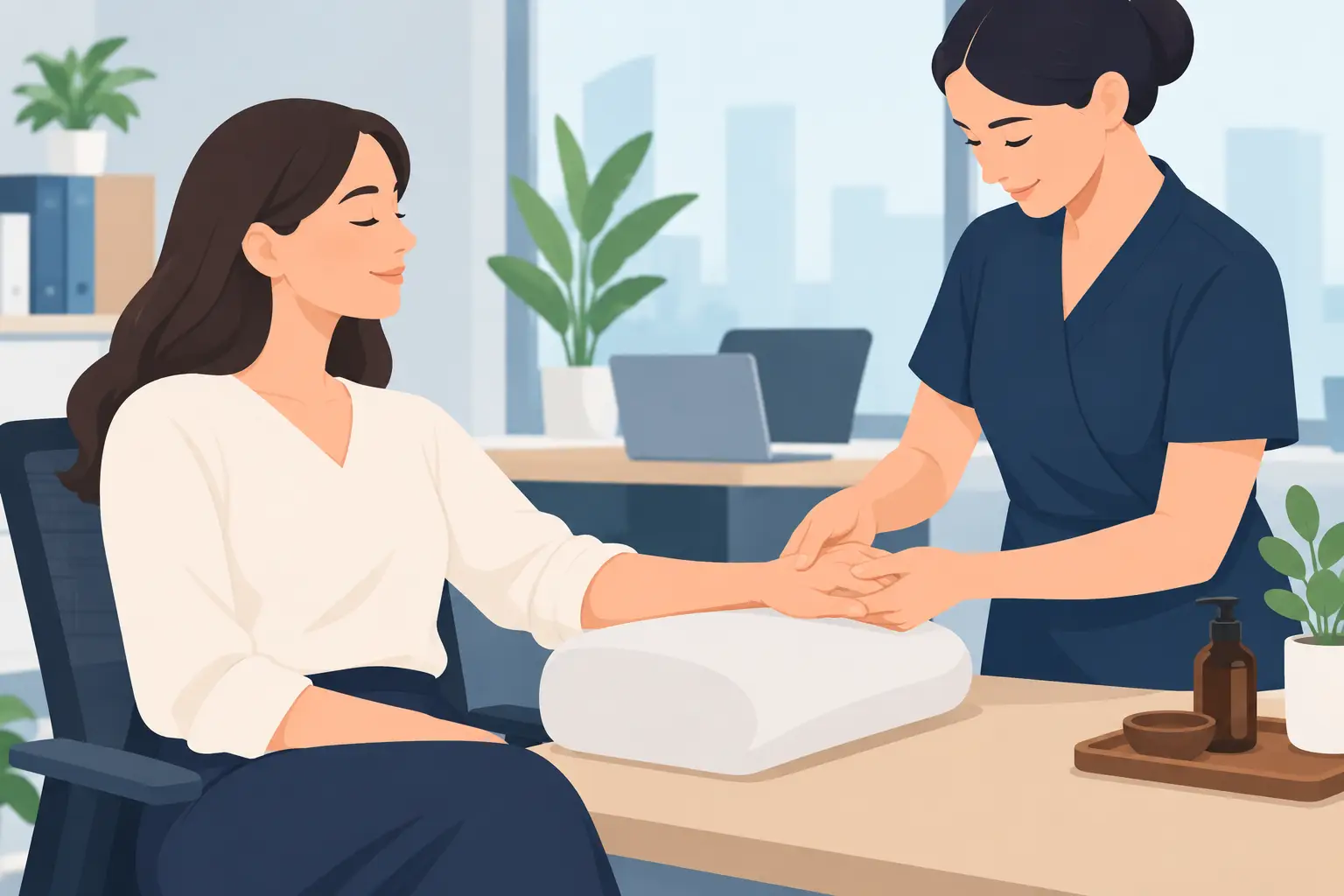
A typical on-site hand massage is brief, comfortable and straightforward. The therapist works with the hands, palms, fingers, wrists and lower arms using appropriate massage techniques and, where suitable, a small amount of massage medium. Employees can usually remain seated at their desk or use a designated quiet area, depending on the event format and available space.
Sessions are commonly arranged in 10 to 20-minute appointments. Shorter treatments work well for larger teams or event days, while longer appointments provide more time for a slower, more restorative experience. The right format depends on headcount, available time and what the organisation wants to achieve.
Before treatment, a professional therapist will ask relevant health questions and explain what to expect. This helps ensure the treatment is appropriate for the individual. Hand massage is not a substitute for medical assessment, and employees with an injury, persistent pain or a health concern should seek advice from an appropriate healthcare professional.
The benefits for desk-based teams
The immediate benefit employees often notice is a chance to stop. A short break away from constant tasks can help people return to their work feeling calmer and more refreshed. Massage may also help ease the feeling of tension that builds through repetitive movement, particularly around the hands and lower arms.
There is a broader workplace benefit too. When wellbeing support is easy to access, it reaches people who may not attend after-work activities, use a gym benefit or make time for a longer therapy appointment. This makes on-site services useful for varied workforces, including parents, shift workers, hybrid teams attending office days and colleagues who simply prefer a low-key form of support.
Hand massage should not be presented as a cure for workplace stress or musculoskeletal problems. Its strength lies in being a practical wellbeing intervention that encourages a pause, provides a positive human interaction and complements good workplace habits. Employers will see the best results when it sits alongside sensible workload management, ergonomic support, clear communication and access to appropriate health resources.
Where hand massage works best
Hand massage is flexible enough for both one-off moments and regular wellbeing activity. It can work especially well during employee appreciation days, mental health awareness campaigns, office reopenings, team meetings, recruitment events and seasonal busy periods. It is also a strong option for organisations that want to trial an on-site therapy service before introducing a recurring programme.
For a smaller office, a single therapist may see employees across a half or full day. Larger workplaces may need several therapists, staggered booking slots or a multi-day programme. A well-planned schedule prevents bottlenecks and gives every employee a fair opportunity to participate.
It is worth considering the working environment before booking. A quiet meeting room offers privacy and creates a more relaxing atmosphere, but an open-plan area can be effective for informal event activation. The trade-off is between visibility and tranquillity. If your aim is to create interest and encourage sign-ups, a central area may help. If the priority is a calm experience for busy employees, a separate room is usually the better choice.
How to organise an effective on-site hand massage programme
The most successful bookings begin with a clear objective. You may want to thank the team after a demanding quarter, support a wellbeing calendar, improve attendance at office days or introduce a more consistent employee benefit. The objective informs the session length, therapist numbers and communications plan.
Start by estimating participation rather than relying only on total headcount. A 50-person office may not need 50 appointments if many colleagues are remote that day, while a popular employee appreciation event could require additional capacity. Offering pre-booked time slots is usually the most reliable approach. It protects productive time, reduces queues and gives employees permission to take the break.
Clear internal communication also has a direct effect on uptake. Explain that the service is free to employees, how long each session lasts, where it will take place and whether they need to bring anything. Keep the message simple and avoid making the treatment sound clinical or exclusive. The aim is to make participation feel easy.
On the day, provide a suitable chair, enough space for the therapist to work safely and a quiet, clean area where possible. Your provider should handle the therapy equipment, professional delivery and any appropriate consultation procedures. Choosing fully qualified and insured therapists is essential, both for employee confidence and for operational peace of mind.
Measuring value beyond attendance
Attendance is a useful starting measure, but it is not the whole story. Ask employees for short feedback after the event: whether booking was easy, how they felt afterwards and whether they would like the service repeated. This provides practical evidence for future wellbeing decisions.
You can also assess participation by department, office location or working pattern to see whether access was equitable. If a particular group could not attend because of meetings or shift coverage, adjust the next programme rather than assuming lack of interest. Small operational changes can significantly improve take-up.
For regular programmes, look for wider signals over time. Employee feedback, engagement survey comments and participation in other wellbeing initiatives can indicate whether people view the workplace as more supportive. It would be unrealistic to attribute changes in retention or absence to one service alone, but consistent, well-used wellbeing provision can contribute to a stronger overall employee experience.
Choosing the right provider
A low-friction service requires more than a therapist arriving on site. Look for a provider that can advise on treatment durations, therapist numbers, room set-up and booking logistics. They should have a dependable network of qualified, insured professionals and the capacity to support offices in London as well as teams across the UK.
Experience with corporate environments is equally valuable. Workplace therapists need to be welcoming and adaptable while respecting schedules, privacy and the pace of the day. They should make employees feel comfortable whether it is their first massage or a familiar part of an ongoing programme.
Therapy Bookings supports employers with flexible on-site wellbeing programmes designed around team size, location and business objectives. Hand massage can be booked as a focused standalone service or combined with options such as chair massage, reflexology, assisted stretching or nutrition consultations where a broader wellbeing event is required.
A well-timed hand massage may last only a few minutes, but it can change the tone of a working day. When employers make space for people to pause and feel valued, wellbeing becomes less of a statement and more of a practical part of how the organisation works.