
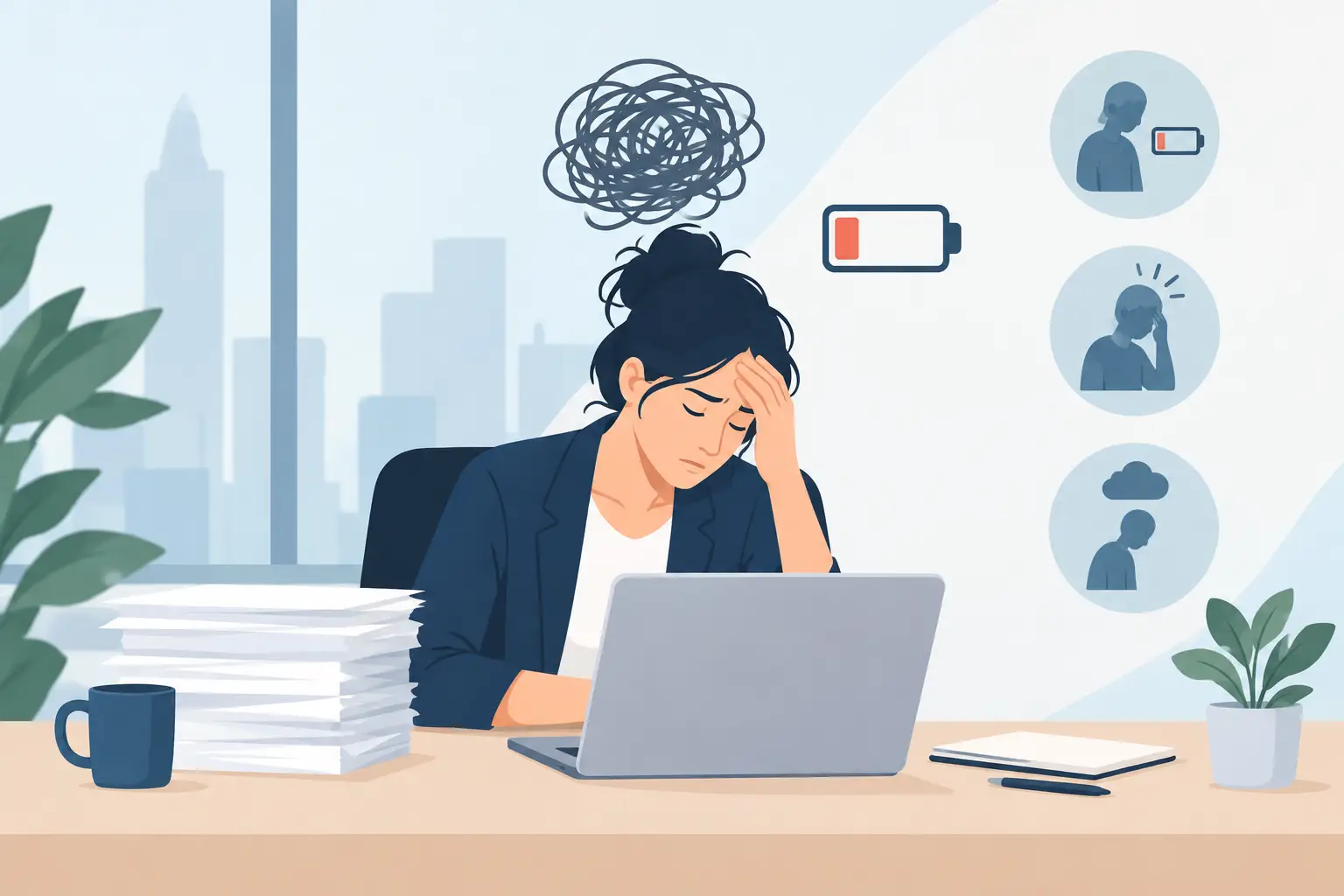
Workplace burnout statistics are not simply a wellbeing concern for HR. They point to a direct business risk: more sickness absence, lower concentration, weaker retention and teams that are physically present but running well below capacity. For employers, the useful question is not whether pressure exists, but whether it has become chronic enough to affect performance, health and culture.
The workplace burnout statistics employers should know
Burnout is difficult to reduce to one headline figure because different studies measure different things. Some track work-related stress, depression and anxiety; others ask employees whether they feel exhausted, disengaged or unable to cope. Taken together, however, the evidence makes the direction of travel clear.
The Health and Safety Executive estimated that 776,000 workers in Great Britain were suffering from work-related stress, depression or anxiety in 2023/24. These conditions accounted for 16.4 million working days lost during the same period. While this is not a direct count of burnout diagnoses, it is a strong indication of the scale of work-related psychological strain affecting UK employers.
Global findings reinforce the issue. Gallup’s 2024 workplace research found that 41% of employees experienced a lot of stress on the previous day. Stress does not automatically equal burnout, but sustained high stress without sufficient recovery is one of burnout’s clearest warning signs.
For people leaders, the most commercially significant point is that burnout often appears before an absence is recorded. Employees may continue attending meetings, replying to messages and completing urgent tasks while their energy, judgement and motivation decline. This presenteeism is harder to see on a dashboard, but it can affect quality, customer experience and team morale long before someone takes extended leave.
What the figures mean in a UK workplace
The World Health Organization describes burnout as an occupational phenomenon resulting from chronic workplace stress that has not been successfully managed. Its three dimensions are exhaustion, increased mental distance or cynicism towards work, and reduced professional efficacy.
That distinction matters. A difficult fortnight around a deadline is not necessarily burnout. Nor can a single wellbeing activity resolve a role with unmanageable demands, unclear priorities or insufficient staffing. However, when pressure becomes the normal operating model, the personal and organisational costs build quickly.
Desk-based teams can be particularly vulnerable to this pattern. Long periods of screen work, back-to-back video calls, poor movement habits and blurred boundaries between work and home can create a combination of mental fatigue and physical discomfort. Neck and shoulder tension, headaches, poor sleep and reduced focus may look like separate concerns, but they often reinforce one another.
The statistics should therefore prompt a broader discussion than sick days alone. Employers need to consider whether people have realistic workloads, autonomy over how work is completed, supportive managers, regular opportunities to recover and access to practical support when pressure rises.
Why absence data tells only part of the story
Absence data is useful, but it is a lagging indicator. By the time stress-related absence rises, an employee may have been struggling for months. It can also miss those who feel unable to take time off, particularly in lean teams or high-growth businesses.
More revealing signals may include rising turnover, reduced participation in team activity, repeated small errors, lower employee survey scores, more conflict, or a noticeable drop in use of annual leave. None of these indicators proves burnout on its own. Together, they give managers a better basis for a constructive conversation and an earlier intervention.
Where burnout creates business cost
A burnout response should not be framed as a wellness perk designed to make an overworked culture feel more tolerable. It is a performance and risk-management issue. Chronic stress can increase absence and attrition, while also weakening concentration, decision-making and collaboration.
Replacing experienced employees costs time as well as recruitment budget. Knowledge leaves the business, managers spend more time hiring and onboarding, and remaining colleagues may carry additional work during the transition. If this becomes a cycle, the workload placed on those who stay can intensify the original problem.
There is also an employer brand consideration. Candidates increasingly assess how an organisation treats its people in practice, not only through stated values. A company that gives managers the tools to spot pressure, makes support easy to access and acts on employee feedback sends a more credible message than one that offers occasional initiatives without changing anything around them.
Measuring burnout without creating survey fatigue
The goal is not to turn employee wellbeing into an intrusive monitoring exercise. A simple, consistent approach is more likely to generate honest participation and useful information.
Start with a brief pulse survey every quarter or at key pressure points in the business cycle. Ask employees whether their workload feels manageable, whether they have enough time to recover, whether they feel supported by their manager and whether work is affecting their physical or mental wellbeing. Keep results anonymous where possible, especially in smaller teams.
Then compare these results with operational measures such as voluntary turnover, short-term absence, overtime, annual leave uptake and employee relations issues. Look for patterns by department, role, seniority or period of the year, rather than assuming the whole business has the same experience.
Qualitative feedback matters too. Exit interviews, manager check-ins and informal listening sessions can explain why a metric has changed. The practical discipline is to share what has been heard, decide what will change and report back. Asking people how they feel without visible follow-through can damage trust.
Practical action that supports recovery
The most effective approach combines work design with accessible support. Senior leaders should examine workload, resourcing, priorities and expectations around availability. Managers need permission and training to have early, respectful conversations about pressure rather than waiting for a crisis.
Alongside these structural measures, onsite wellbeing can make recovery more tangible during the working day. Chair massage, assisted stretching and reflexology offer employees a short, practical break from screens and sedentary posture. They can help people pause, reduce muscular tension and return to work feeling refreshed, without the time and travel commitment of an offsite appointment.
This type of support works best when it is easy to use. A service delivered at the office can fit around meetings, team away days, high-pressure periods or a regular wellbeing programme. It is also inclusive of employees who may not use a gym benefit or have the flexibility to attend appointments outside working hours.
Therapy Bookings provides qualified, insured therapists for workplace programmes across London and the UK, making it straightforward to introduce chair massage and complementary wellbeing services at the scale that suits the organisation. For an office manager or HR team, the operational detail matters: clear scheduling, professional delivery and a format employees can access in a short break.
There is a trade-off to acknowledge. A one-off wellbeing event can lift morale and create a welcome moment of care, but it will not by itself resolve persistent workload problems. Ongoing programmes are most valuable when they sit alongside better management practices, realistic capacity planning and clear boundaries around work.
Turning concern into a credible wellbeing plan
Begin with the part of the employee experience most in need of attention. It may be a department facing a demanding delivery period, a team returning to the office, or an organisation seeing higher-than-usual absence and turnover. Set a practical aim, such as improving access to restorative breaks, reducing reported neck and shoulder discomfort, or increasing the proportion of employees who say they feel supported.
Measure a small number of indicators before and after the initiative, and give employees a way to comment on what helped. Attendance rates are useful, but not enough. Look at repeat engagement, feedback themes and whether the programme encourages broader conversations about workload and recovery.
The best response to workplace burnout statistics is not a grand statement. It is a consistent commitment to notice pressure early, improve the conditions creating it and give people credible ways to recover while they are still at work. When care is practical, visible and properly supported, employees are more likely to feel valued and better able to do their best work.