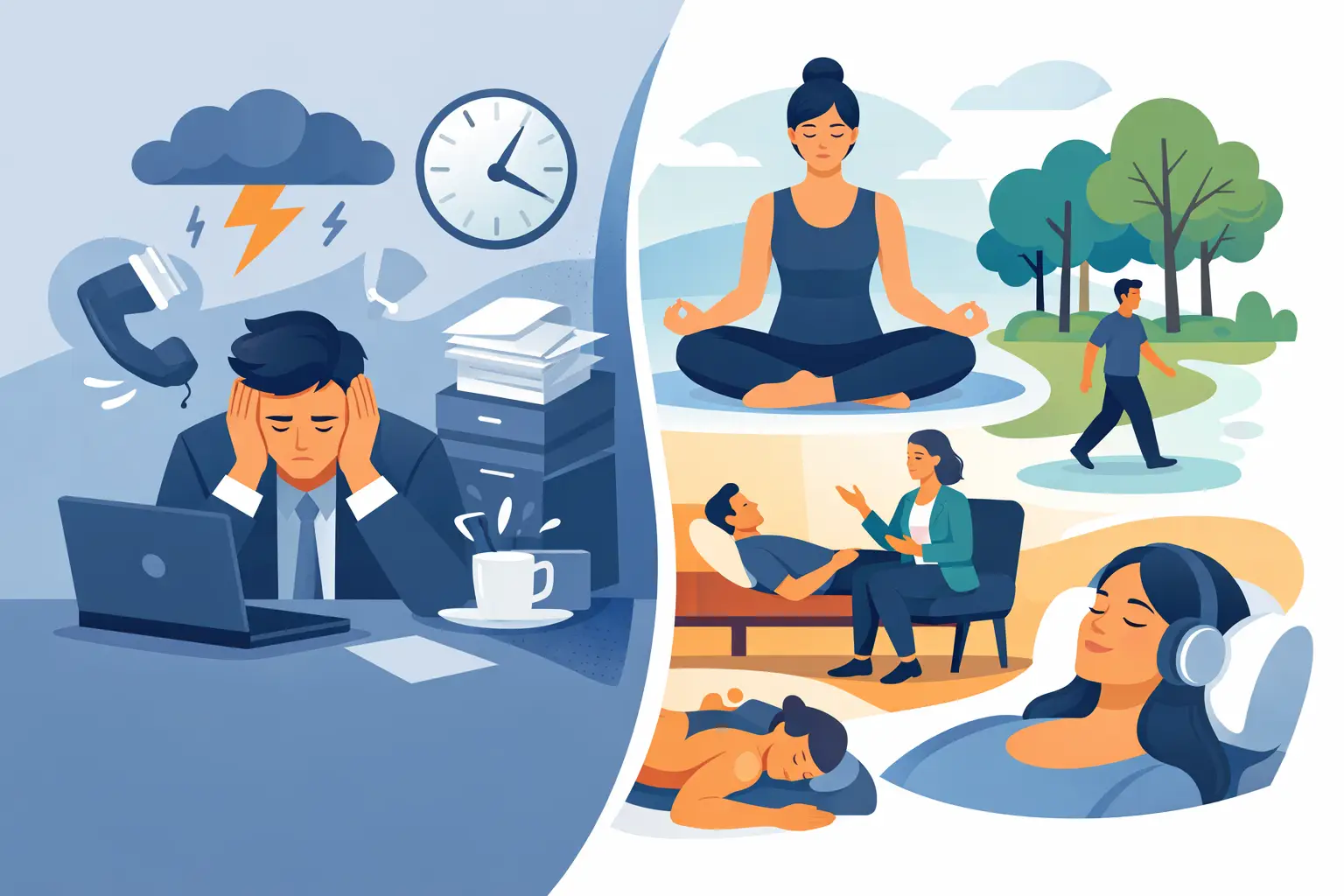
A team can look productive while quietly running on empty. Back-to-back video calls, prolonged screen time, tight deadlines and poor posture can leave employees tense, distracted and less able to recover between demanding periods. The best therapies for office stress do more than provide a pleasant break: when delivered well, they give people practical relief while supporting morale, engagement and a healthier working culture.
For employers, the right choice depends on the pressure points within the business. A fast-moving office may benefit most from short, accessible treatments that fit around meetings. A team reporting recurring neck pain, headaches or fatigue may need a programme that combines hands-on support with posture and lifestyle guidance. The strongest wellbeing plans recognise that stress is both physical and psychological – and make support easy to use.
Why office stress needs a practical response
Office stress rarely has one cause. Workload, unclear priorities, difficult client demands and organisational change all play a part. Yet the physical effects are often immediate: tightened shoulders, shallow breathing, aching hands, poor concentration and interrupted sleep. For desk-based teams, hours spent seated can compound those symptoms.
Therapy is not a substitute for fair workloads, capable management or appropriate mental health support. Those fundamentals matter. However, it can form a valuable part of a wider employee wellbeing approach by helping people reset, feel recognised and address the physical strain of their working day before it becomes more disruptive.
The most effective workplace options are convenient, professionally delivered and tailored to the people using them. If arranging a session feels complicated, employees are unlikely to take part. Onsite therapies remove much of that friction by bringing qualified practitioners directly into the workplace.
1. Chair massage for immediate stress relief
Chair massage is often the most practical starting point for office-based organisations. Treatments are typically delivered through clothing on a specially designed ergonomic chair, focusing on common tension areas such as the back, neck, shoulders, arms and hands. There is no need for employees to change clothes or leave the building for an extended period.
That convenience matters. A focused 15- or 20-minute session can fit into a lunch break, a wellbeing day or a demanding project schedule without creating a diary headache for the office manager. Employees return to their desks feeling more relaxed, while employers can offer a visible, high-value benefit to a large number of people in one day.
Chair massage is particularly well suited to teams experiencing digital fatigue and upper-body tension. It is also highly adaptable, whether the aim is to support a one-off staff event, reward a team after a busy period or establish a recurring wellbeing programme.
2. Reflexology for a calmer workplace experience
Reflexology is a complementary therapy involving pressure techniques on specific points of the feet. For employees who prefer a quieter, more restorative treatment, it can provide valuable time away from screens and constant demands.
From an employer perspective, reflexology works well as part of a broader wellbeing day or a regular programme designed to give employees meaningful choice. Not everyone wants massage, and a varied offering signals that wellbeing support is inclusive rather than one-size-fits-all.
It is worth being clear about expectations. Reflexology should not be positioned as a treatment for medical conditions. Its workplace value lies in offering a calming, professionally delivered experience that may help employees feel more rested and cared for. As with all complementary therapies, practitioners should be fully qualified, insured and able to assess whether a treatment is suitable for each participant.
3. Hand massage for teams with limited space
Hand massage is one of the most flexible therapies for office stress, particularly where meeting rooms are scarce or workstations cannot be left for long. It can be delivered in a compact space and is especially relevant for employees who spend much of the day typing, using a mouse or handling mobile devices.
Although brief, a hand massage can create a genuine pause in the working day. It encourages employees to step away from repetitive movement, rest their eyes and have a moment of undivided attention. This can be an effective option for high-attendance events, receptions, co-working environments and offices where operational coverage must be maintained.
The trade-off is depth. Hand massage will not address the same range of back and shoulder tension as chair massage. It works best as a fast, accessible wellbeing touchpoint or alongside other therapies, rather than as the sole response to widespread musculoskeletal discomfort.
4. Assisted stretching for posture and mobility
Stress is not only felt mentally. It often shows up in reduced mobility, rounded shoulders, stiffness through the hips and persistent tightness after long periods of sitting. Assisted stretching offers a more active response, with a trained practitioner guiding employees through controlled stretches suited to their individual comfort and movement.
For organisations with desk-based teams, this can be a useful complement to massage. Employees learn how their body is holding tension and experience movement that can feel difficult to achieve alone at a desk. It is especially relevant after intense delivery periods, during workplace wellbeing campaigns or where staff feedback highlights stiffness and posture concerns.
Assisted stretching is not a fitness class and should not be treated as one. The therapist should work within appropriate professional boundaries, screen participants where necessary and adapt the session to individual needs. Done properly, it offers an energising alternative for people who would rather move than receive a passive treatment.
5. Spinal analysis to start better conversations
Spinal analysis can provide employees with an accessible overview of posture-related patterns and potential areas of tension. In a workplace setting, it is best used as an educational service rather than a diagnostic claim. The goal is to help people understand how desk habits, device use and prolonged sitting may be affecting comfort.
This service can be particularly useful during health and wellbeing events, alongside ergonomic guidance or stretching support. It gives employees a practical reason to consider small changes, such as adjusting screen height, taking movement breaks or varying their seated position.
For employers, the benefit is preventative. Early awareness can prompt healthier habits before minor discomfort becomes a repeated source of absence or disengagement. Where someone reports ongoing or severe pain, the appropriate next step is referral to a suitable healthcare professional.
6. Nutrition consultations for sustained energy
Stress can influence eating habits, and inconsistent meals can make a demanding day feel harder to manage. Nutrition consultations bring a different but complementary perspective to workplace wellbeing. They can help employees consider practical habits around hydration, balanced meals, caffeine and energy levels.
This is not about prescribing a perfect diet or policing lunch choices. The best sessions are realistic, confidential and relevant to busy working lives. An employee who regularly skips breakfast, relies on late-afternoon coffee or struggles to plan meals around commuting may benefit from simple, workable advice.
Nutrition support is especially valuable when employers want to move beyond one-off relaxation treatments and build a more rounded wellbeing programme. It can also sit well alongside mental health education, sleep awareness and physical activity initiatives.
Choosing the best therapies for office stress
The right therapy mix should reflect employee needs, available space and the outcome the organisation wants to improve. If the priority is immediate relaxation and broad participation, chair massage is usually the strongest option. If space is restricted, hand massage offers a practical alternative. If posture and movement are recurring concerns, assisted stretching and spinal analysis may add more value. For a more holistic programme, reflexology and nutrition consultations provide welcome variety.
Before booking, ask employees what would genuinely help. A short pulse survey can reveal whether the main issue is physical tension, low energy, lack of breaks or a desire for more visible recognition. Participation data and feedback after each event can then shape future sessions.
Operational details matter too. Consider private space, access requirements, appointment lengths, communication to staff and whether treatments should be offered as a one-off reward or on a regular schedule. A trusted provider should make these decisions straightforward, supplying qualified and insured therapists, clear session planning and a delivery model that works around the business.
Make wellbeing part of how work gets done
A single wellbeing day can lift spirits, but consistent support is more likely to influence culture. Monthly chair massage sessions, quarterly wellbeing events or rotating therapies can give employees something tangible to look forward to while showing that the organisation takes their experience seriously.
Therapy Bookings helps businesses across London and the UK build flexible onsite programmes around their team size, workplace setup and wellbeing objectives. The aim is not to add another initiative for HR to administer. It is to provide professional support that is simple to arrange, valued by employees and aligned with stronger engagement, retention and workplace performance.
The most helpful next step is to listen closely to your team, choose one therapy that removes a clear source of strain, and make taking a proper pause feel normal rather than exceptional.