
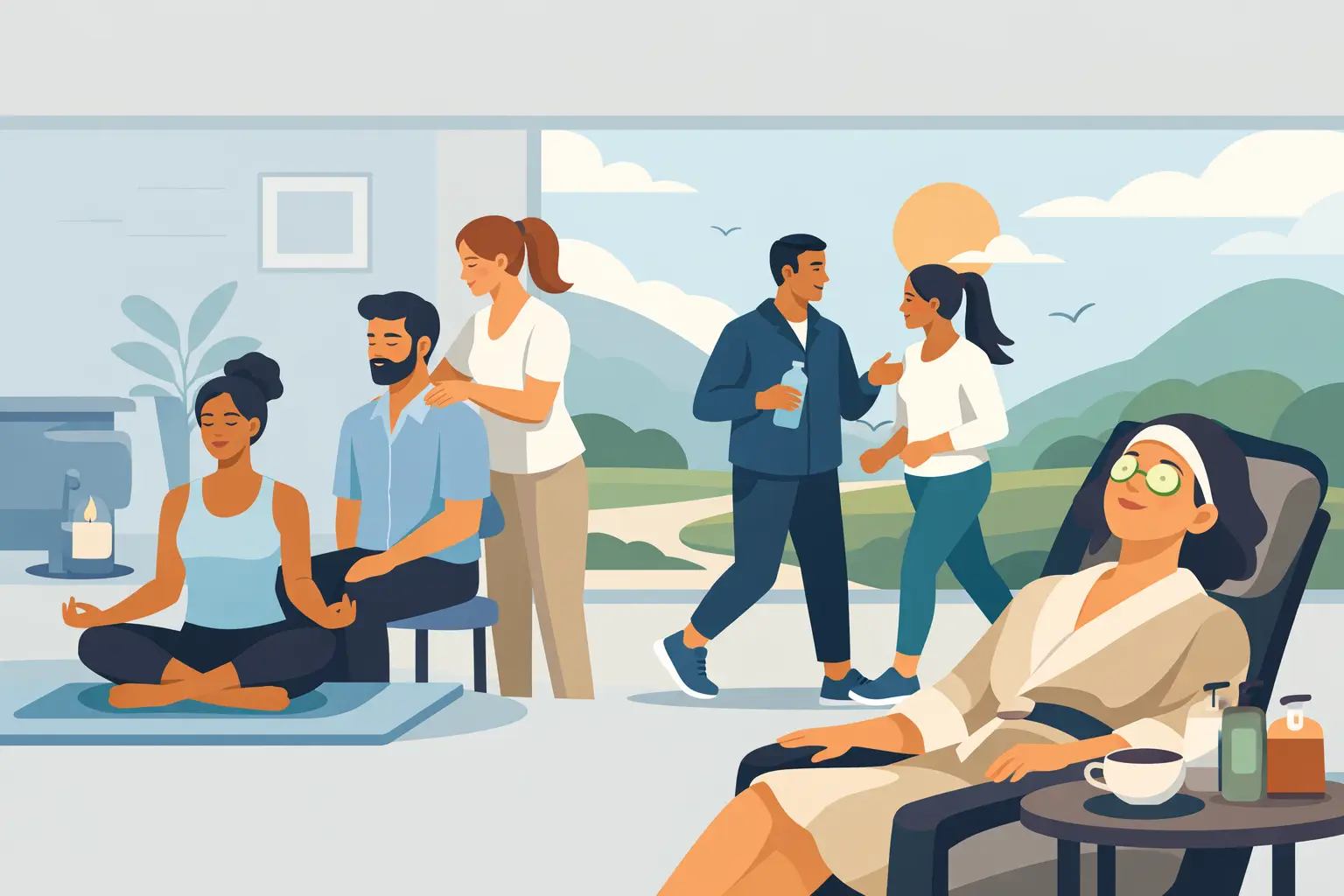
A wellness day can be a visible signal that an employer cares, but only if it fits the reality of the working day. A fruit bowl in the kitchen or a one-off webinar between packed meetings is unlikely to change much. Knowing how to run wellness days well means creating an experience people can access easily, enjoy without pressure and connect with practical support for stress, comfort and energy.
For HR teams, office managers and operations leads, the goal is not simply to arrange a pleasant event. It is to make wellbeing feel credible, inclusive and straightforward while supporting the outcomes the business needs: better morale, stronger engagement, reduced stress and a workplace people want to remain part of.
Start with a clear business and people objective
The most effective wellness days begin with a specific reason for holding them. Your objective might be to recognise staff after a demanding project, support Mental Health Awareness Week, bring office-based and hybrid colleagues together, or address common issues such as desk tension and digital fatigue.
This focus shapes every decision, from the therapies you select to the way you measure success. If your team has been working long hours at screens, short chair massage sessions, assisted stretching or spinal analysis may be particularly relevant. If the aim is broader education, nutrition consultations and practical wellbeing guidance can give employees something they can apply after the event.
Avoid trying to solve every wellbeing issue in one day. A wellness event is most valuable when it responds to a genuine employee need and acts as part of a wider commitment to healthy working practices. It cannot compensate for unmanageable workloads, poor management behaviours or a culture where people feel unable to take breaks.
Choose activities people will genuinely use
Participation is often the difference between a successful workplace wellness day and an expensive gesture. Employees are more likely to take part when sessions are convenient, brief and clearly explained. Onsite therapies work well because they bring support into the workplace without asking staff to travel, change clothes or give up an evening.
Chair massage is a popular option for desk-based teams. Delivered fully clothed in a specialist chair, it can target common areas of tension around the back, shoulders, neck and arms in a short appointment. Hand massage and reflexology can also suit busy offices, particularly where employees may prefer a calming treatment that fits neatly into a break.
Consider the character of your workforce before finalising the programme. A large office may benefit from multiple therapists and bookable appointments across a full day. A smaller team may prefer a mixed-format event, such as individual treatments alongside a group stretching session or nutrition advice. For hybrid teams, you might run an onsite wellness day for office staff and pair it with an inclusive online session for colleagues working remotely.
Choice matters, but too much choice can create confusion. Two or three complementary activities, delivered well, will usually have more impact than a crowded schedule of unrelated offerings.
Plan the practical details before announcing it
A smooth event is largely won before the first employee arrives. Allocate a quiet, private room with enough space for therapists, equipment and a comfortable waiting area if needed. Check access arrangements, lift availability, parking requirements and building procedures in advance, especially in larger London offices or multi-site organisations.
A qualified provider should be able to advise on room set-up, therapist numbers, appointment lengths and capacity. This is particularly useful when you need to serve a large team fairly within a limited window. As a guide, short treatments can help maximise access, while longer appointments allow for a more in-depth experience but reduce the number of people seen.
Use a booking system where possible. It gives employees certainty, helps minimise queues and lets organisers identify unused slots early enough to offer them to others. Leave a small number of walk-in appointments if your culture favours flexibility, but do not rely solely on drop-ins. People with busy diaries may assume they will not have time and miss out.
Build in a clear cancellation process and encourage staff to release appointments they cannot attend. This small step protects the value of the investment and gives more colleagues the chance to participate.
Make wellness days inclusive rather than performative
Wellbeing should not feel like another compulsory work activity. Present the event as an invitation, not an expectation, and make participation confidential where appropriate. Some employees may not want a treatment, may have religious or personal preferences, or may simply be managing a heavy workload that day.
Offer options that reflect different comfort levels. For example, employees may choose between chair massage, hand massage, reflexology, assisted stretching or a short nutrition consultation. Clear pre-event information helps people make an informed choice, including what each service involves, how long it takes and whether there are any relevant health considerations.
Inclusivity also means considering shift patterns, part-time staff and colleagues who are less visible in the office. If the programme is available only between 10am and 3pm, some teams may be excluded by default. Extending the delivery window, repeating the event across sites or scheduling an additional date can make the experience more equitable.
Communicate the value without overselling it
Your internal communications should be warm, practical and specific. Tell employees why the wellness day is being held, what is available, how to book and what they can expect. Rather than making broad promises about transformation, focus on immediate, recognisable benefits: a chance to take a proper pause, ease muscular tension, reset after a demanding period and learn techniques that support day-to-day wellbeing.
Senior leaders can strengthen participation by visibly supporting the initiative and protecting time for teams to attend. The message should be simple: taking twenty minutes for wellbeing is acceptable, and managers should help make it possible.
Timing also matters. Announcing the event only a day before it happens may lead to empty slots. Give people enough notice to plan around appointments, then send a reminder shortly beforehand. If booking demand is high, communicate that early and consider whether a recurring programme would offer better access than a one-off event.
Measure what matters to the organisation
A wellness day does not need an overly complicated reporting framework, but it should generate useful evidence for future decisions. Start with participation: how many appointments were booked, attended and reallocated? Look at uptake across departments, locations and working patterns to understand whether the format reached the people it was intended to support.
Short post-event feedback is equally valuable. Ask employees whether the activity was easy to access, relevant to their needs and worth repeating. A simple rating and one open question will usually produce more usable insight than a lengthy survey.
For an ongoing programme, connect event feedback with wider people measures over time. This may include engagement results, absence trends, retention conversations or use of wellbeing support. It is rarely possible to attribute a business outcome to one wellness day alone, but consistent employee support can contribute to a healthier, more positive workplace culture.
Turn a successful event into a sustainable programme
One-off wellness days are useful for key moments such as an office move, team celebration or wellbeing campaign. They can create a welcome lift in energy and give employees a practical experience of employer support. However, regular provision often delivers stronger long-term value, particularly for teams dealing with continuous screen work, tight deadlines and recurring musculoskeletal discomfort.
A monthly or quarterly onsite programme can be scaled around headcount, budget and demand. It also allows you to learn what employees use most. A team may initially book chair massage heavily, then show growing interest in assisted stretching or nutrition consultations once the service becomes familiar.
Therapy Bookings supports businesses across London and the UK with qualified, insured practitioners and flexible onsite wellbeing programmes. The right delivery model depends on your workplace, but operational ease should remain central: clear planning, reliable practitioners and services that employees can use without disrupting the day.
A well-run wellness day should leave people feeling that their time and wellbeing have been respected, not that they have attended another workplace initiative. When the experience is easy to access and grounded in real employee needs, it becomes a practical expression of the culture you are building.