
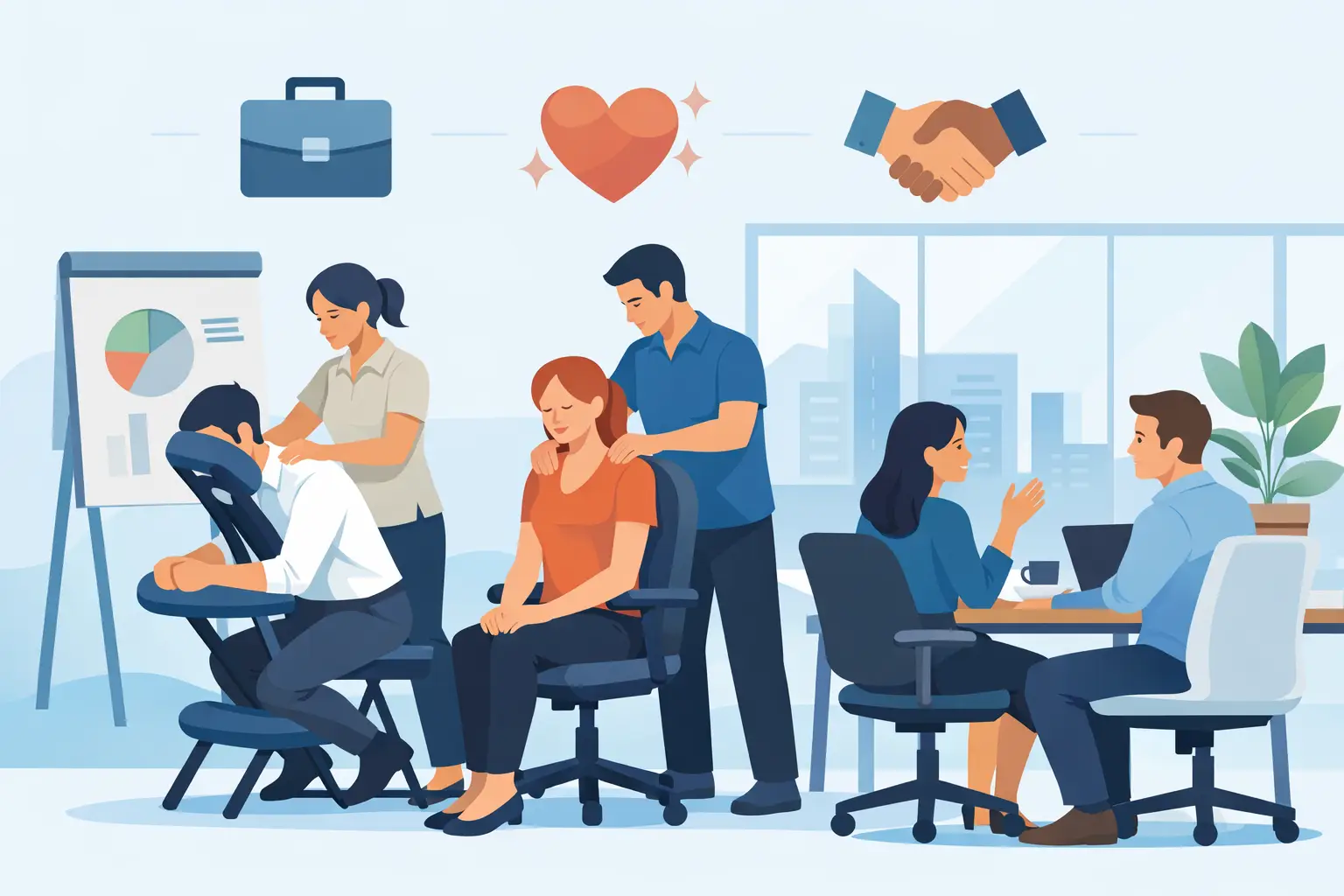
A 15-minute chair massage can be one of the most visible signs that an employer takes wellbeing seriously. For HR teams and office managers, however, the value lies in more than a welcome break. Understanding how workplace massage programmes work helps you turn a popular employee benefit into a practical, well-run initiative that supports morale, comfort and day-to-day performance.
The strongest programmes are designed around the working day, rather than asking employees to fit wellbeing around an already busy schedule. A qualified therapist comes to the workplace, sets up in a suitable private or semi-private space, and delivers short, focused treatments that employees can book with minimal disruption.
How workplace massage programmes work in practice
A workplace massage programme begins with a short discussion about your team, workplace set-up and goals. Some organisations want an engaging addition to a staff event. Others are responding to feedback about stress, screen fatigue, neck tension or low morale. A regular programme may also form part of a wider wellbeing strategy focused on retention and employee experience.
From there, the provider agrees the most appropriate therapy, appointment length, number of therapists and delivery schedule. Chair massage is often the most straightforward choice for office-based teams because it is delivered fully clothed, requires no oils and can take place in a meeting room, wellness space or quiet corner of the office.
On the day, therapists typically arrive before the first appointment to prepare the space and check access requirements. Employees attend their allocated slots, usually lasting 15 to 30 minutes, then return to work feeling more comfortable and refreshed. There is no need for employees to travel to a clinic or spend valuable personal time arranging an appointment.
For hybrid teams, programmes can be scheduled around core office days to increase uptake. For larger workplaces, several therapists may work simultaneously, allowing more people to take part without the service taking over the working day.
The employee experience
Before treatment, the therapist asks a few brief questions about the employee’s comfort, health considerations and areas of tension. This allows the session to be tailored safely and appropriately. The employee remains clothed and is seated in a specialist ergonomic massage chair, designed to support the body while giving the therapist access to the back, shoulders, neck, arms and hands.
The therapist uses focused pressure and massage techniques to address common desk-based discomfort. Many employees report that even a short session provides a useful mental reset, particularly during demanding periods, after long meetings or when workloads are high.
Workplace massage is not a substitute for medical advice, physiotherapy or treatment for an injury. A professional provider will use qualified, insured therapists who understand when a treatment should be adapted, postponed or declined. That clinical judgement is essential to delivering a service employees can trust.
Choosing the right format for your workplace
There is no single ideal format. The right programme depends on your headcount, available space, employee needs and the outcome you are trying to achieve.
A one-off massage day can work well for a company celebration, wellbeing week, office reopening or high-pressure period. It creates a positive moment for the team and gives employers a simple way to introduce wellbeing support. The trade-off is that its impact is primarily immediate: employees enjoy the experience, but it is less likely to influence longer-term wellbeing habits on its own.
Monthly or quarterly sessions provide greater continuity. Regular access gives employees something tangible to look forward to and reinforces that wellbeing is part of the workplace culture, not an occasional gesture. This format is particularly suitable for businesses looking to support morale through periods of growth, change or sustained workloads.
Some employers build a broader programme using complementary services such as reflexology, hand massage, assisted stretching, spinal analysis or nutrition consultations. This can create more choice and help engage employees with different preferences. It does require more planning, particularly where space, privacy and appointment times are limited.
The logistics employers need to get right
Workplace massage is operationally simple when a few details are agreed in advance. A private meeting room is ideal, but it does not need to be large. The space should be quiet enough for employees to relax, accessible for the therapist and free from interruptions. For chair massage, a small room with enough space for the chair and therapist is usually sufficient.
Appointment management matters just as much as the room. Some businesses use a booking link or shared schedule so employees choose their own times. Others allocate slots by team, department or shift. Self-booking tends to give employees more control, while centrally managed rotas can be helpful where operational cover is needed.
Clear communication drives participation. Let employees know what the treatment involves, how long it lasts, where it will take place and whether they need to bring anything. Reassure them that chair massage is delivered over clothing and that they can speak to the therapist about any concerns. Managers should also make it clear that taking a short wellbeing break is encouraged, not viewed as time away from work.
For busy offices, it is sensible to build in a few buffer appointments. Meetings overrun, employees may need to reschedule, and a little flexibility prevents the day from feeling rushed. A provider experienced in corporate settings can help plan capacity realistically, based on the number of employees you want to reach.
What makes a programme credible rather than a perk
Massage can be an enjoyable benefit, but it becomes a stronger business investment when it is connected to a clear purpose. Before booking, decide what success looks like. It may be better employee feedback, stronger attendance at wellbeing activities, improved morale during a demanding quarter or a more competitive employee experience offer.
Anonymous post-event feedback is a practical starting point. Ask employees whether the session helped them feel more relaxed, valued or comfortable at work, and whether they would use the service again. These insights can show which formats are most valued and help make the case for a recurring programme.
Attendance data is also useful. Low uptake does not necessarily mean employees do not want the service. It may indicate that appointments were announced too late, scheduled on a low-attendance office day or placed in a space that did not feel private enough. Reviewing these details allows you to refine the next session rather than abandoning the initiative.
It is less realistic to claim that a single massage day will directly transform absence figures or retention. Those outcomes are influenced by workload, leadership, pay, flexibility and many other factors. But a consistent, well-communicated wellbeing programme can contribute to a culture where employees feel considered and supported. That is commercially relevant, especially when employers are working to retain skilled people.
Why qualified therapists matter
The quality of the therapist shapes the entire employee experience. A professional therapist should be fully qualified, insured and confident working with a wide range of people in a workplace environment. They must be able to explain the treatment clearly, maintain appropriate boundaries and adapt their approach to individual comfort levels.
This is especially important in diverse teams, where employees may have different health needs, previous experiences of massage or expectations around privacy. The best practitioners make the session feel calm and welcoming without being intrusive. They also keep the process efficient, so the programme works for the employee and the employer.
With more than 25 years of complementary healthcare expertise, Therapy Bookings supports businesses with qualified therapists and flexible workplace wellbeing services across London and the UK. The practical aim is simple: make a high-quality experience easy for employers to arrange and easy for employees to use.
Making massage part of a healthier working culture
Workplace massage delivers the greatest value when it sits alongside sensible everyday practices. Encourage regular screen breaks, review workstation set-ups, make movement acceptable during the day and ensure managers model healthy boundaries around workload. Massage can then reinforce those messages with a direct, positive experience rather than carrying the entire responsibility for employee wellbeing.
Start with a format that suits your current workplace reality. A carefully planned half-day for a smaller team may be more effective than an ambitious programme with poor access or unclear communication. Once employees respond, you can adjust the frequency, add therapies or extend provision to other sites.
A well-delivered massage programme gives people permission to pause, reset and feel looked after during the working day. For employers, that small operational decision can send a much larger message about the kind of workplace they are building.